


-
Proud to be HUFLITers #07 | M.A. Tran My Uyen – A lectern where a teacher wishes only to “watch her children grow up”At the HUFLIT Faculty of Foreign Languages, M.A. Tran My Uyen (Vice Dean) goes by many names. Some call her “Ms My”; her students call her “mother”. Colleagues often compare her to Mother Au Co with a hundred children. Yet to become the “mother” of the lecture hall she is today, she went through a profound shift in thinking that completely changed a teaching philosophy built over more than 30 years.
-
New Cybersecurity Regulations: Opportunities for the Cybersecurity Field in the Digital EraThe new cybersecurity regulations taking effect on 1 July 2026 not only help complete the legal framework but also drive demand for talent in cybersecurity. This is also the moment when the discipline becomes a promising choice for young people who love technology and information security.
-
“GenZ Major Insights 2026” – Episode 9: Boundless Journeys with HUFLIT’s Tourism and Hospitality ProgramsMany students choose the Tourism and Hospitality field simply because they love to travel. But passion alone is not enough to pursue this field in the long run. What matters more is understanding the nature of the discipline, its professional requirements, and the qualities needed to grow in a professional service environment.
“Have You ‘Reported’ Today?”
NGÀY: 20/06/2026
Chia Sẻ Qua
The programme was carried out by the Pré group – students of the HUFLIT Faculty of International Relations and Communication – with the desire to bring students practical perspectives on journalism from the very people directly working in the profession.
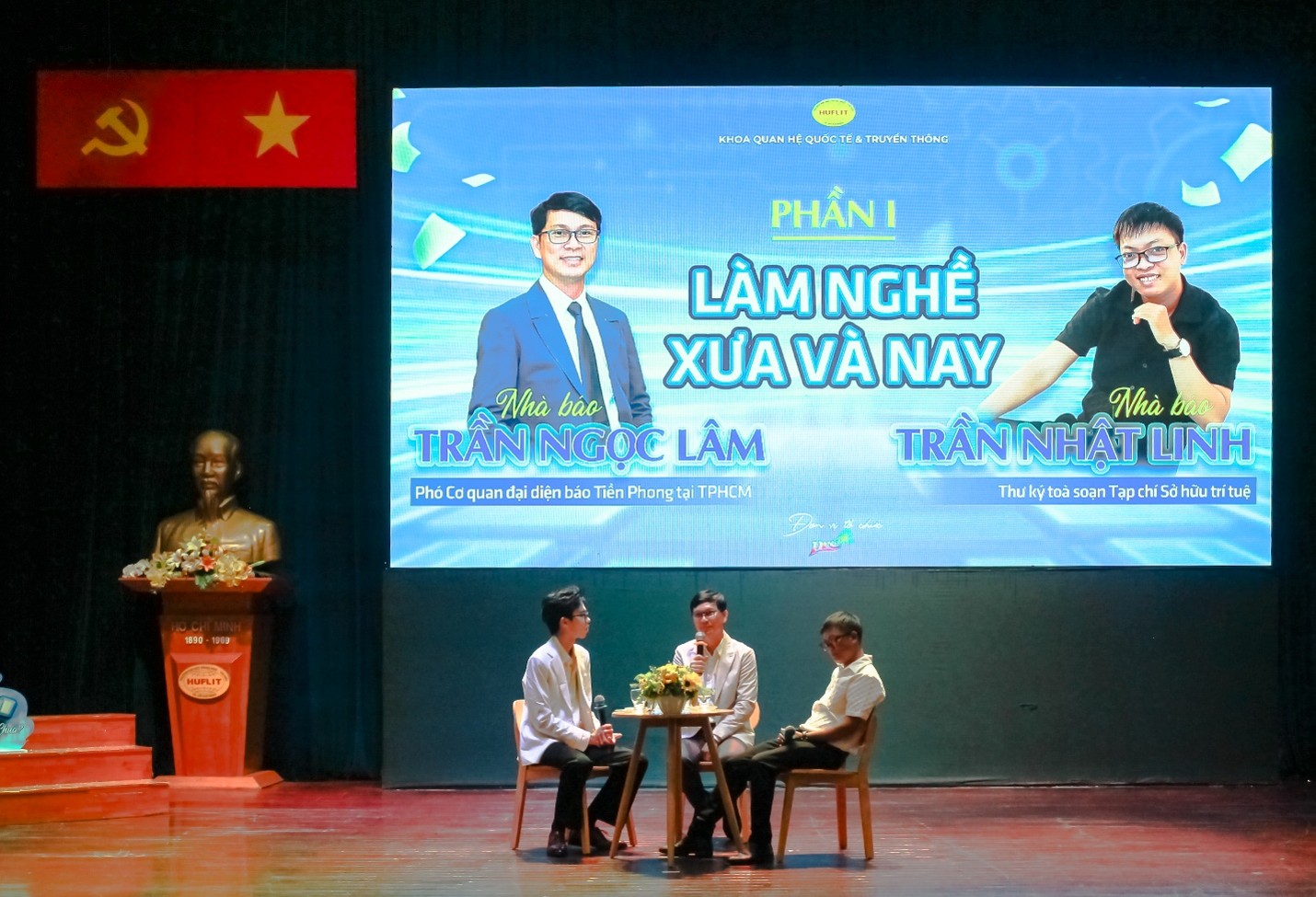
The setting of the ongoing talkshow
Stories of the trade from veteran writers
Accompanying the programme is journalist Trần Ngọc Lâm from the Tiền Phong Ho Chi Minh City press agency. Currently, he is Deputy Head of the Tiền Phong Newspaper Representative Office in Ho Chi Minh City with 23 years of experience.
Returning to the first days of the profession, when the Internet did not yet dominate and AI did not yet exist, journalist Trần Ngọc Lâm chose for himself the thorniest path: social reportage and investigation to bring back the hidden corners that you had never heard of. Through the years of holding fast at the scene, his pen now carries a different weight, deeper and broader, through his commentary and political editorials.
That 23-year journey of keeping the flame of the profession is not only proven through solid seniority but also deservedly recognised with a Category C prize of the National Press Award and other similar commendations from Health-sector agencies, the Central Youth Union and the Ho Chi Minh City People’s Committee.
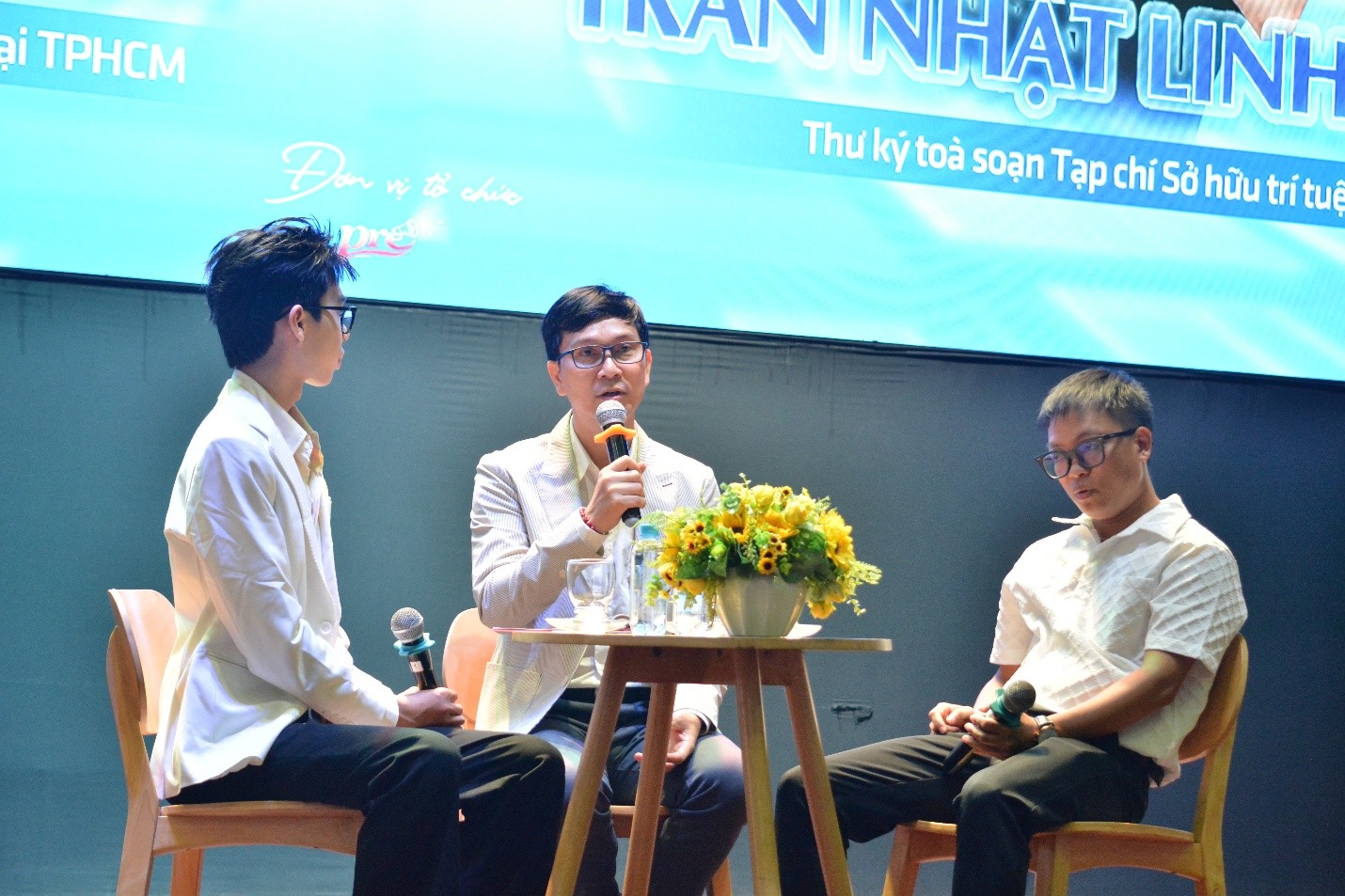
Journalist Trần Ngọc Lâm (in the middle) sharing in the talkshow
If journalist Ngọc Lâm represents the thorny field of social investigation, then the remaining piece of the programme – journalist Trần Nhật Linh (Head of Southern Content of the Intellectual Property and Creativity magazine) – brings a calmer and more cautious perspective. Instead of pursuing “hot” topics that easily attract views.
The speaker also shared the differences between journalism of the past and present, as well as the changes in journalism through each stage of development. He shared that the more society develops, the more journalism undergoes great transformations that journalists need to absorb and develop.
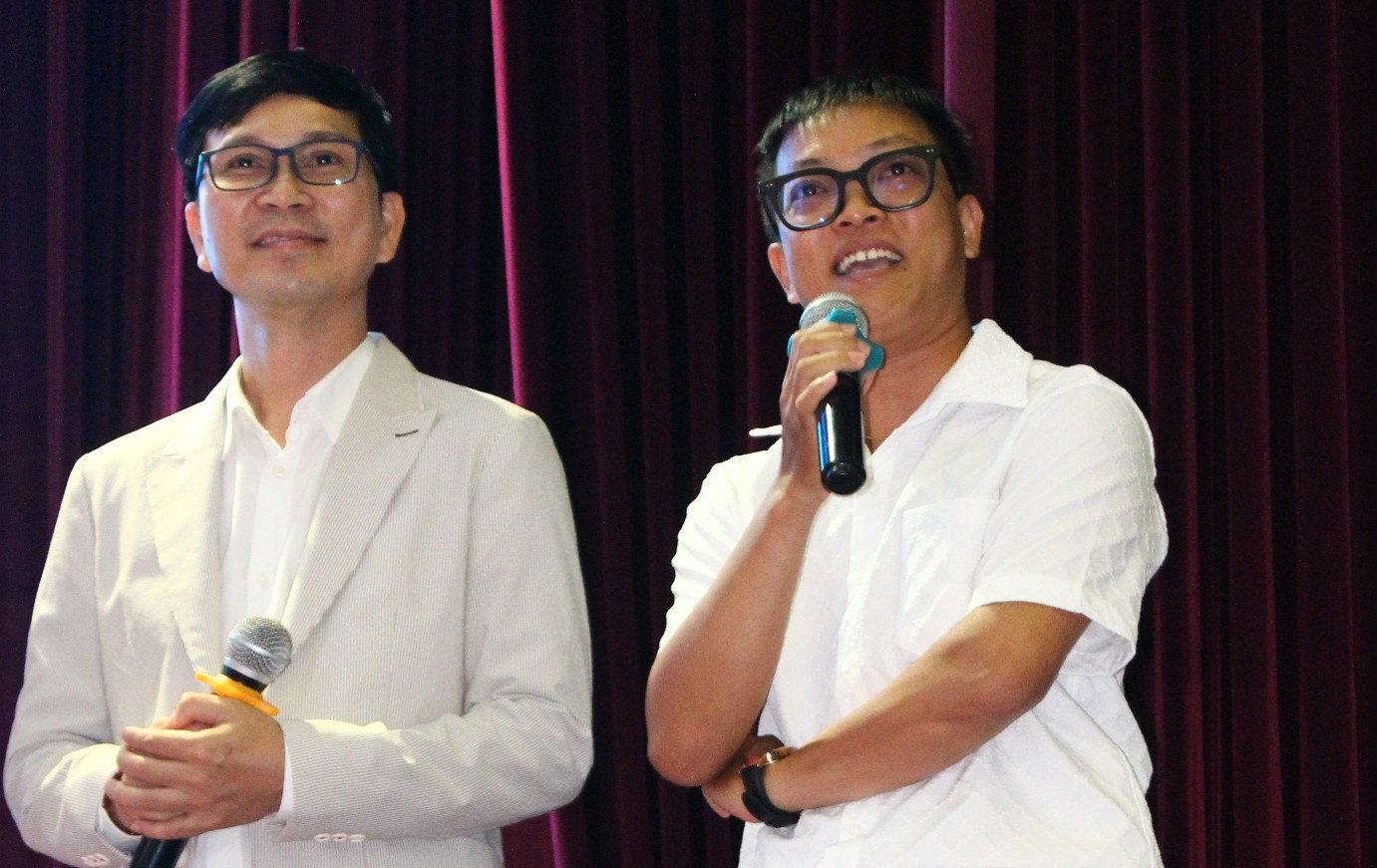
Journalist Trần Nhật Linh (on the right) sharing in the talkshow
Journalists in the AI era: being good at the profession alone is not enough
From their real-world experiences in the profession, the two speakers brought a profound perspective on the changes in journalism in the digital age. If technology and social media help information spread faster, then the responsibility of journalists also becomes greater than ever.
According to journalist Trần Ngọc Lâm, verifying news sources before publishing is a principle that cannot be traded away. In a context where anyone can create and share information with just a smartphone, the difference between a news poster and a professional journalist lies in accuracy, objectivity and responsibility to the community.
From another perspective, journalist Trần Nhật Linh believes that AI is becoming a capable support tool for journalism activity, but it cannot replace the emotion, critical thinking and mettle of professionals. In particular, professional ethics remains the core value that helps journalists maintain public trust in a volatile media environment.
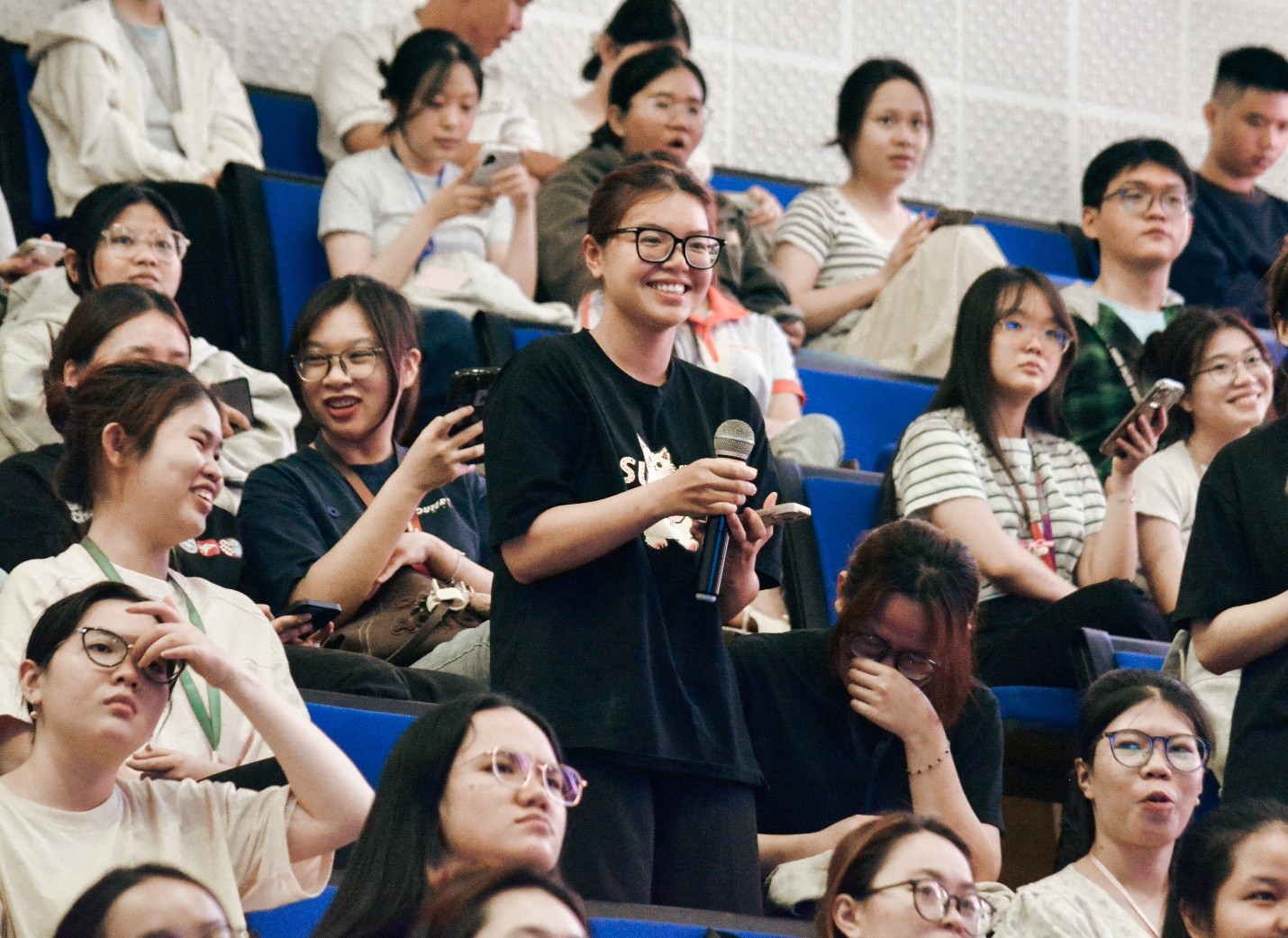
HUFLIT students ask the programme speakers questions
The opening question of the programme “Have You ‘Reported’ Today?” is therefore not only an interesting Gen Z wordplay but also a reminder of the social responsibility of writers. In a world where anyone can speak up, the boundary between spreading value and creating harmful consequences is sometimes very fragile. Closing the conversation, the message that remained is: to go the long way with the profession, being good alone is not enough. Today’s journalists need mettle, clear-headedness and a solid ethical foundation so as not to be swept along by easy choices.
The message the programme conveys does not stop at a single sentence, but is a reminder for anyone who is, has been and will be entering journalism: to go the long way, being good alone is not enough; you also need mettle, clear-headedness and an ethical foundation solid enough not to be swept along by easy choices.
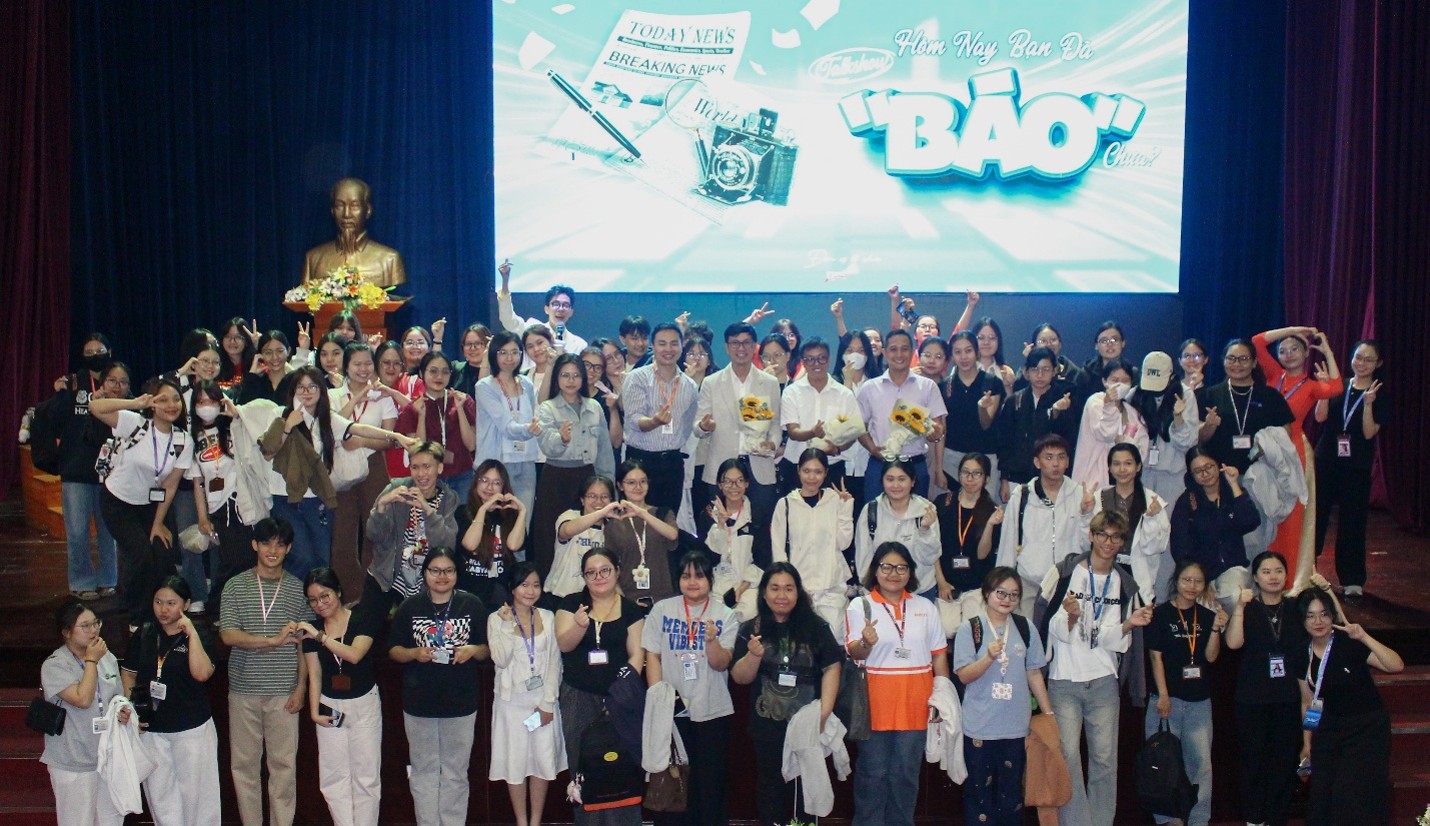
The programme closed with much knowledge and success
CONTACT INFO
Apply for admission at
tuyensinh.huflit.edu.vn
Find out information
huflit.edu.vn
Advising education enrollment