



-
Proud to be HUFLITers #07 | M.A. Tran My Uyen – A lectern where a teacher wishes only to “watch her children grow up”At the HUFLIT Faculty of Foreign Languages, M.A. Tran My Uyen (Vice Dean) goes by many names. Some call her “Ms My”; her students call her “mother”. Colleagues often compare her to Mother Au Co with a hundred children. Yet to become the “mother” of the lecture hall she is today, she went through a profound shift in thinking that completely changed a teaching philosophy built over more than 30 years.
-
New Cybersecurity Regulations: Opportunities for the Cybersecurity Field in the Digital EraThe new cybersecurity regulations taking effect on 1 July 2026 not only help complete the legal framework but also drive demand for talent in cybersecurity. This is also the moment when the discipline becomes a promising choice for young people who love technology and information security.
-
“GenZ Major Insights 2026” – Episode 9: Boundless Journeys with HUFLIT’s Tourism and Hospitality ProgramsMany students choose the Tourism and Hospitality field simply because they love to travel. But passion alone is not enough to pursue this field in the long run. What matters more is understanding the nature of the discipline, its professional requirements, and the qualities needed to grow in a professional service environment.
What Is the Management Information Systems Field? Job Opportunities
NGÀY: 03/03/2026
Chia Sẻ Qua
What field is management information systems?
What field is management information systems is a question that many young people raise when facing fields of study that intersect between technology and economics. Below is information about the nature of the field of study, the combination of technology and management as well as the role of management information systems today.
The combination of Technology and Management in management information systems
Management information systems (MIS – Management Information Systems) is an interdisciplinary training field that closely combines information technology and business administration. This field of study focuses on collecting and analysing data to support decision-making, while also connecting technology systems with business operations in the enterprise.
Unlike the purely technical Information Technology or Computer Science fields, MIS focuses on designing, operating and administering information systems serving management goals. The combination of IS (Information Systems) and M (Management) creates a field with a wide application scope, meeting the demand for human resources who both understand technology and firmly grasp management thinking in modern enterprises.
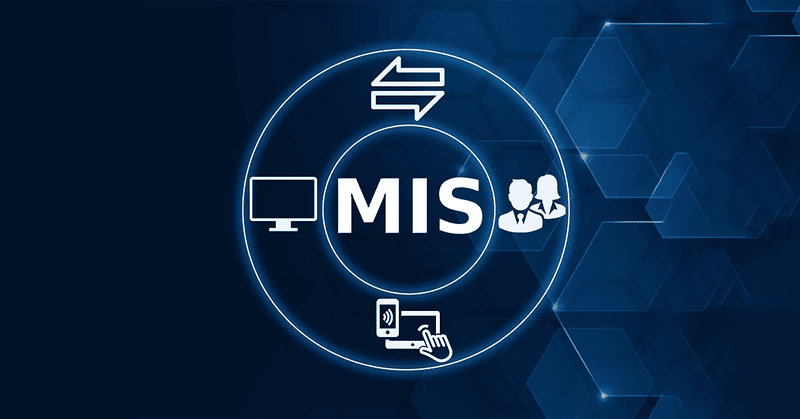
MIS is an interdisciplinary field of study that combines information technology and management to optimise enterprise operations
The role of management information systems in the digital age
In the digitalisation era, management information systems (MIS) become an important foundation that helps enterprises organise, store and exploit data scientifically. Through synthesising and analysing customer, market and internal data, MIS helps managers identify opportunities, control risks and build suitable strategies in a highly competitive environment.
Besides, MIS also plays a key role in supporting decision-making, optimising operational processes and promoting digital transformation. Thanks to technology application, enterprises can automate operations, optimise resources and quickly adapt to market changes.
>>>> LEARN HERE: What do software engineering graduates do? Which direction is suitable
Studying the Management Information Systems field at HUFLIT, what do you study?
Studying the Management Information Systems field at HUFLIT equips students with knowledge of both information technology and business administration, helping to effectively operate and analyse enterprise information systems. The programme combines theory and practice, preparing readily for career opportunities in the digital age.
The Technology knowledge block at HUFLIT
The technology knowledge block at HUFLIT equips students with a solid foundation in databases, data structures and algorithms, operating systems, web programming, computer networks, software analysis and design, and mobile-device programming. These subjects help students have the ability to design, operate and optimise information systems serving enterprise administration.

The technology knowledge block at HUFLIT helps students apply IT effectively in managing and operating enterprise systems
The Economics knowledge block at HUFLIT
The economics knowledge block at HUFLIT equips students with subjects such as management studies, accounting, finance, business data analysis (Business Analytics), micro – macroeconomics, mathematics, probability and statistics, marketing, international relations, international business – law, and applied informatics. These subjects help students understand the mechanism of economic operation, important indicators and modern business development trends.
What careers do Management Information Systems graduates do?
Many people wonder what studying management information systems leads to after graduation. Graduates can take on important positions in enterprises, combining technology and management knowledge to operate information systems, analyse data and support strategic decision-making, specifically:
Business Analyst specialist (Business Analyst – BA)
In this position, you will survey and collect information to propose solutions to improve the user flow and software functions, coordinating with departments to ensure product quality before deployment. The BA is a bridge between customers, business and the technical team, playing an important role in optimising enterprise processes. The reference salary for a BA is from 8 – 20 million/month, and can go up to 25 – 35 million with more in-depth experience and position.

The Business Analyst specialist connects customers, business and technical to optimise processes
Information system administration specialist, ERP/CRM
This specialist is responsible for deploying, configuring and optimising ERP and CRM systems to ensure smooth operation from internal to customer interaction. They are people who both understand business operations and understand technology to adjust the system suitably. The reference salary for a system administration position in Vietnam is around 8–15 million/month, while more in-depth roles can be higher when tied to large ERP/CRM.

The ERP/CRM system administration specialist deploys and optimises the system according to enterprise needs
>>>> DO NOT SKIP: Is software engineering hard? A detailed answer 2026
Data Analyst specialist (Data Analyst)
The data analyst specialist is responsible for collecting, processing and analysing data to support decision-making and forecast business trends. After graduation, you can develop into a Data Engineer or Data Scientist.
According to Salary.vn, a platform specialising in collecting and analysing real salary data across many professions in Vietnam, the salary of a Data Analyst specialist (Data Analyst) averages around 21.3 million VND/month in urban areas (data updated on 11-01-2024) for a position with 1–3 years of experience

The data analyst specialist collects and processes information to support business decisions
Business data analysis and management reporting
In this position, you will be responsible for synthesising and analysing business indicators, building management reports and dashboards that help leaders grasp operational performance, evaluate KPIs and make correct strategic decisions. The work requires the ability to read and understand data, present convincing insights and coordinate with departments to optimise business effectiveness. According to CareerViet – a platform that aggregates recruitment and real salary data, the Business Analyst position (business analysis) has an average salary of around 18–22 million VND/month.

The business data analyst specialist builds reports that help leaders make decisions
Information technology project management
In this position, you will be responsible for planning, coordinating and supervising the entire technology project, from determining customer requirements, dividing work, tracking progress to ensuring quality and effectiveness according to the set goals. The work requires time management skills, team communication, technology understanding and strategic thinking to ensure IT projects are deployed smoothly.
Regarding income in Vietnam, according to aggregated real salary data from Indeed, the IT Project Manager position has an average salary of around 32.7 million VND/month (data updated 11/10/2025) based on real income reports from employees in the field.

IT project management plans and supervises projects to ensure progress and effectiveness
What skills does the management information systems field need?
The Management Information Systems (MIS) field is a combination of information technology and business administration. Therefore, students need to be fully equipped with specialised knowledge along with hard skills and soft skills to meet professional requirements. Below are the important skills that help you stand out and be ready for the modern working environment:
- Passion for information technology: A love for the IT field helps you maintain learning motivation and continuously train skills.
- Critical and logical thinking: The ability to analyse, evaluate and make decisions quickly and accurately.
- Business analysis and data processing: The skill of synthesising information and converting data into valuable insights for the enterprise.
- Problem-solving: Effectively handling arising situations and finding optimal solutions at work.
- Meticulous and careful: Paying attention to detail to limit errors and ensure accuracy in information management.
- Basic understanding of databases and software: Proficiently using databases, common analysis and reporting tools.
- Updating technology trends: Always keeping up with new technologies to apply them effectively at work.
- Foreign languages: Foreign-language skills are a big advantage, expanding advancement and international cooperation opportunities.

The Management Information Systems field requires combining technology knowledge and management skills
>>>> POCKET IT NOW: Software Engineering and Information Technology: Differences & Opportunities
What is outstanding about studying the Management Information Systems field at HUFLIT?
The Management Information Systems field at HUFLIT stands out thanks to its highly applied training programme, dynamic learning environment and close connection with enterprises. This will help students be fully equipped with both knowledge and practical skills to be ready to enter the labour market. Below are the outstanding points that make HUFLIT’s difference:
- A programme tied to enterprise practice: Students learn how to collect and analyse information system requirements, while also designing, deploying and managing technology solutions suitable to enterprise needs.
- Close linkage with enterprises: HUFLIT maintains cooperative relationships with many enterprises in the field, creating opportunities for internships, participation in real-world projects and enhancing professional skills, helping students easily integrate after graduation.
- A highly specialised lecturer team: Students are guided by lecturers with deep, broad knowledge and practical experience, who also always update the latest technology trends.
- Diverse specialisations: HUFLIT provides many choices in the IT field such as Software Technology, Cybersecurity, Information Systems, Data Science, helping students freely pursue a field of study suitable to their passion and career orientation.
- Wide-open career opportunities: Graduates can take on attractive positions such as programmer, system analyst, data administrator, software tester at technology companies, e-commerce, hotel – restaurant chains, with a competitive salary and fast advancement opportunities.

HUFLIT equips students with practical knowledge, specialised skills and wide-open career opportunities in the field
Some questions about the management information systems field
Below are some frequently asked questions about the Management Information Systems (MIS) field that many candidates are interested in when learning about this field of study. The answers will help you understand better about the training characteristics, career opportunities and the suitability of MIS for yourself.
Can you study management information systems if you are not good at programming?
You can completely study the MIS field without being a “professional coder”. This field focuses much more on management, data analysis and operating information systems than on advanced programming. However, having basic knowledge of programming and technology will help you absorb faster and easily practise the exercises and projects in the study programme.
Is it easy to find a job in this field?
Management information systems is a field with high human-resource demand in the context of enterprises increasingly depending on data and technology. MIS graduates can take on many positions such as Business Analyst, Data Analyst, ERP/CRM system administrator, IT project manager with diverse job opportunities and an attractive salary, especially at medium and large companies.
Should you choose MIS or IT/Software Engineering?
If you love analysis, data management and connecting technology with business, MIS is the suitable choice. Conversely, if you are passionate about programming, software development and application design, the IT or Software Engineering field will be more suitable. The choice should be based on interests, personal strengths and long-term career orientation.
What field is management information systems has become an attractive choice for those who want to combine technology and management to create real value for enterprises. This field of study helps students develop analytical thinking and skills in applying technology in enterprise management. Explore the programme at HUFLIT to equip yourself with knowledge and open up career opportunities in the MIS field.
>>>> CONTINUE READING RELATED ARTICLES:
What careers does multimedia communications lead to? Job opportunities 2026
CONTACT INFO
Apply for admission at
tuyensinh.huflit.edu.vn
Find out information
huflit.edu.vn
Advising education enrollment