



-
Proud to be HUFLITers #07 | M.A. Tran My Uyen – A lectern where a teacher wishes only to “watch her children grow up”At the HUFLIT Faculty of Foreign Languages, M.A. Tran My Uyen (Vice Dean) goes by many names. Some call her “Ms My”; her students call her “mother”. Colleagues often compare her to Mother Au Co with a hundred children. Yet to become the “mother” of the lecture hall she is today, she went through a profound shift in thinking that completely changed a teaching philosophy built over more than 30 years.
-
New Cybersecurity Regulations: Opportunities for the Cybersecurity Field in the Digital EraThe new cybersecurity regulations taking effect on 1 July 2026 not only help complete the legal framework but also drive demand for talent in cybersecurity. This is also the moment when the discipline becomes a promising choice for young people who love technology and information security.
-
“GenZ Major Insights 2026” – Episode 9: Boundless Journeys with HUFLIT’s Tourism and Hospitality ProgramsMany students choose the Tourism and Hospitality field simply because they love to travel. But passion alone is not enough to pursue this field in the long run. What matters more is understanding the nature of the discipline, its professional requirements, and the qualities needed to grow in a professional service environment.
What Does Military Study at University Involve? See A-Z Details Now
NGÀY: 13/04/2026
Chia Sẻ Qua
What is military study at university understood to be?
Military study at university is the National Defence and Security Education (NDSE) course unit included in the main-curriculum training programme for students. This subject aims to equip students with basic knowledge about national defence and security, while also training the sense of discipline and the citizen’s responsibility towards protecting the Fatherland.
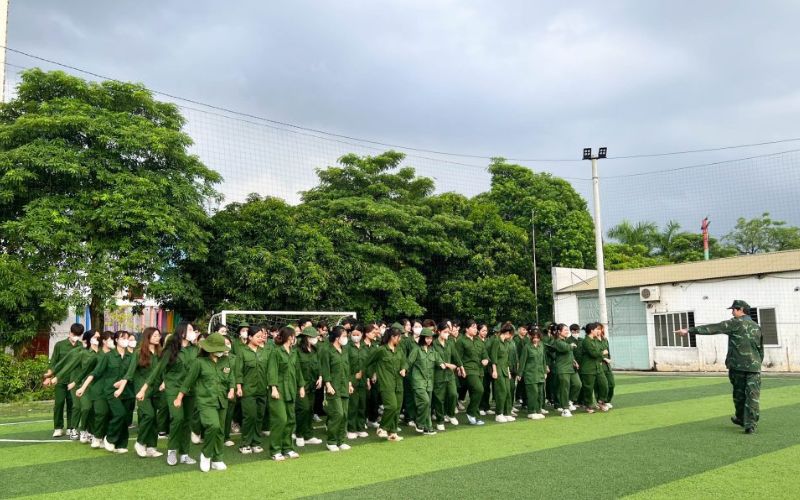
The subject equips students with basic knowledge about national defence and security
What does military study at university involve?
The National Defence and Security Education subject not only provides theoretical knowledge about national defence and security but also includes many basic military-practice contents. Students will be trained in the skills, discipline and qualities necessary to be ready to participate in tasks of protecting the Fatherland.
Basic theoretical knowledge
Students will study the foundational knowledge about national defence and security, including:
- Vietnamese military history: Understanding the development process of the army and the national defence strategies.
- The Military Service Law: Grasping the rights and obligations of citizens towards national defence.
- The State’s national defence policy: Understanding the strategy of protecting the country and the role of citizens in national security.
Military skills training
Students are trained in important and practical skills:
- Shooting skills: Guidance on using the submachine gun, aiming techniques and safety.
- Using military equipment: Operating the compass, communication devices and other military equipment.
- Tactical skills: Formation movement, defence, attack and teammate coordination.
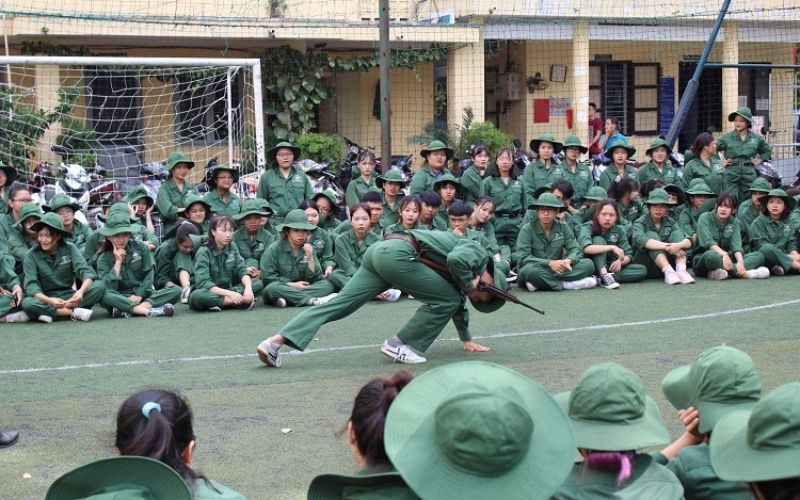
Students are trained in important and practical skills
>>>> UPDATE NOW: Tourism Marketing staff, latest update! A-Z details
Outdoor practical training
The practical part helps students train endurance and discipline. At HUFLIT, only students who fully complete the theoretical course unit are allowed to participate in intensive study at the NDSE Centre – Military School of Military Region 7.
- Formation drill orders: Lining up, moving according to orders and keeping discipline.
- Outdoor exercises: Participating in battle simulation to understand strategy and group coordination.
- Physical training: Running, overcoming obstacles and physical exercise, enhancing health and the spirit of readiness to face challenges.
Regulations on those exempted from or granted a temporary deferral of NDSE study
Not all students are required to participate in the National Defence and Security Education subject. Some special cases may be exempted from or granted a temporary deferral of military study if they meet the conditions according to the provisions of the law and are reviewed and confirmed by the University. Those exempted from or granted a temporary deferral of NDSE study include:
- Students with disabilities or health problems: Students with disabilities, chronic illnesses or insufficient physical conditions to participate in military-training activities may be considered for exemption. However, a confirmation from a competent medical authority is needed to prove the health condition.
- Students who have completed military service: Students who have participated in and completed military service or served in the armed forces according to regulations will be exempted from the NDSE subject.
- Students who are foreigners: According to regulations, international students studying at universities in Vietnam are not required to participate in the national defence and security education programme.
- Students in the temporary-deferral category: Some cases with special circumstances such as being treated for a long-term illness, having health difficulties or legitimate personal reasons may be considered for a temporary deferral of the NDSE subject according to the University’s regulations.
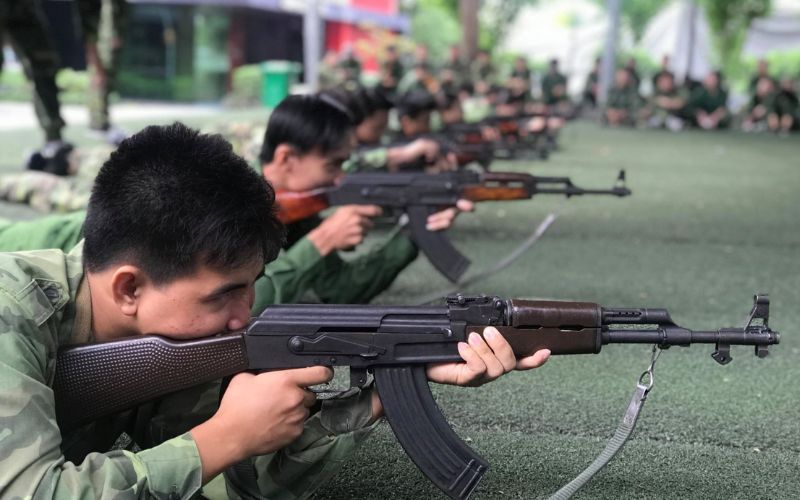
Some special cases may be exempted from or granted a temporary deferral of military study
>>>> CLICK NOW:Is military study mandatory? Latest information update
Benefits and challenges when studying military study at university
Military study at university is not only a mandatory course unit but also brings many memorable experiences to students. Besides the benefits in knowledge and skills, the study process also has some challenges that students need to mentally prepare for to adapt better.
Benefits
Military study helps students equip basic knowledge about national defence – security and enhance the citizen’s sense of responsibility towards the country. At the same time, the study process also helps students achieve the following benefits:
- Equipping knowledge about national defence – security: Students study the basic knowledge about the national defence and security of Vietnam as well as the regional and world context. This helps enhance awareness of the citizen’s responsibility in protecting the Fatherland.
- Training discipline and a spirit of responsibility: The military environment requires seriousness and high discipline, from the daily-routine schedule to the study manner. Thereby, students form the habit of being on time, working with a plan and being more responsible towards themselves as well as the collective.
- Developing life skills and soft skills: During the study process, students are trained in many skills such as teamwork, situation handling, communication and adapting to a new environment. These are useful skills for studying and future work.
- Strengthening health and physical fitness: The training, exercise and orderly-living activities help students improve physical fitness, enhance endurance and the ability to withstand.
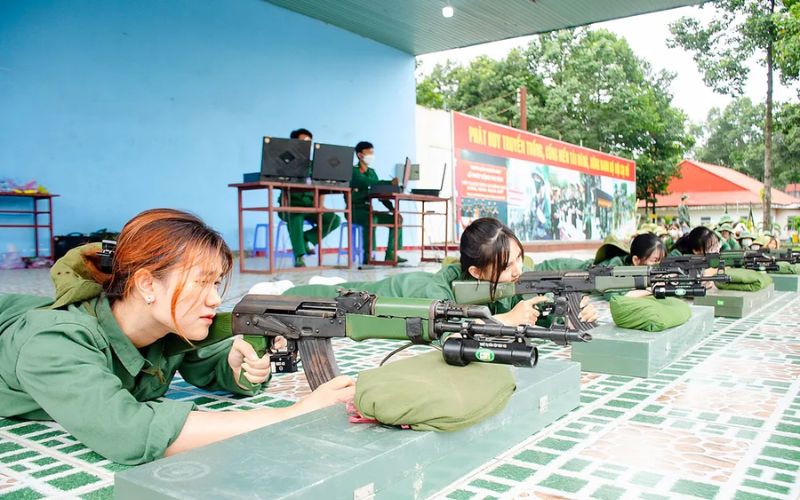
Students are taught basic knowledge about national defence
Challenges
Besides the benefits, military study also poses certain challenges for students, especially those not yet familiar with the disciplined environment. However, if well prepared in terms of mentality and health, students can completely adapt and get through this stage.
- A strict daily-routine schedule: Students must strictly comply with the schedule, from waking up early and training to participating in study sessions and collective activities. This can make many unfamiliar students feel quite pressured in the early days.
- Physical fitness requirements: Some practical content such as drill practice, marching or outdoor training can make students feel tired if not yet familiar with the intensity of exercise.
- Living conditions different from daily life: When studying military study intensively, students may have to board or live according to the training centre’s regulations. This requires the ability to adapt to a new environment and collective living.
>>>> SAVE NOW:Can you go home during military study at university? Advantages and notes
Experiences and advice to know when studying military study
For the military-study process to take place smoothly and bring many positive experiences, students can refer to some of the following experiences and advice.
Prepare mentally and physically before participating
Before starting military study, students should mentally prepare to be ready to adapt to the disciplined environment and new daily-routine schedule. Besides, doing gentle exercise, getting enough sleep and maintaining good health will help you easily participate in the practical activities during the study process.
Take advantage of the opportunity to learn new skills
Military study is not only an obligation but also an opportunity for students to learn many useful skills. You should proactively participate in collective activities, socialise with friends and learn additional skills such as teamwork, time management or situation handling.
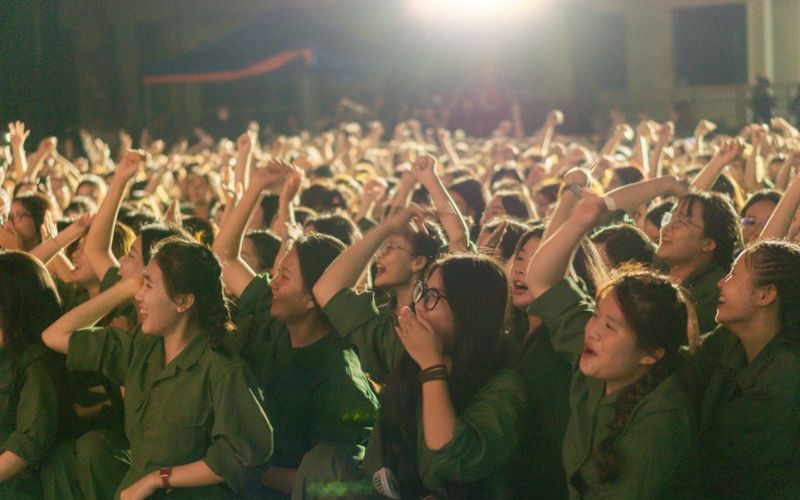
You should proactively participate in collective activities and socialise with friends
How to overcome difficulties during the study process
In the early period, students may encounter some difficulties when having to adapt to the disciplined environment and the intensity of activity. However, if you keep a positive spirit, proactively support each other and see this as a memorable experience, you will easily overcome these challenges and gain many meaningful memories during your university life.
Frequently asked questions about what military study at university involves
Many students usually wonder about the content and form of the National Defence and Security Education subject in the university programme. Let’s find out right away.
Does military study require boarding?
Whether to board or not depends on the organising form of each school. In many cases, the theoretical course unit can be studied online or at the school. The intensive practical sessions usually require students to stay in boarding for a short time to complete the military-training and -practice activities.
Do students studying military study have to fire real guns?
In the military-practice part, students may be guided in using the AK rifle. Depending on the training programme, students may fire live ammunition in a safe environment controlled by the centre, or use simulation to train safe and accurate skills.
How long does military study at university last?
The military-study time is usually from 3–4 weeks if studied intensively, or it can be interspersed by each session during the semester depending on the plan of each university. Students will complete both the theoretical and practical parts within this period.
The article has helped you learn about what military study at university involves. At the same time, you also grasp the benefits, challenges and experiences to prepare before participating in the course. Through that, students can fully complete the programme and receive the NDSE certificate effectively. If you have any other questions, contact HUFLIT for answers.
>>>> DON’T MISS THE USEFUL ARTICLES:
What is military study? 8 important notes students need to know
How much does the MOS certificate exam cost? Updated new exam fee
CONTACT INFO
Apply for admission at
tuyensinh.huflit.edu.vn
Find out information
huflit.edu.vn
Advising education enrollment