



-
Proud to be HUFLITers #07 | M.A. Tran My Uyen – A lectern where a teacher wishes only to “watch her children grow up”At the HUFLIT Faculty of Foreign Languages, M.A. Tran My Uyen (Vice Dean) goes by many names. Some call her “Ms My”; her students call her “mother”. Colleagues often compare her to Mother Au Co with a hundred children. Yet to become the “mother” of the lecture hall she is today, she went through a profound shift in thinking that completely changed a teaching philosophy built over more than 30 years.
-
New Cybersecurity Regulations: Opportunities for the Cybersecurity Field in the Digital EraThe new cybersecurity regulations taking effect on 1 July 2026 not only help complete the legal framework but also drive demand for talent in cybersecurity. This is also the moment when the discipline becomes a promising choice for young people who love technology and information security.
-
“GenZ Major Insights 2026” – Episode 9: Boundless Journeys with HUFLIT’s Tourism and Hospitality ProgramsMany students choose the Tourism and Hospitality field simply because they love to travel. But passion alone is not enough to pursue this field in the long run. What matters more is understanding the nature of the discipline, its professional requirements, and the qualities needed to grow in a professional service environment.
What Do Students Need to Do to Have a Job Upon Graduation: A Detailed Roadmap
NGÀY: 05/03/2026
Chia Sẻ Qua
Stage 1 (Year 1-2): Building the foundation
The first two years of university are the golden period for students to discover themselves, build a career foundation and shape their future clearly. This is also when you start accumulating experience for first-year students and building career orientation for students proactively and effectively.
Clearly determine goals and career orientation
Career orientation is the first and most important step in the journey of preparing for the future. According to research by the Vietnam Institute of Educational Sciences published in 2023, nearly 70% of first-year students do not yet have a clear orientation about their future career. This leads to many people studying the wrong field or losing time to find a suitable path.
To determine your career goal, you can apply career personality tests such as MBTI (Myers-Briggs Type Indicator) or the Holland model. In addition, you can also look for a mentor – those who have gone before in the profession you are interested in. They can share real-world experience and specific orientation for your career path.
In particular, HUFLIT regularly organises career-orientation consulting programmes, job fairs and talkshows with successful entrepreneurs exclusively for first- and second-year students. For example, the HUFLIT Career Fair – a job fair that helps students meet enterprises and explore career opportunities. In parallel is the HUFLIT Career Talks series with experts sharing real-world experience, along with the HUFLIT Mentoring programme that supports personalised orientation.
The school also has Internship Week, which helps students approach internship opportunities early and clearly understand enterprise needs. These activities bring a solid foundation for you to build a career plan right from the early years of university.
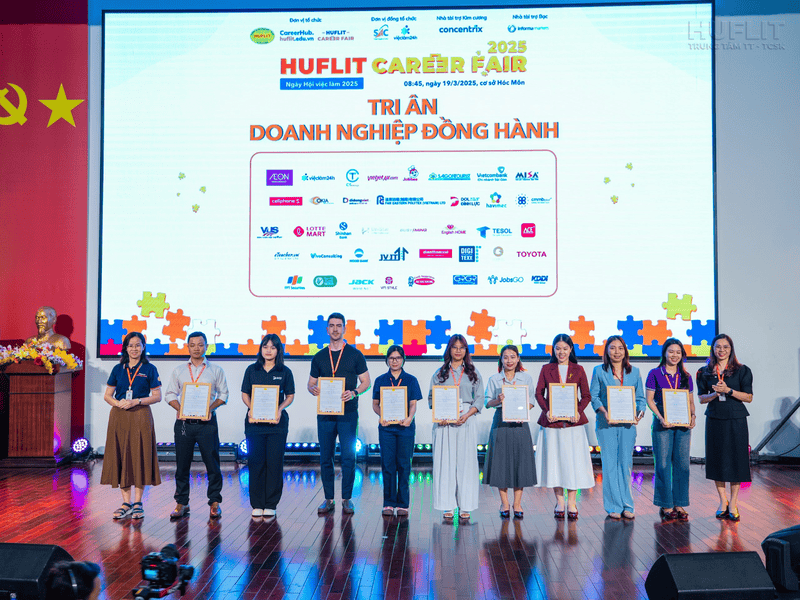
HUFLIT Career Fair helps students connect directly with enterprises and orient their careers early
>>>> FOLLOW MORE: Update the training programmes meeting the accreditation standard 2026
Focus on studying specialised subjects well and cultivating foreign languages
According to a LinkedIn survey on the Vietnamese labour market in 2024, 89% of employers highly value candidates with a GPA of 3.0 or higher and who hold international foreign-language certificates such as IELTS of 6.0 or TOEIC of 700 points. This figure was compiled by LinkedIn from analysing thousands of Fresher job postings in Vietnam.
GPA not only reflects the ability to absorb knowledge but also demonstrates your seriousness, discipline and time-management ability. For multinational corporations and large companies, a GPA of 3.2 or higher is usually one of the first profile-screening criteria. In the context of globalisation, proficient English communication has become a minimum requirement for most jobs.
With an in-depth training foundation in foreign languages combined with information technology, HUFLIT has built a modern learning environment where students develop both language capacity and technology-application skills simultaneously. HUFLIT students are trained in a multilingual environment with a team of native lecturers, modern equipment and internationally standard teaching methods.

A high GPA and international English certificates are a big advantage in Fresher recruitment
Actively participate in extracurricular activities and clubs
According to Coursera’s Global Skills Report 2024, 85% of employers believe that skills such as leadership, teamwork and communication greatly determine success at work. When joining clubs, you have the opportunity to train teamwork ability through coordinating event organisation, develop leadership thinking when taking on management positions, and enhance communication skills,…
At HUFLIT, students can join many outstanding academic and skill clubs such as the Music Club, HUFLIT Photography Club, HUFLIT Volunteer Club (HVC), Informatics Club or foreign-language clubs such as the Japanese Club and Chinese Club.
Notably, many HUFLIT clubs have achieved impressive results, such as the Volunteer Club standing out with the activity series “HUFLIT youth actively participate in volunteer activities 2025”. The Music Club also won the Gold Prize in the competition “50 years of pride in the heroic anthem”, helping students develop skills and add valuable achievements to their CV.

Soft skills greatly determine work effectiveness
>>>> QUICK CLICK: 5 ways to improve presentation skills effectively
Stage 2 (Year 3-4): Accumulating practical experience
The third and fourth years of university are a pivotal stage, when students need to transform theoretical knowledge into real-world experience. According to figures from the Ministry of Labour – Invalids and Social Affairs published in 2024, students with at least 6 months of internship experience are 3.2 times more likely to find a job than those without experience.
Seek internship opportunities right from year 3
To seek internship opportunities, you can use reputable recruitment websites such as TopCV, VietnamWorks, or LinkedIn. In addition, building a relationship network through networking and participating in job fairs organised by the school also opens up many valuable opportunities.
HUFLIT owns a widespread enterprise partner network with more than 200 domestic and foreign companies, creating favourable conditions for students to easily find reputable internships in the right specialisation. HUFLIT’s Enterprise Cooperation Centre regularly updates internship positions from partners, while also organising meetings between students and enterprises.
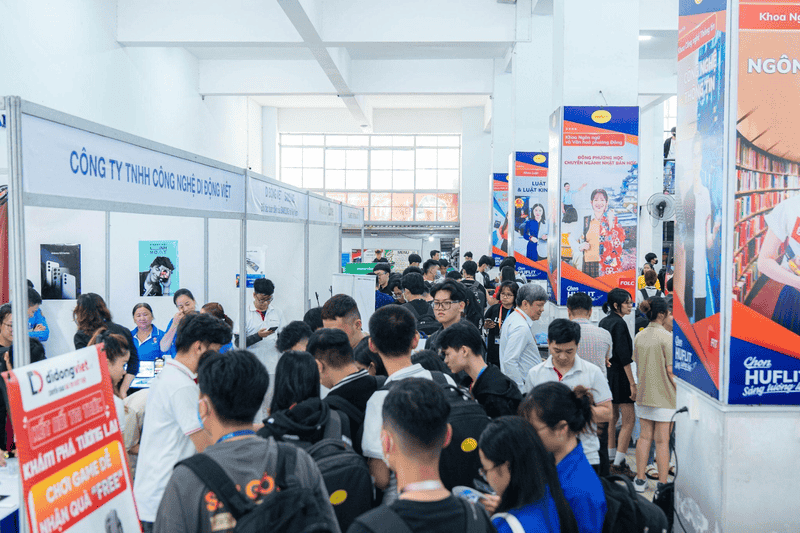
Find internships in year 3 through recruitment websites and HUFLIT’s enterprise partners
Build an impressive personal CV and Portfolio
According to research by Careerbuilder – one of the largest recruitment sites in the world, employers spend an average of only 6 seconds to look through a CV. Therefore, creating an impressive, clear and professional CV is extremely important. For students without experience, the CV should focus on the career objective, education, skills and the projects or activities participated in.
You can use online CV creation tools such as Canva, TopCV or free templates on Microsoft Word to design a professional CV. Along with that, HUFLIT regularly organises “CV Writing & Interview Skills” workshops guided by the Enterprise Cooperation Centre in coordination with recruitment experts from enterprises.
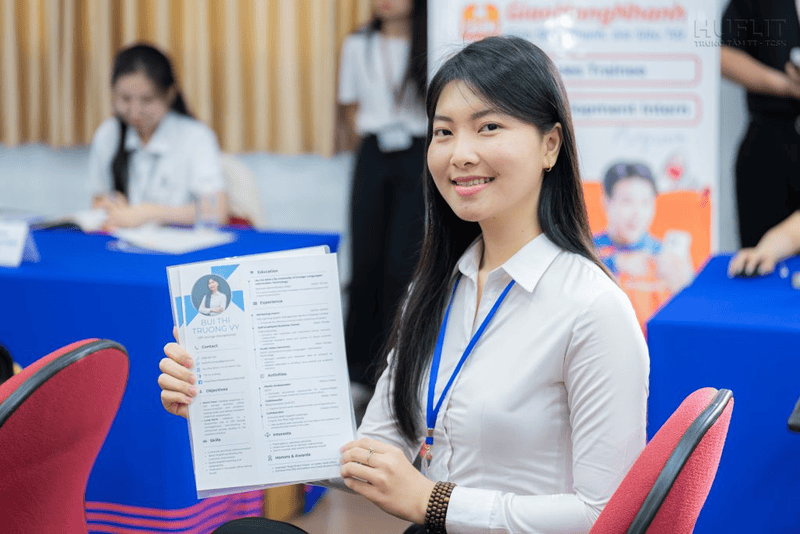
The CV needs to be clear, highlighting skills and projects suitable to the applied position
Proactively build a relationship network (Networking)
Effective networking starts with optimising your LinkedIn profile and joining specialised groups. You should actively attend industry events, seminars and workshops to meet people in the profession. At the same time, proactively connect with lecturers and alumni to receive advice and suitable opportunities. When you maintain these relationships sincerely, you will expand your network and increase your access to jobs.
HUFLIT is proud of its community of successful alumni working in many important positions in large companies both at home and abroad. The school also organises many connection activities such as “Alumni Talk”, “Career Day” or mentoring sessions, helping students learn from experience and expand their network right from the early years.
Equip the most important soft skills
According to the Future of Jobs Report 2023 by the World Economic Forum (WEF), soft skills continue to be among the most important criteria that employers look for. The most prominent are critical thinking, analysis and problem-solving ability in a fast-changing environment. Besides, communication, teamwork and leadership skills are also considered essential.
To develop these soft skills, you can take online courses, workshops, read specialised books, and most importantly practise regularly through group projects, extracurricular activities and internship work. Each real-world situation is a valuable opportunity to learn and train skills.

Soft skills such as critical thinking, communication and teamwork determine a student’s level of competitiveness
>>>> DO NOT SKIP: Personal financial management for students: The secret to planning
Stage 3 (After graduation): Preparing baggage for work
The “finishing” stage after graduation requires thorough preparation in both skills and psychology. This is when you officially enter the labour market as a candidate ready to contribute value to the enterprise.
Prepare thoroughly for interviews
The job interview is the most important step in the recruitment process, where you have the opportunity to demonstrate your capacity and convince the employer that you are the most suitable candidate. According to a Glassdoor survey – a platform with more than 60 million employee reviews, preparing well before the interview can increase the chance of success by up to 80%.
The interview preparation process should start with clearly researching the company, position and working culture. You need to practise common questions such as “Introduce yourself”, “Why do you want to work here?”, “What are your strengths and weaknesses?”… At the same time, prepare 2 – 3 questions for the employer to demonstrate initiative and interest.
Some tips to make a good impression such as arriving 10 – 15 minutes early, dressing neatly and professionally, keeping a confident sitting posture, making eye contact, speaking clearly and enthusiastically, bringing relevant documents (CV, certificates, portfolio), and sending a thank-you email after the interview. In particular, practise interviewing with friends or family to be more confident when facing real-world situations.
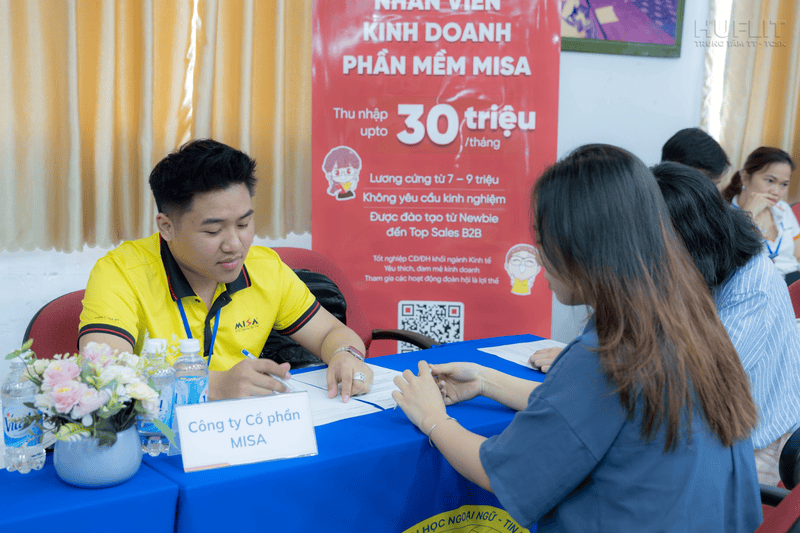
Preparing thoroughly before the interview, practising common questions and rehearsing will increase the chance of success by 80%
Build a personal brand on social media
In the digital age, a personal brand on social media plays an important role in making an impression on employers. According to statistics from the Society for Human Resource Management (SHRM) – the world’s largest professional organisation on human resource management with more than 300,000 members, 92% of employers use social media to search for and evaluate candidates before making a recruitment decision.
LinkedIn is an important platform for building a professional image, so optimise your profile with a neat profile photo, a clear headline and an About section that briefly tells your career story. With Facebook, although it is personal, you should still keep public content at a positive and professional level, limiting negative, controversial posts or inappropriate images.
Maintain an optimistic spirit and keep learning
According to research by the Institute of Labour Science and Social Affairs, fresh graduates on average must apply for 15 – 20 positions before receiving their first offer. Being rejected is completely normal and does not reflect your true value. When facing rejection, see it as a learning opportunity. Re-analyse the interview, identify points to improve, ask for feedback from the employer if possible, and continue to perfect yourself.
To enhance your competitive advantage, you can cultivate new knowledge through reputable training programmes. HUFLIT currently offers postgraduate programmes such as Master of English Language, Information Technology and Business Administration.
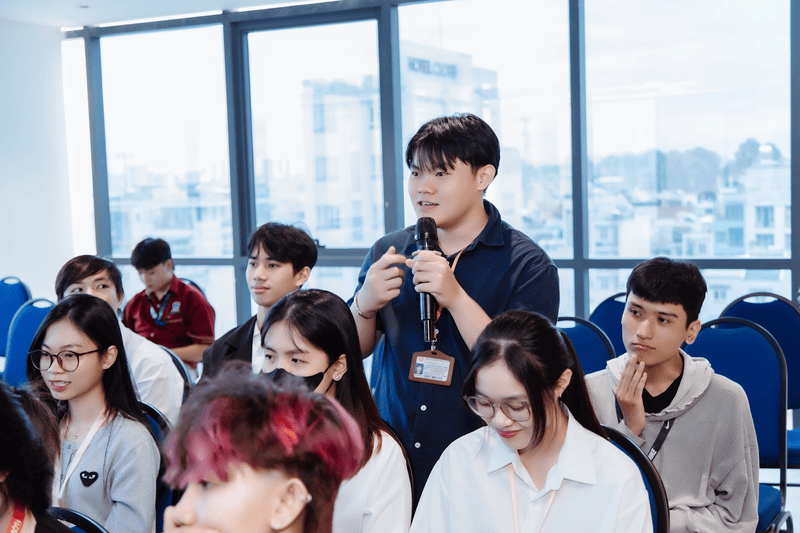
Learn from failure and participate in postgraduate programmes or short courses to enhance your advantage
FAQs – Frequently asked questions
This will be where you find brief, clear and practical answers to be more confident on the journey of studying and preparing for the future.
What should first-year students focus on most?
The first year is an important time to orient your career by learning about professions and taking personality tests. You should study general subjects well to build a solid foundation and maintain a high GPA. In parallel, join 1 – 2 clubs to train communication, teamwork and time-management skills.
Should you take a part-time job outside your field?
Students can completely take a part-time job outside their field if the work helps you train communication, situation-handling and time-management skills. However, prioritise jobs close to your specialisation when possible. From the third year onwards, you should focus on finding an internship in the right field to accumulate experience.
Is GPA really important when applying for a job?
GPA is important when you apply to large corporations or don’t have real-world experience yet. Many companies require a minimum GPA of 3.0–3.2 to screen profiles. Nevertheless, enterprises increasingly value soft skills and internship experience. A good GPA is an advantage but does not decide everything.
How does HUFLIT support students in finding jobs?
HUFLIT has an Enterprise Cooperation Centre that connects students with enterprises and organises job fairs. The school regularly opens workshops on CV, interviews and soft skills. Students also access internship opportunities thanks to a network of more than 200 partner enterprises. In addition, the mentoring programme supports career orientation from alumni.
What students need to do to have a job upon graduation lies in preparing early, accumulating skills and experience right during their studies. HUFLIT brings a learning environment, foreign languages and enterprise-connection opportunities that help students increase their competitive advantage. Proactively participate in activities, internships and perfect your professional profile, helping you be confident when entering the labour market.
>>>> SEE MORE RELATED ARTICLES:
Salary deals for fresh graduates: The secret to effective negotiation
CONTACT INFO
Apply for admission at
tuyensinh.huflit.edu.vn
Find out information
huflit.edu.vn
Advising education enrollment