



-
Proud to be HUFLITers #07 | M.A. Tran My Uyen – A lectern where a teacher wishes only to “watch her children grow up”At the HUFLIT Faculty of Foreign Languages, M.A. Tran My Uyen (Vice Dean) goes by many names. Some call her “Ms My”; her students call her “mother”. Colleagues often compare her to Mother Au Co with a hundred children. Yet to become the “mother” of the lecture hall she is today, she went through a profound shift in thinking that completely changed a teaching philosophy built over more than 30 years.
-
New Cybersecurity Regulations: Opportunities for the Cybersecurity Field in the Digital EraThe new cybersecurity regulations taking effect on 1 July 2026 not only help complete the legal framework but also drive demand for talent in cybersecurity. This is also the moment when the discipline becomes a promising choice for young people who love technology and information security.
-
“GenZ Major Insights 2026” – Episode 9: Boundless Journeys with HUFLIT’s Tourism and Hospitality ProgramsMany students choose the Tourism and Hospitality field simply because they love to travel. But passion alone is not enough to pursue this field in the long run. What matters more is understanding the nature of the discipline, its professional requirements, and the qualities needed to grow in a professional service environment.
What Do First-Year Students Need to Prepare? (2026 Checklist)
NGÀY: 23/02/2026
Chia Sẻ Qua
Mental & psychological preparation: the most important foundation
Psychological preparation is the first and most important part of what first-year students need to prepare when entering university. According to educational psychologists, mental preparation not only helps students through the initial period of anxiety but also builds a solid foundation for well-rounded development.
Redefine your academic and career goals
One of the most important things new students should do is set clear goals for all four university years. This includes setting a target GPA, identifying the skills to develop and the extracurricular activities to join. Understanding the major you have chosen is also vital — from career prospects and skill requirements to the direction the field is heading.
At universities such as HUFLIT, students receive career guidance from their very first year through in-depth workshops, meetings with business representatives and close advice from lecturers. This gives them a more realistic view of their career path, along with support in adjusting their academic goals to match their ability and future direction.

New students need to set the right academic and future career goals
>>>> SEE ALSO: How much do four years of university cost? A detailed A-to-Z guide
Build a mindset of independence and initiative
The biggest difference between school and university is the degree of autonomy. At university there is no form teacher issuing daily reminders and no fixed timetable running from morning to afternoon. Instead, students must manage their own time, study independently and take responsibility for their own results.
To build self-discipline, new students should start practising weekly study planning, setting personal deadlines for assignments and assessing their own progress. This not only speeds up adaptation to the new environment but also creates positive habits for life.

The degree of autonomy at university is considerable — you take responsibility for your own academic results
Academic preparation & study methods
Study methods at university also need to change fundamentally. Rather than simply taking notes and memorising as at upper-secondary level, students need to apply modern approaches such as Cornell note-taking, mind mapping and effective study groups.
Reading and researching course materials also becomes more important than ever. Unlike school textbooks designed for easy comprehension, university course books usually contain specialist knowledge and demand a strong capacity for independent research and analysis.
Research the curriculum and courses in advance
Before stepping into the lecture hall, studying the curriculum carefully gives students an overview and better preparation. Curricula are usually divided into different groups of courses: general education courses (providing foundational knowledge), disciplinary foundation courses (basic professional knowledge) and specialist courses (advanced knowledge).

Before starting, new students should study the programme curriculum carefully
>>>> CLICK TO SEE NOW: The latest list of universities admitting by academic transcript
Equip yourself with essential soft skills (foreign languages, IT, communication)
In the age of Industry 4.0, foreign language and IT skills are no longer an advantage but a basic requirement. Students need to invest time in improving their English and mastering basic office software such as Word, Excel and PowerPoint.
Communication skills also play an important role, from presenting to the class and group discussion to communicating with lecturers. Students should join clubs and extracurricular activities to practise these skills.
At HUFLIT in particular, with its strengths in Foreign Languages – Information Technology, students have an ideal environment in which to hone both skills through academic clubs and internationally aligned programmes, creating a significant competitive advantage in the labour market.

Soft skills such as IT, foreign languages and communication matter a great deal in a university environment
Financial preparation: managing your money wisely
Financial management is an important life skill within what first-year students need to prepare in order to become economically independent. Drawing up a monthly cost estimate gives students and their families a clear picture of the spending required.
Plan your spending and open a bank card
Budgeting skills should be formed from the very first days. Students should apply the 50-30-20 rule: 50% for essentials (food, accommodation, study), 30% for entertainment and shopping, and 20% for savings or contingency.
The main costs usually include:
- Tuition (VND 15–30 million per year depending on the major)
- Rented accommodation or dormitory (VND 1.5–3 million per month)
- Food (VND 2–4 million per month)
- Travel (VND 300,000–500,000 per month)
- Books and learning materials (VND 500,000–1 million per semester)
- Other personal expenses (VND 1–2 million per month)
Opening a bank account and getting an ATM card is also essential. Banks such as Vietcombank, BIDV and Techcombank usually offer student packages with low maintenance fees. When using an ATM card and mobile banking, students should protect their personal information and check their statements regularly.
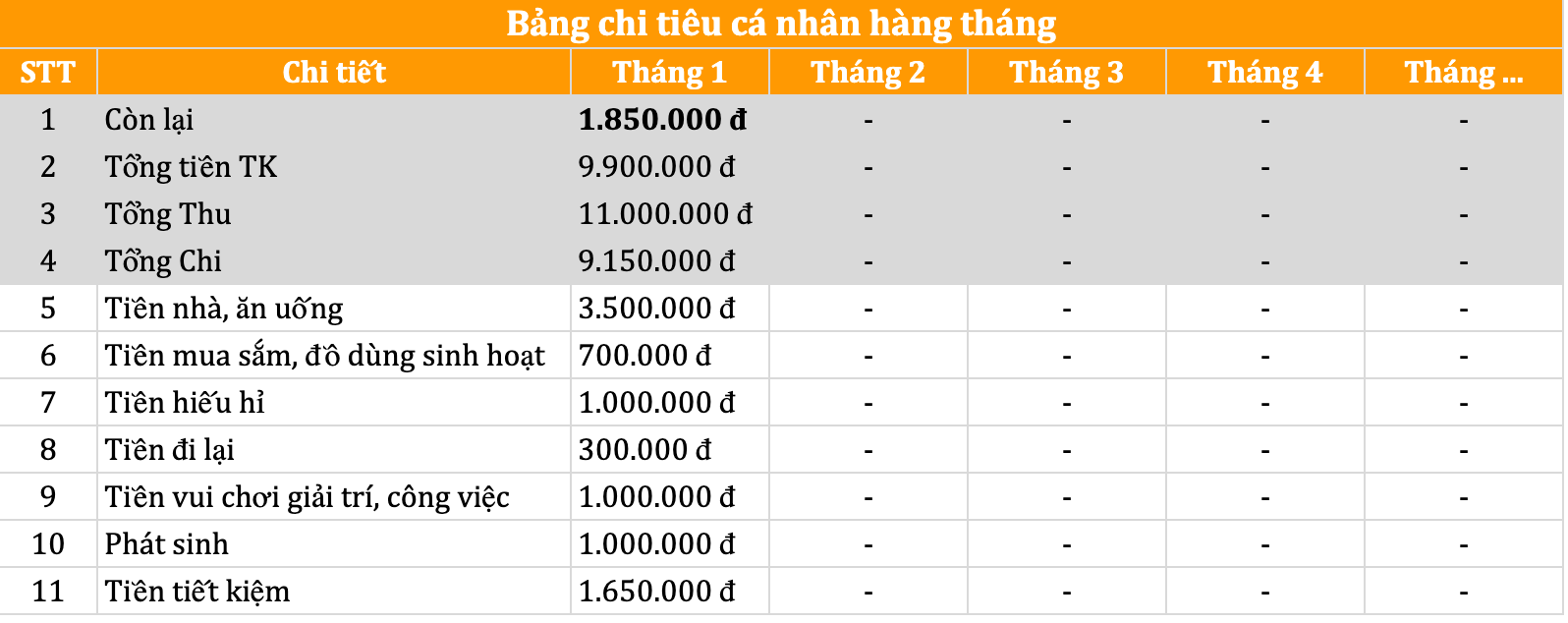
Plan your spending and open a bank account for convenient transactions
Should you take a part-time job?
Taking a part-time job in your first year is a decision that deserves careful thought. On the positive side, part-time work brings extra income, real-world experience and soft-skill development. However, it can also affect your studies, particularly in the first year while you are still adapting.
If you do decide to work, choose jobs with flexible hours such as tutoring, content writing or weekend part-time service work. Most importantly, you must keep study and work in balance and not let a part-time job harm your academic results.
Material essentials: a checklist of what to buy
Preparing the necessary material essentials is also an important part of what first-year students need to prepare. A detailed list helps you avoid missing anything important and avoid buying what you do not need.
Important enrolment documents
Your enrolment file is the first and most important thing to prepare. The list of documents usually includes:
- Letter of admission (original and 2 notarised copies)
- Upper-secondary graduation certificate or equivalent (original and 2 notarised copies)
- Upper-secondary academic transcript (original and 2 notarised copies)
- Citizen ID card (original and 4 copies)
- 3×4 photographs (about 10–15, ideally taken at the same time so they match)
- Birth certificate (notarised copy)
- Temporary residence certificate (if you are not registered locally)
An important note: prepare plenty of notarised copies for other procedures during your studies, such as scholarship applications, internships and job applications.

New students need to prepare their enrolment documents correctly and completely as required by the university
>>>> DON’T MISS: What majors are there in the social sciences? The top 9+ in-demand fields
Study equipment (laptop, phone, books)
A laptop is an indispensable study tool in the digital age. Choosing the right one depends on your major and how you will use it:
- Economics, management and languages: a light office laptop with good battery life such as the Dell Inspiron, HP Pavilion or Asus VivoBook (VND 12–18 million)
- IT and design: a powerful gaming laptop or workstation such as the Asus ROG, MSI Gaming or Dell XPS (VND 20–35 million)
- Engineering: a well-specified laptop able to run specialist software, such as the ThinkPad or Dell Precision (VND 18–30 million)
Students in IT and English Language at HUFLIT usually favour thin, light laptops with long battery life for easy travel and study, particularly when taking part in real projects and internships at businesses.
For books and stationery, you should prepare:
- A4 notebooks (3–5) and a small notebook for quick notes
- Ballpoint pens, pencils, highlighters, a ruler
- Folders and files for storing documents
- A handheld calculator (for majors with a lot of calculation)

Students need to prepare a full set of study equipment
Personal and household items (if renting or living in a dormitory)
For students living away from home in rented accommodation or a dormitory, preparing personal items is very important:
Clothing and personal items:
- Seasonal clothing, ideally easy to wash and quick to dry
- Sleepwear and underwear (at least a week’s worth between washes)
- Suitable footwear (trainers, indoor slippers, formal shoes if needed)
- A raincoat and umbrella (important in the rainy season)
Bedroom items:
- Blanket, sheets and pillow (bring them from home so they feel familiar)
- A mosquito net
- A laundry bag and clothes hangers
- A desk lamp and a portable power strip
Personal hygiene items:
- Toothbrush, toothpaste, shampoo, shower gel
- Bath towel and face towel
- Personal medicines (for stomach ache, colds and flu, vitamins)
Kitchen items (if you cook for yourself):
- A mini electric hob, a pot and a small pan
- Your own bowl, chopsticks and spoon
- Glasses and cups
- Food bags and storage containers

HUFLIT always supports and accompanies students throughout their studies
Frequently asked questions (FAQ)
Is the university timetable like upper-secondary school?
A university timetable is completely different from upper-secondary school. Instead of a fixed schedule from morning to afternoon, students have a flexible timetable by course, sometimes with gaps between sessions. Each course usually runs 2–3 periods a week, and students arrange their own personal study time.
How do you sign up for a club at university?
Universities usually hold a club fair at the start of the academic year to showcase their activities. Students can find information on the university website and club fan pages, or contact the committees directly. Joining a club helps develop soft skills and widen your network.
How is university tuition paid?
Tuition is usually paid by semester or by academic year, depending on each university’s regulations. Some universities allow monthly payment to ease the financial burden on students. It is worth researching the payment options and the university’s financial support policies carefully.
Dormitory or private rental?
This decision depends on several factors. Dormitories are cheaper, secure, close to campus and make it easy to meet people. Renting privately offers more personal space and greater freedom in daily life. Students should weigh this up against their finances and personal needs.
What do first-year students need to prepare for a successful start? As set out in detail above, preparation needs to be comprehensive, covering mindset, study methods, finances and material essentials. With thorough preparation, you will step into university life with confidence, enjoy wonderful experiences and achieve the results you are aiming for.
>>>> SOME RELATED ARTICLES:
Does an IELTS certificate earn you bonus points in university admission?
Tips for choosing a university in 2026: a detailed A-to-Z guide
CONTACT INFO
Apply for admission at
tuyensinh.huflit.edu.vn
Find out information
huflit.edu.vn
Advising education enrollment