



-
Proud to be HUFLITers #07 | M.A. Tran My Uyen – A lectern where a teacher wishes only to “watch her children grow up”At the HUFLIT Faculty of Foreign Languages, M.A. Tran My Uyen (Vice Dean) goes by many names. Some call her “Ms My”; her students call her “mother”. Colleagues often compare her to Mother Au Co with a hundred children. Yet to become the “mother” of the lecture hall she is today, she went through a profound shift in thinking that completely changed a teaching philosophy built over more than 30 years.
-
New Cybersecurity Regulations: Opportunities for the Cybersecurity Field in the Digital EraThe new cybersecurity regulations taking effect on 1 July 2026 not only help complete the legal framework but also drive demand for talent in cybersecurity. This is also the moment when the discipline becomes a promising choice for young people who love technology and information security.
-
“GenZ Major Insights 2026” – Episode 9: Boundless Journeys with HUFLIT’s Tourism and Hospitality ProgramsMany students choose the Tourism and Hospitality field simply because they love to travel. But passion alone is not enough to pursue this field in the long run. What matters more is understanding the nature of the discipline, its professional requirements, and the qualities needed to grow in a professional service environment.
What Do Artificial Intelligence Graduates Do? What Is the Salary?
NGÀY: 03/03/2026
Chia Sẻ Qua
Applications of artificial intelligence today
Artificial intelligence (AI) has become an important part of many areas of life and business, helping to automate processes, analyse data intelligently and enhance work efficiency. The outstanding applications of AI today clearly reflect the potential and wide-ranging influence of this technology:
AI in Healthcare
Artificial intelligence is contributing to raising healthcare quality by supporting early disease diagnosis through the analysis of medical data and images, helping doctors make faster and more accurate decisions. In addition, AI also supports personalised treatment, building suitable treatment protocols for each patient, thereby increasing treatment effectiveness and reducing risks.

AI helps enhance accuracy in diagnosis and personalise treatment in healthcare
AI in Finance – Banking
AI helps financial institutions detect fraud, manage risk and assess customer creditworthiness faster and more accurately. At the same time, this technology also supports smart financial and investment advice based on the analysis of market data and each customer’s needs.
AI in Traffic and Transport
AI contributes to enhancing traffic safety and efficiency through self-driving vehicles and smart coordination systems. In addition, AI also optimises routes, manages public transport and supports automated delivery, helping to save time and reduce congestion.

AI optimises traffic and transport, enhances safety, saves time and energy
>>>> SEE RIGHT HERE: Should you study the artificial intelligence field? Work opportunities & Government goals
AI in Manufacturing and Industry
AI plays an important role in manufacturing automation, helping robots and smart systems perform assembly, quality inspection and packaging with high precision. This technology also analyses data to detect problems early, optimise processes and reduce waste. Thanks to this, enterprises enhance productivity, save costs and increase competitiveness.
AI in Commerce and Services
In commerce – services, AI helps personalise the customer experience through analysis of shopping behaviour and needs. Chatbots and virtual assistants support consulting and customer care 24/7, enhancing satisfaction. At the same time, AI also optimises logistics, tracks orders and improves delivery efficiency.

AI enhances the customer experience and optimises processes in commerce, services and logistics
AI in Education
AI is innovating education through smart learning systems, helping to personalise content according to each learner’s capacity and progress. This technology analyses learning data to suggest lessons, materials and timely feedback. Thanks to this, learning becomes more flexible, effective and accessible in the digital environment.
What do artificial intelligence graduates do?
Artificial intelligence (AI) is reshaping the future of every industry. With the outstanding development of technology, the demand for recruiting AI personnel in Vietnam and globally is growing strongly. So after studying the artificial intelligence field, what do you do? Below are 7 promising careers:
AI Developer
The AI Developer is responsible for designing and deploying artificial intelligence applications in reality, from chatbots, image recognition systems to smart automation solutions. They work with popular artificial intelligence development platforms such as TensorFlow (Google’s machine learning library) and PyTorch (the deep learning library developed by Meta), the Python programming language,…
At HUFLIT, students are equipped with knowledge from basic to advanced about machine learning, deep learning, image processing, natural language processing (NLP) and artificial neural networks. Besides theory, students also practise on real-world projects and are connected with the network of enterprise partners right from their time at school.
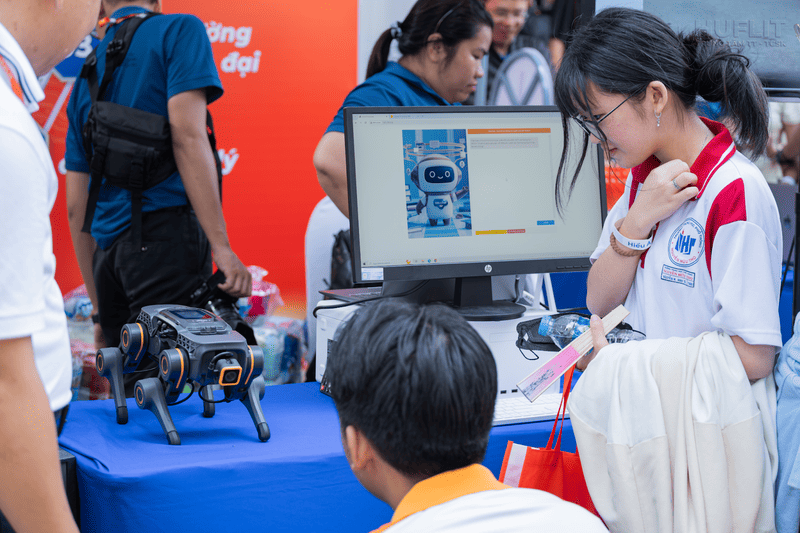
HUFLIT equips AI knowledge and practice, connecting students with enterprises right from their studies
Data Scientist
The Data Scientist applies statistics, machine learning and AI to analyse big data, thereby detecting important trends and insights. In the context of digital transformation, this role is increasingly valued by enterprises to support strategic decision-making. At HUFLIT, AI students are equipped with a data science, applied statistics and big data foundation in a methodical way.
Especially in September 2025, the school cooperated with Yuan Ze University (YZU) to organise the specialised report “AI – A More Realistic Review” at HUFLIT, bringing students a multidimensional and scientific view of the real-world impact of AI in life today.
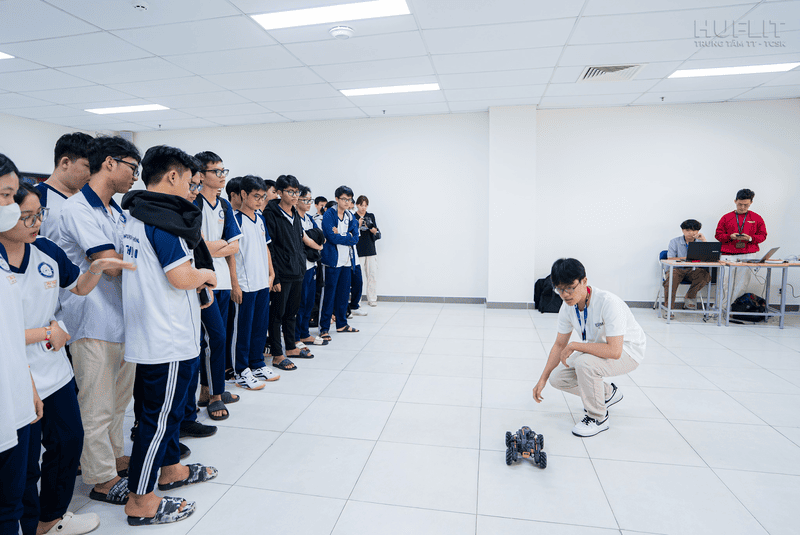
HUFLIT brings students the opportunity for real-world experience through projects and international cooperation programmes
>>>> SEE IN DETAIL: Should you study software engineering or artificial intelligence – [Answer]
AI Cybersecurity Expert
Faced with the rapid increase in network threats, the AI cybersecurity expert becomes the “shield” protecting data and information systems. They develop smart security solutions, applying artificial intelligence to identify and prevent complex attacks, while the system has the ability to self-learn and adapt to new dangers.
The application fields include banking, finance, government agencies and technology corporations. At HUFLIT, the AI training programme not only equips programming and application development skills but also focuses on security and AI ethics. Students learn how to protect information, build safe AI systems and meet the demand for highly specialised human resources in the cybersecurity field.
Data Engineer
The data engineer is the person who designs and manages data infrastructure, creating pipelines to collect, process and store big data, helping turn raw data into valuable information for AI models and advanced analysis. They are an important bridge between data and practical AI applications. The work usually includes designing databases, building data pipelines, and optimising information-processing performance.
At HUFLIT, students are trained in knowledge of databases, big data processing (Big Data), cloud computing and modern technologies in data engineering. Through modern laboratories and cooperation projects with enterprises, students have the opportunity for real-world experience with large-scale data systems, preparing firmly for the labour market.

HUFLIT equips students to practise with big data and modern technology for the data engineer profession
Strategic Consulting
The AI strategic consultant helps enterprises identify opportunities to apply artificial intelligence and deploy this technology effectively into business operations. They assess AI potential, build a digital transformation roadmap and advise on technology investment suitable to the enterprise’s goals.
At HUFLIT, students are not only equipped with solid AI technical knowledge but also train strategic thinking, soft skills and the ability to apply AI in business through workshops, extracurricular activities and exchange sessions with enterprises. The school regularly organises sharing sessions from experts on AI trends, helping students expand diverse career opportunities.
Natural Language Processing Expert
The NLP expert develops systems that allow computers to understand, analyse and process human language. Common applications include chatbots, translation tools, sentiment analysis and virtual assistants, creating smart and personalised user experiences.
At HUFLIT, students study in-depth subjects on NLP, deep learning and modern AI techniques, while also practising building real-world NLP applications and researching Vietnamese-language processing, meeting the demand of the domestic market.

HUFLIT equips students with NLP knowledge and practice to apply AI in language processing and real-world product development
Machine Learning Engineer
The Machine Learning engineer is responsible for designing, training and deploying machine learning models to solve practical problems in business and technology. They work with ML algorithms, deep learning, model optimisation and bringing these models into the production environment (production).
The important skills include machine learning algorithms, deep learning, model optimisation and MLOps. At HUFLIT, the training programme is always updated according to the latest technology trends. Students learn from basic to advanced algorithms, exploring deeply into deep learning and popular frameworks.
AI Teaching and Training
At HUFLIT, students not only train technical skills but also develop the ability to convey information through mentoring activities for lower cohorts, participating in the AI club and presenting projects. Outstanding students also have the opportunity to become teaching assistants, accumulating teaching experience in parallel with studying.
In particular, HUFLIT organises specialised seminars such as “Creativity in Business: AI Tools & Techniques for Success” (Creativity in business: AI tools and techniques for success) and “AI for Academia: Enhancing Research, Writing & Teaching” (AI for academia: enhancing research, writing and teaching), helping students expand their perspective, enhance the ability to apply AI in many fields and prepare readily for a diverse working environment.

HUFLIT equips AI skills and teaching experience through mentoring, clubs and specialised seminars
>>>> SEE INFORMATION: What do software engineering graduates do? Which direction is suitable
What is the salary of the artificial intelligence field today?
The artificial intelligence field has a very high demand for human resources, accompanied by an attractive salary. In Vietnam, the salary in the AI field ranges from 15 million – 500 million VND per month, with large enterprises such as VIN AI, Viettel AI, VNPT AI, FPT and Bosch Software leading in recruitment.
In the international market, according to Glassdoor (an online job and company review platform), the average salary for AI positions is around 112,132 USD/year, while Datamation (a technology news site specialising in data and programming) records the income of AI programmers from 100,000 to 200,000 USD/year. In particular, AI engineers have an average income of around 171,715 USD, with those at the top of the income scale able to exceed 300,000 USD/year, reflecting an extremely attractive career potential.
Some frequently asked questions about artificial intelligence
The artificial intelligence field is increasingly becoming an attractive choice with many career opportunities and high development potential. Below are some frequently asked questions to help you understand better about studying and working in the AI field:
Is it easy to find a job in the AI field?
Career opportunities in the AI field are very wide open. Due to the shortage of high-quality human resources, graduates can find jobs at technology companies, start-ups, banks, the finance and healthcare sectors or research organisations. Moreover, AI is a continuously innovating field, giving learners many opportunities to test themselves with real-world projects right after graduation.
What skills do you need to study artificial intelligence?
To study AI effectively, you need a solid mathematical foundation, programming skills, data analysis ability and logical thinking. In addition, creativity in problem-solving is also very important, helping you design effective and practical AI solutions.
Do you need to be good at Maths to study AI?
Maths, probability, statistics and algorithms are important foundations for understanding and deploying AI models. At HUFLIT, the teaching-assistant model where students who study well guide those who still face difficulties creates an even learning environment and helps all students firmly grasp the knowledge.
What do artificial intelligence graduates do is a question that many people are interested in. This field opens up diverse career opportunities from AI development, data, cybersecurity to consulting and teaching. along with a modern training programme, a practice system and a wide-ranging partner network, HUFLIT equips students with a solid foundation to apply AI effectively in many fields, while also creating a firm stepping stone for a future career.
>>>> READ MORE GOOD ARTICLES:
Is software engineering hard? A detailed answer 2026
Software Engineering and Information Technology: Differences & Opportunities
CONTACT INFO
Apply for admission at
tuyensinh.huflit.edu.vn
Find out information
huflit.edu.vn
Advising education enrollment