


-
Proud to be HUFLITers #07 | M.A. Tran My Uyen – A lectern where a teacher wishes only to “watch her children grow up”At the HUFLIT Faculty of Foreign Languages, M.A. Tran My Uyen (Vice Dean) goes by many names. Some call her “Ms My”; her students call her “mother”. Colleagues often compare her to Mother Au Co with a hundred children. Yet to become the “mother” of the lecture hall she is today, she went through a profound shift in thinking that completely changed a teaching philosophy built over more than 30 years.
-
New Cybersecurity Regulations: Opportunities for the Cybersecurity Field in the Digital EraThe new cybersecurity regulations taking effect on 1 July 2026 not only help complete the legal framework but also drive demand for talent in cybersecurity. This is also the moment when the discipline becomes a promising choice for young people who love technology and information security.
-
“GenZ Major Insights 2026” – Episode 9: Boundless Journeys with HUFLIT’s Tourism and Hospitality ProgramsMany students choose the Tourism and Hospitality field simply because they love to travel. But passion alone is not enough to pursue this field in the long run. What matters more is understanding the nature of the discipline, its professional requirements, and the qualities needed to grow in a professional service environment.
What Careers Does Multimedia Communications Lead To? Job Opportunities 2026
NGÀY: 03/03/2026
Chia Sẻ Qua
What careers does the Multimedia Communications field lead to?
The multimedia communications field opens up many diverse career opportunities, from creating digital content to managing professional communication campaigns. Below are some main positions and areas that students can pursue:
Graphic Design and Digital Content (Graphic & Digital Design)
Graphic design and digital content focus on creating visual products such as logos, posters, banners and communication publications, web/app graphics on digital platforms. People working in this field need to be proficient in popular design software such as Photoshop, Illustrator or Canva, while also possessing creative thinking and good aesthetics.
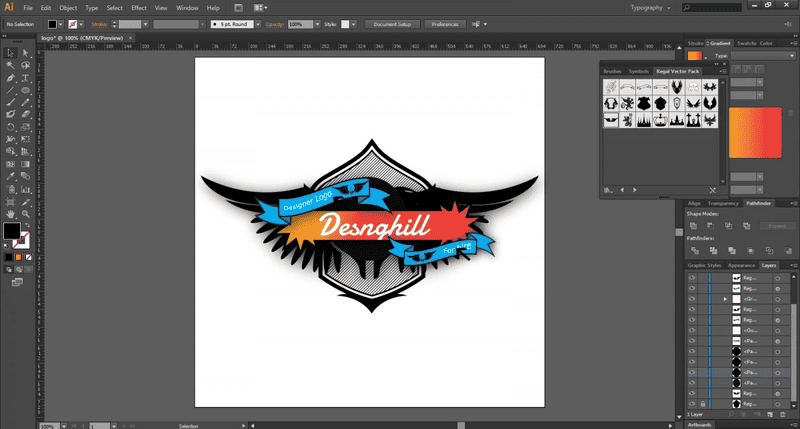
Graphic design and digital content create products such as logos, posters, banners and communication publications
Video Production and Post-production (Video Production & Editor)
In the multimedia communications field, the video production and post-production position focuses on tasks such as filming, editing and adjusting video, post-production processing,…. To do well in this role, you need to be proficient in film-editing software such as Premiere, After Effects or Final Cut, while also having storytelling thinking and basic filming knowledge. Thanks to this, you can apply it effectively in content, advertising and content production for platforms.
User Experience Design (UX/UI Design)
UX/UI Design is a field that focuses on creating website and application interfaces, bringing a smooth experience for users. The work includes building wireframes (sketches), prototypes (models) and continuously improving the design based on real-world use. At the same time, UX/UI workers also need to proficiently use tools such as Figma, Adobe XD or Sketch.

UX/UI Design focuses on creating website interfaces, proficient in tools such as Figma, Adobe XD
>>>> EXPLORE IN DETAIL: The secret to choosing a university 2026: A detailed guide from A-Z
Communication and Marketing Management (Content Creator/Social Media Manager)
Communication and marketing management focuses on creating digital content and managing online channels such as social media and websites. The work includes building and deploying communication plans and marketing campaigns suitable to brand goals. This profession requires content writing skills (copywriting), using social media management tools and knowing how to analyse data, applying it in digital marketing and brand building.
Event Organisation and Promotional Communication (Event Management)
The work of this profession includes coming up with ideas, planning, coordinating offline or online organisation and event PR. To do it well, you need project management skills, effective communication and detailed planning. Thanks to the ability to manage budgets and coordinate many stakeholders, this field is widely applied in marketing events, enterprise PR, seminars and exhibitions.
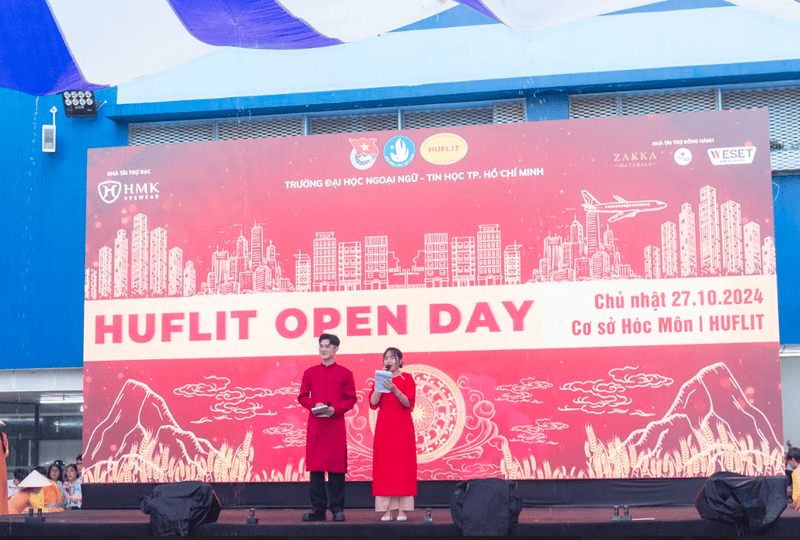
Event organisation and promotional communication coordinate offline or online organisation and event PR
Skills needed in the multimedia communications field
The multimedia communications field requires learners to also possess many important soft skills and supporting skills. Some skills needed include:
Creativity and aesthetic thinking (Aesthetic Sense)
The multimedia communications field requires you to have creative thinking, the ability to sense colour, layout and harmonious design. This helps you apply it effectively in graphic design, video production, UX/UI or marketing content.
Studying at HUFLIT, students will be trained with many practical projects and workshops that help aesthetic thinking and content creation right from the first year. The programme focuses on practice in studios, film-editing and graphics rooms together with experienced lecturers, helping students learn to apply knowledge to real-world products.
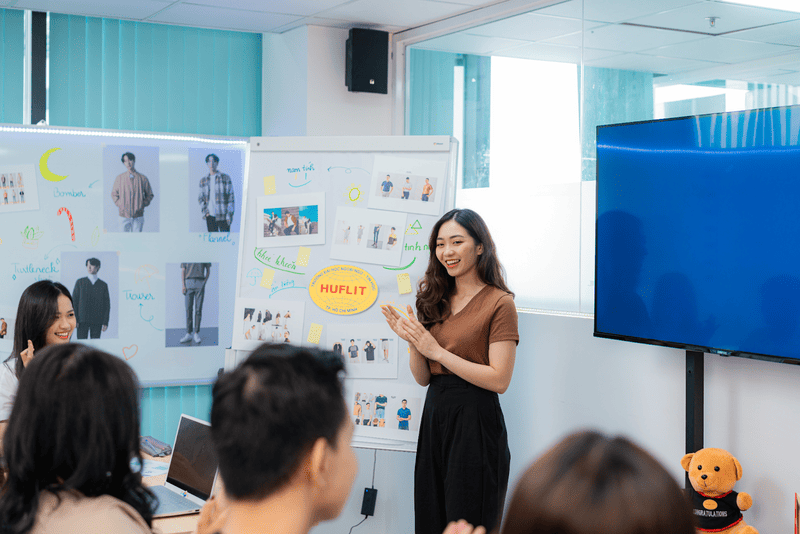
The multimedia communications field requires having creative thinking and aesthetic thinking
The ability to self-learn and update new technology (AI, new Tools)
When studying this field, you always need to self-learn and keep up with the development pace of new tools and software such as Photoshop, Figma, Premiere or AI applications supporting content creation. This helps you optimise the production process and enhance the quality of creative products on modern digital platforms.
HUFLIT encourages students to study by the project-based learning method (learning through real-world projects), participating in communication projects, workshops and talkshows. From there, students proactively learn and apply new technology in studying. In addition, some programmes such as HUFLIT Career Bootcamp and Career Talks No. 24 with the theme “NextGen Careers: Taking off with AI” help students directly approach AI trends and expand career opportunities.
Time management skills and the ability to withstand pressure (Deadline)
During the process of studying and working, students need to divide time reasonably, manage projects and complete tasks on time, especially when working in teams or organising events. This skill helps students both complete work progress and ensure product quality when there are many deadlines and pressure.
At HUFLIT, students train time management skills through study and extracurricular activities such as the workshop “Time management skills – THE TIME ZONE”. Experts will guide methods of planning, personal scheduling and optimising the study time budget, helping students learn to prioritise important tasks and not miss deadlines.
The salary and job opportunities of the multimedia communications field
The multimedia communications field has many job positions with different salaries depending on role, experience and level. According to VietnamWorks (a prestigious and leading job recruitment site in Vietnam with over 22 years of operation), the average salary of this field ranges from 8-30 million/month. Specifically, let’s look at the reference salary table for the positions in this field.
| Position | Reference salary |
| Graphic Designer (Graphic design) | 8,000,000-18,000,000 VND |
| Video Editor (Video editing specialist) | 8,000,000-15,000,000 VND |
| Multimedia Designer (Multimedia design) | 8,000,000-22,000,000 VND |
| UI/UX Designer (UI/UX design) | 8,000,000-25,000,000 VND |
| Content Creator (Content creator) | 8,000,000-30,000,000 VND |
| Event Manager (Event manager) | 10,000,000-30,000,000 VND |
The multimedia communications field has clear career prospects in the context of strong digitalisation. You can start with positions from Junior (staff) → Senior (senior) → Team Lead (team leader) → Creative Director (creative director). In particular, advancement opportunities will expand as you accumulate real-world experience, manage projects and firmly grasp new technologies.
Currently, with the strong development of digital marketing and online communication, the demand for this human resource is increasingly high, creating many career opportunities in the future. Besides, many positions allow remote work, freelance (freelance) or cooperation with foreign companies to further enhance skills.
>>>> UPDATE NOW: Guidance on choosing university aspirations 2026 smartly (A-Z)
Why should you study Multimedia Communications at HUFLIT?
The multimedia communications field at HUFLIT is built following a practical orientation, keeping up with the digital communication trends of the current market. Below are the outstanding reasons that make HUFLIT a suitable choice for Gen Z:
A training environment “standard” for Gen Z
At HUFLIT, students are in a modern practice environment with a dedicated studio, film-editing room and graphics room fully equipped with premium equipment right from the first year. Thanks to this, learners quickly get acquainted with and practise professional skills to real-world standards. At the same time, the programme is designed to combine communication – technology – design, creating conditions for Gen Z to develop creative thinking and use digital technology during the study process.
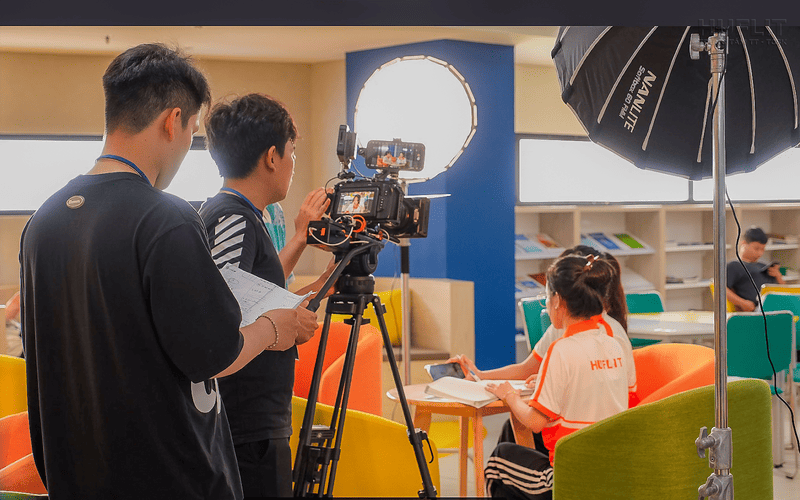
Dedicated studio, film-editing room and graphics room, fully equipped and modern
The foreign-language advantage in the digital communication era
Communication students at HUFLIT are equipped with foreign languages and an international learning environment while still on the lecture hall, helping them confidently communicate and present in English with multimedia projects. Moreover, thanks to “global classes” with international students and exchange programmes or international semesters, students train foreign languages, opening up opportunities to work at international Agencies or participate in global projects.
In addition, HUFLIT has many foreign-language clubs such as the English Club (7SEC), Korean Club, Japanese Club and Chinese Club, helping students train listening – speaking – reading – writing skills. Besides, students also have the opportunity to participate in events, academic programmes and cultural exchanges such as Language Melody, exchange sessions with international students, helping to expand their language vocabulary and cultural understanding.
Enterprise connection and a wide-ranging partner network
At HUFLIT, the school also connects students and enterprises, creating a practical bridge while you are still on the lecture hall. Some activities such as the Job Fair, HUFLIT Internship Week,…. with over 1,000 internship and job opportunities, help students work at large communication corporations.
Besides, HUFLIT also maintains cooperative relationships with many enterprise partners, expanding internship opportunities for students. Participating in programmes such as career talks or using CareerHub helps students easily search for suitable career opportunities early, preparing well for the working environment after graduation.
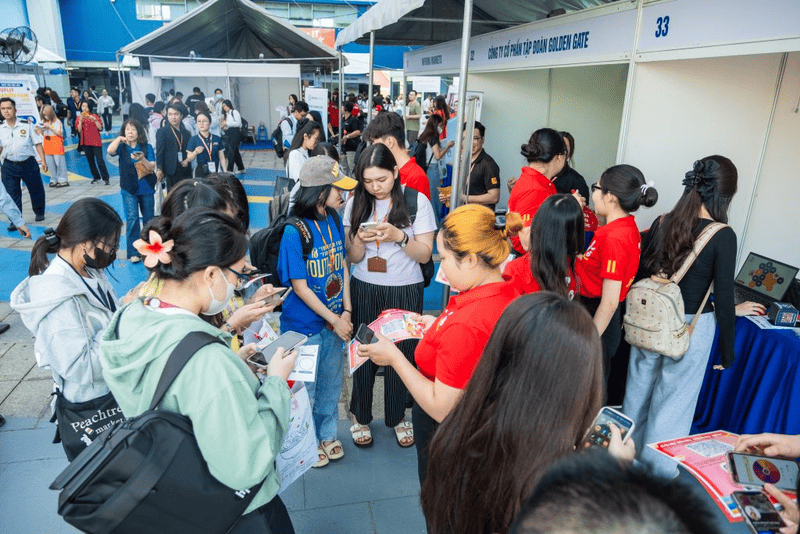
A strong connection between students and enterprises, creating a practical bridge while you are still on the lecture hall
>>>> SEE MORE:5 steps to choosing a suitable career A-Z in 2026
Some common questions about the multimedia communications field
Is multimedia communications hard to study?
The multimedia communications field is not too hard in terms of theory, but requires a lot of practice, constant creativity and technology updating, so if you are not used to practice and time management, it is easy to feel pressure during the study process.
Can people who are not good at design study it?
Yes. Because the training programme will teach you from basic knowledge of design and graphic tools to systematic digital content production skills. However, you also need to learn, practise regularly and train creative thinking, and you will still keep up and develop well during the process of studying and working later.
At HUFLIT, the training programme is built following a practice – project direction, helping students get acquainted with design, content production, filming-editing and post-production under the guidance of lecturers. The courses combine theory and practice, so students will gradually firmly grasp the tools and develop creative capacity even from the beginning.
Which subject combinations does the Multimedia Communications field examine and what are the benchmark scores?
At HUFLIT, the benchmark score is 17 points for the National High School exam and 20 points for academic transcript review (in 2025) and a competency assessment score of 600. The admission combinations are A01 (Maths, Physics, English), D01 (Literature, Maths, English), D14 (Literature, History, English) and D15 (Literature, Geography, English), in which the English subject is usually multiplied by a coefficient of 2 (especially for D14, D15).
The above is information that helps answer more clearly the question of what careers multimedia communications leads to, as well as the job positions and development opportunities in this field. With high creativity, continuous technology application and large human-resource demand, this field of study is opening up many attractive directions for young people. If you are looking for a practical, dynamic training environment rich in development opportunities, HUFLIT is a choice worth considering.
>>>> SEE MORE RELATED ANALYSES:
Should you study marketing or multimedia communications?
What field is management information systems? Job opportunities
CONTACT INFO
Apply for admission at
tuyensinh.huflit.edu.vn
Find out information
huflit.edu.vn
Advising education enrollment