


-
Proud to be HUFLITers #07 | M.A. Tran My Uyen – A lectern where a teacher wishes only to “watch her children grow up”At the HUFLIT Faculty of Foreign Languages, M.A. Tran My Uyen (Vice Dean) goes by many names. Some call her “Ms My”; her students call her “mother”. Colleagues often compare her to Mother Au Co with a hundred children. Yet to become the “mother” of the lecture hall she is today, she went through a profound shift in thinking that completely changed a teaching philosophy built over more than 30 years.
-
New Cybersecurity Regulations: Opportunities for the Cybersecurity Field in the Digital EraThe new cybersecurity regulations taking effect on 1 July 2026 not only help complete the legal framework but also drive demand for talent in cybersecurity. This is also the moment when the discipline becomes a promising choice for young people who love technology and information security.
-
“GenZ Major Insights 2026” – Episode 9: Boundless Journeys with HUFLIT’s Tourism and Hospitality ProgramsMany students choose the Tourism and Hospitality field simply because they love to travel. But passion alone is not enough to pursue this field in the long run. What matters more is understanding the nature of the discipline, its professional requirements, and the qualities needed to grow in a professional service environment.
Tips to Learn Japanese Quickly Without Having to “Cram”
NGÀY: 01/04/2026
Chia Sẻ Qua
The 15 most effective tips to learn Japanese quickly
Learning Japanese will become much easier and more interesting if you know how to apply smart methods suited to yourself. Below are 15 tips to learn Japanese quickly that are proven effective from the experience of many successful learners.
Scatter flashcards everywhere
The flashcard (memory card) is an extremely effective tool for learning Japanese vocabulary, kanji and grammar. Learning through spaced repetition helps the brain remember information 3-5 times longer than learning all at once.
Take advantage of every space around you: stick flashcards on the bathroom mirror, the fridge, the desk, beside the bed. Every time you see them, read aloud and repeat the meaning. You can use traditional paper flashcards or apps such as Anki, Quizlet to learn on your phone.
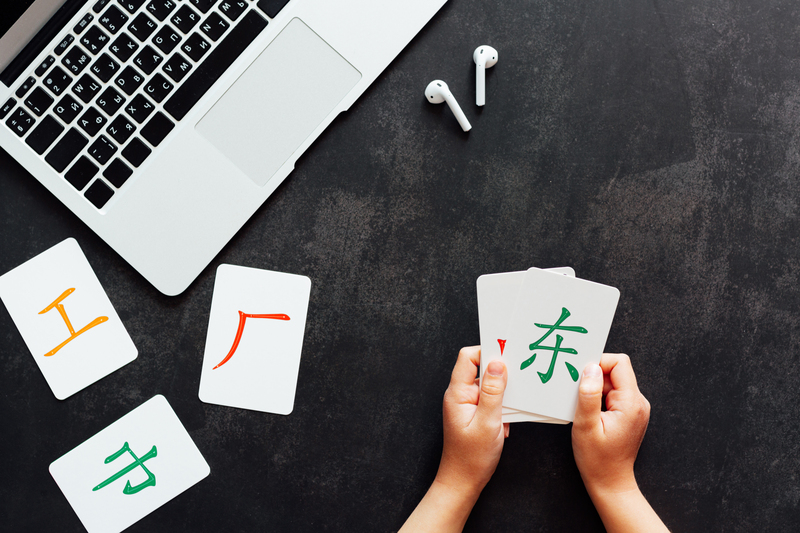
The flashcard is one of the basic Japanese-learning tools
Translate from Vietnamese into Japanese
Instead of only learning passively, proactively produce language. When you think about something in Vietnamese, try to translate it into Japanese. For example: “The weather is so nice today” – 今日はいい天気ですね (Kyou wa ii tenki desu ne). At first you will have to look up the dictionary, but gradually the brain will automate this process.
>>>> SEE DETAILS: Should you study Chinese or Japanese? An A-Z analysis
Learn and practise translating at the same time
Translation skill is a great way to reinforce knowledge and detect gaps. Choose short passages, songs, short stories in Japanese and try to translate them into Vietnamese. Then you can compare with the standard translation (if any) to find the places you misunderstood or missed.
Spend time reviewing lessons
Reviewing is the key factor to transfer knowledge from short-term memory to long-term memory. Many learners make the mistake of only learning new lessons and forgetting to review old ones, leading to forgetting everything after a few weeks. Apply the “1-3-7-14” principle: After learning a new lesson, review it after 1 day, after 3 days, after 7 days and after 14 days. Each review only takes 10-15 minutes but is very effective.

Another tip to learn Japanese quickly is to spend time reviewing lessons daily
Read books about Japanese regularly
Reading is the best way to expand vocabulary, learn grammar in context and become familiar with natural expression. Choose books suited to your level: manga comics with furigana for beginners, children’s books, light novels for intermediate level, newspapers and literature for high level.
Use a dictionary during the learning process
Use a Japanese – Japanese dictionary (explaining Japanese meaning in Japanese) instead of only relying on a Japanese – Vietnamese dictionary once you have a basic level. Japanese – Japanese dictionaries such as 広辞苑 (Koujien), 大辞林 (Daijirin) or the Mazii, Jisho.org apps help you understand the nuance of meaning more accurately, avoiding misunderstanding due to translating into Vietnamese.
Learn with “teammates”
Studying in a group helps you have more motivation, opportunities to practise conversation and support each other in overcoming difficult knowledge parts. You can join Japanese-learning communities or find a language-exchange partner to practise regularly. When learning together, each person complements the other’s strengths, thereby progressing faster and more effectively.
Form a regular writing habit
Another tip to learn Japanese quickly is writing. This is an important output skill that helps reinforce vocabulary, grammar and kanji. Start writing a diary in Japanese – each day only 3-5 sentences about what you do, think and feel.
You can write a blog, post on social media in Japanese, join Japanese forums to write comments. If possible, ask a Japanese person or teacher to correct your work to detect errors. Making mistakes and being corrected is the most effective way to learn.

Maintaining a regular writing habit will help you learn Japanese quickly and effectively
Don’t study too much and continuously
Instead of studying 5 hours a day then resting all week, study 1-2 hours every day regularly. Apply the Pomodoro technique: focus study for 25 minutes, rest 5 minutes, after 4 pomodoros rest 15-30 minutes. This helps maintain concentration and avoid burnout.
>>>> QUICK LOOK: Review: Should you study a language field? Opportunities and challenges
Learn the alphabet combined with taking illustrative examples
When learning hiragana, katakana and kanji, don’t just memorise by heart but attach them to specific examples. For example, when learning the character あ (a), also learn the words あさ (asa – morning), あめ (ame – rain). When learning the kanji 食 (eat), immediately learn 食べる (taberu – eat), 食事 (shokuji – meal).
Create a story or image attached to each character to remember it easily. For example: the kanji 休 (rest) has the image of a person (人) leaning against a tree (木) to rest. These mnemonics (memorisation techniques) help the brain link information more effectively.
Narrate what is happening in Japanese
This is an extremely effective thinking-in-Japanese exercise. When you are doing something – cooking, cleaning, walking – narrate it to yourself in Japanese in your head or even say it aloud: “I am now cutting vegetables” (今、野菜を切っています – Ima, yasai wo kitte imasu), “I will go to the market” (スーパーに行きます – Suupaa ni ikimasu).
At first it will be very hard because you don’t yet have enough vocabulary, but don’t give up. Look up the dictionary right when you encounter a word you don’t know. Gradually, you will gain a practical vocabulary about daily life and the brain will start thinking in Japanese instead of having to translate from Vietnamese.

During the learning process, you also need to frequently narrate what is happening in Japanese
Listen whenever possible
Listening is a difficult but very important skill when learning Japanese. Take advantage of all your free time to listen to music, podcasts or news in order to become familiar with the sounds and intonation. It’s okay not to understand at first; the important thing is to train your listening ear every day. Once you have a foundation, listen actively and repeat to improve your reflexes and pronunciation.
Learn through YouTube, Podcasts
YouTube and Podcasts are a free and extremely rich source of learning Japanese. You can choose channels suited to your level to practise listening, learn grammar and expand vocabulary. Prioritise content that matches your interests to increase enjoyment and maintain it long-term. When learning through a favourite topic, you will absorb more naturally and effectively.
Take advantage of the alarm clock
You can set an alarm with vocabulary or Japanese sentences you need to memorise to create repetition throughout the day. Each time the alarm rings, read aloud and repeat the meaning to remember it more deeply. You can also change your phone’s language or set reminders in Japanese. These small habits help form a continuous learning environment.
Learn from your own experience
Each person has their own suitable Japanese-learning method, so you should proactively experiment and adjust to find the most effective way to learn. Regularly monitoring your learning progress will help you assess the level of improvement and optimise your method. Instead of comparing with others, focus on your own progress each day.
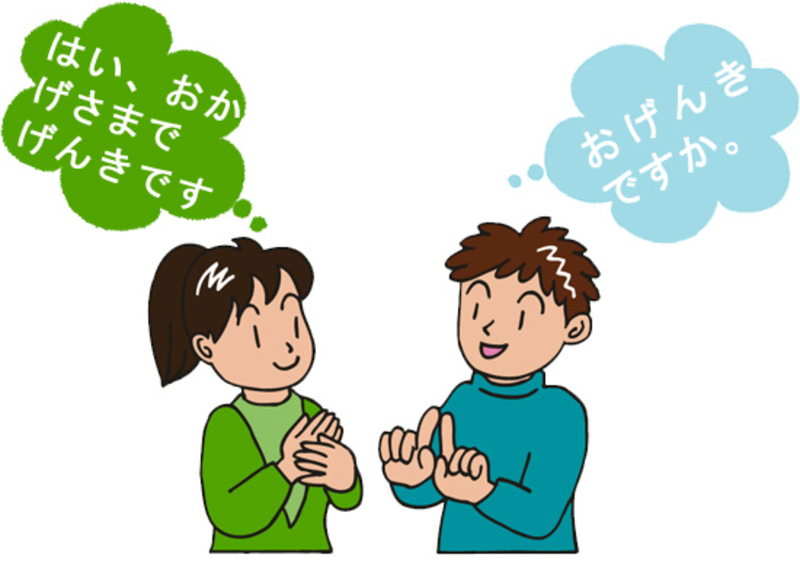
Drawing on your own practical experience will help you enhance your Japanese level during the learning process
Some mistakes to avoid when learning Japanese
During the process of learning Japanese, learners cannot avoid certain errors. To learn Japanese effectively, you also need to avoid the following common mistakes:
- Studying without a clear goal: Many people study “to know” without determining a specific goal (take JLPT N3 after 1 year, study abroad, apply for a job…). Without a goal, it is easy to get discouraged and give up midway.
- Only memorising by heart without understanding: Rote-learning vocabulary and grammar without understanding the meaning and usage in context will quickly be forgotten and cannot be applied in reality.
- Afraid to speak, afraid of being wrong: Many people are afraid to speak Japanese for fear of mispronouncing or using the wrong word. But mistakes are the best way to learn. Be brave to speak; even if wrong, you are corrected and progress.
- Ignoring pronunciation: Standard pronunciation is very important in Japanese because a word can have many different meanings depending on the pitch accent (pitch). Ignoring pronunciation will lead to misunderstandings when communicating.
- Studying unevenly, cramming all at once: Studying 8 hours a day then resting all week is much less effective than studying 1-2 hours every day regularly.
- Too dependent on one learning source: Only learning from textbooks without contact with real-world materials (films, music, stories, news) will make your vocabulary poor and unnatural.
>>>> SAVE NOW:Japan market development specialist – Details from A to Z
What makes the difference when choosing the Japanese Language field at HUFLIT?
The Japanese Language training programme at HUFLIT is built along a methodical roadmap from basic to advanced, comprehensively developing the 4 skills of listening – speaking – reading – writing and practising real-world communication. Students are oriented towards a learning outcome equivalent to international certificates such as JLPT N2, J-Test level C, Nat-Test 2Q and above, creating a competitive advantage when applying for a job or studying abroad.
Besides focusing on enhancing foreign-language capacity and early contact with Japanese lecturers, HUFLIT also expands exchange – study-abroad opportunities from 6 months to 2 years at many reputable universities in Japan. At the same time, students get to take part in diverse academic activities and cultural experiences, especially Japanese oratory contests. This helps train confidence and the mettle for international integration.

Students studying Japanese Language at HUFLIT get to take part in and experience many different activities
Frequently asked questions about tips to learn Japanese quickly
Are you looking for a way to learn Japanese quickly but don’t know where to start effectively? Below are the frequently asked questions about tips to learn Japanese quickly that help you find a smart way to learn, saving time while still achieving high results.
Can you learn Japanese quickly if you are not good at kanji?
You can still progress if you learn along a suitable roadmap. Kanji is a big barrier but not impossible to overcome. You should start from basic kanji (N5, N4), learn by radicals to understand the composition and attach it to real-world context instead of learning each character in isolation.
Does watching anime help you learn Japanese quickly?
Yes, if you watch actively instead of passively. Turn on Japanese subtitles (not Vietnamese) to both listen and read, note new words and good phrases, repeat the dialogue lines to practise pronunciation and intonation.
You can choose anime suited to your level: slice of life (everyday life) is easier than fantasy, school films are easier than historical films. Watch multiple times: the first time with Vietnamese subtitles to understand the content, the second time with Japanese subtitles to learn vocabulary, the third time without subtitles to challenge yourself.
Can a person who has lost their basics learn Japanese quickly?
Learners can completely do so if they start from a solid foundation: the Hiragana, Katakana alphabets, standard pronunciation and building a clear roadmap. Don’t rush to choose to learn difficult kanji and complex grammar before firmly grasping the basics.
Learn in a logical sequence: Hiragana, Katakana (2-3 weeks) → Basic N5 grammar (2-3 months) → Basic kanji + vocabulary expansion → Practise the 4 skills regularly. Use textbooks such as Minna no Nihongo, Genki that have a methodical system from easy to hard.
Tips to learn Japanese quickly are not magical miracles but a combination of scientific method, perseverance and passion. With the 15 tips shared in this article, hopefully you will find the way of learning most suited to yourself. If you are looking for a professional training environment with a high-quality lecturer team and a modern teaching method, learn about the Japanese Language field at HUFLIT.
>>>> SEE MORE ARTICLES OF INTEREST:
What skills does a Japanese translator need? Is the salary attractive?
Is learning Japanese hard or easy: The real reasons and how to conquer it
CONTACT INFO
Apply for admission at
tuyensinh.huflit.edu.vn
Find out information
huflit.edu.vn
Advising education enrollment