



-
Proud to be HUFLITers #07 | M.A. Tran My Uyen – A lectern where a teacher wishes only to “watch her children grow up”At the HUFLIT Faculty of Foreign Languages, M.A. Tran My Uyen (Vice Dean) goes by many names. Some call her “Ms My”; her students call her “mother”. Colleagues often compare her to Mother Au Co with a hundred children. Yet to become the “mother” of the lecture hall she is today, she went through a profound shift in thinking that completely changed a teaching philosophy built over more than 30 years.
-
New Cybersecurity Regulations: Opportunities for the Cybersecurity Field in the Digital EraThe new cybersecurity regulations taking effect on 1 July 2026 not only help complete the legal framework but also drive demand for talent in cybersecurity. This is also the moment when the discipline becomes a promising choice for young people who love technology and information security.
-
“GenZ Major Insights 2026” – Episode 9: Boundless Journeys with HUFLIT’s Tourism and Hospitality ProgramsMany students choose the Tourism and Hospitality field simply because they love to travel. But passion alone is not enough to pursue this field in the long run. What matters more is understanding the nature of the discipline, its professional requirements, and the qualities needed to grow in a professional service environment.
Students’ Communication Skills: Reality & How to Improve
NGÀY: 16/03/2026
Chia Sẻ Qua
The importance of communication skills for students
Communication skills play an important role in many aspects of student life, specifically:
- In studying: Communication skills help students discuss in groups effectively, present confidently in front of the class, ask questions and exchange with lecturers, thereby absorbing knowledge better.
- In social relationships: Good communication helps students easily integrate with friends, build good relationships, expand their connection source – an important factor for their later career.
- In job searching: employers always highly value candidates with good communication ability. A job interview is exactly a communication-skills “exam” – where you demonstrate your ability to express, listen and persuade.
- In work: Effective communication helps work in groups better, resolve conflicts, build relationships with colleagues and customers, thereby advancing quickly in your career.

Communication skills are the foundation that helps students study effectively, expand relationships, increase job opportunities and develop sustainably in their career
>>>> SAVE NOW: The necessary soft skills for HUFLIT students
The reality of students’ communication skills
Although the importance of communication skills is widely recognised, reality shows that many Vietnamese students are still limited in this skill.
Through surveying research and statistics
According to Novaboss – Vietnam’s leading soft-skills training centre with over 10 years of operation, research by the Vietnam Institute of Education shows an alarming figure: 83% of graduating students are assessed as lacking soft skills, 37% cannot find a suitable job for many reasons – among which the lack of the skills factor is the main one.
The research also points out that many Vietnamese students are still limited in some basic communication skills, directly affecting study effectiveness and the ability to integrate into the working environment.
- Language skills: The ability to use words accurately and express ideas clearly is still limited
- Presentation skills: Many students tremble and lack confidence when standing in front of a crowd
- Listening skills: Frequently interrupting others, not focusing on listening
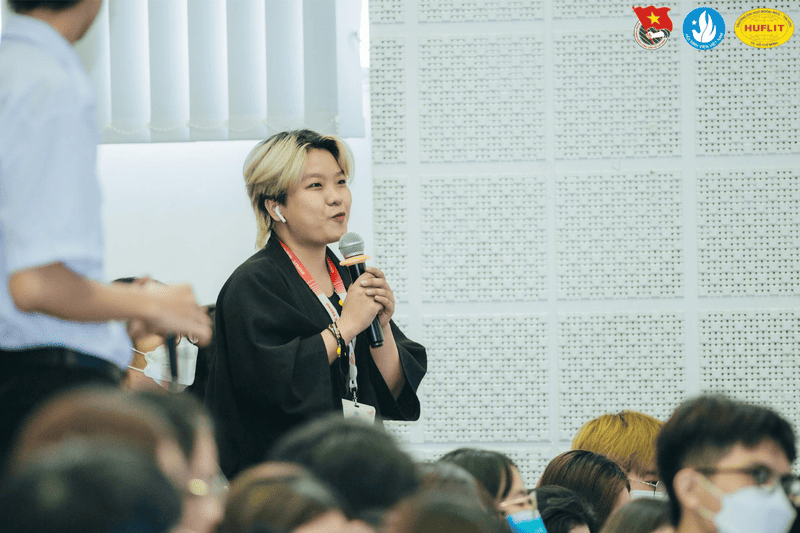
Students’ communication skills are still quite limited, directly affecting study and employment
Common limitations and causes
According to Van Hien University – one of the reputable private universities in HCMC, research on students’ communication skills shows that these limitations stem from many systemic causes, clearly reflecting the reality of students’ communication skills today:
Limited English-use ability:
In the context of integration, English is an important communication tool in study and career. However, many students have not been trained on a solid foundation early, lack a practice environment so are still hesitant when communicating. Research on students’ communication skills points out that the limitation in foreign languages significantly reduces the ability to be confident, proactive and the opportunity to access international jobs.
Lack of social-interaction experience:
Most students are oriented to focus on studying professional knowledge, participating little in social-communication activities. This makes students awkward when starting a conversation, maintaining a dialogue or handling complex communication situations, clarifying further the reality of students’ communication skills in the study and working environment.
Too high study pressure:
The volume of coursework, exams and score pressure make students prioritise GPA over soft skills. Many people think communication is not as important as professional knowledge, leading to a lack of proactive training, a problem often mentioned in research on students’ communication skills.
Insecurity, shyness:
The psychology of fear of being wrong, fear of being judged makes many students avoid communication, especially in crowded environments or in a foreign language. Little practice makes the skill increasingly decline, creating a negative loop hard to improve if not supported properly.
Lack of a practice environment:
Some universities are still heavy on theory, not creating enough space for students to discuss, present or do real projects. This limits training opportunities, clearly reflecting the results from research on students’ communication skills in recent years.
>>>> POCKET IT NOW: Part-time job experience for HUFLIT students 2026
How to improve communication skills for students
Fortunately, communication skills can completely be trained and improved if students have awareness and effort in the right way.
Participate in courses and seminars on communication skills
Participating in courses and seminars is the fastest and most systematic way to improve communication skills. Students should look for reputable courses from centres specialising in soft skills, or courses organised by the university. In-depth courses will provide:
- A solid theoretical knowledge of communication
- Proven effective communication techniques
- The opportunity to practise with feedback from experts
- A safe environment to “rehearse” before applying in reality

A communication-skills course helps students improve confidence and communicate more effectively
Practise communication daily
Communication skills are like swimming skills – can only progress through regular practice. Students need to:
- Proactively start conversations: Try communicating with strangers, asking for directions, buying goods, ordering food
- Participate in group discussions: Actively voice opinions in class
- Join clubs, extracurricular activities: Meet many people, train skills in a real environment
- Present frequently: Find opportunities to present in front of friends, class, clubs
- Listen actively: Focus on listening to others speak, don’t interrupt, ask questions to understand better
Seek support from service centres
Students should proactively start from their specialised Faculty to receive study advice, skills orientation and internship opportunities, then participate in seminars and workshops organised by the school and linked centres to supplement soft skills and practical knowledge:
- Soft-skill workshops organised by the school
- 1-1 consultation with an academic advisor
- Mentoring programmes with seniors
- A library of materials on communication skills
Why do many students choose HUFLIT to train communication skills?
Ho Chi Minh City University of Foreign Languages – Information Technology (HUFLIT) is known as an ideal environment for students to comprehensively develop communication skills, thanks to unique factors:
A study environment rich in interaction:
HUFLIT organises small-scale classes, only 25 – 30 students, helping increase the level of interaction between learners and lecturers. The teaching method emphasises group discussion, project-based learning, presentation and debate, creating an open study space that encourages students to proactively voice opinions, ask questions and train communication skills daily.
Combined with outstanding foreign-language training:
With its strength in foreign languages, HUFLIT builds a methodical English training programme with an output standard from B2 and above, combined with teaching Business English and specialised subjects in English. Students study with native lecturers or lecturers with C1–C2 level, thereby confidently communicating bilingually and increasing competitive advantage when applying for jobs.
Training presentation and teamwork skills:
Most subjects at HUFLIT require students to do a presentation and work in a group. Through this, students are methodically trained in presentation skills, task assignment, group coordination and conflict resolution, while getting familiar with modern presentation-support tools such as PowerPoint, Prezi or Canva.

HUFLIT creates a highly interactive study environment, methodical foreign-language training and presentation training
Real experience through seminars and talkshows:
HUFLIT regularly organises thematic seminars and talkshows with entrepreneurs, experts and successful alumni. In addition, job fairs and presentation, debate, MC competitions help students directly interact with employers, learn professional communication styles and accumulate practical experience.
More than 50+ diverse clubs:
HUFLIT owns a rich club system such as 7SEC Club (English Club), MC HUFLIT MICs Club, HUFLIT Volunteer Club – HVC, Language Clubs (Japanese, Korean, Chinese) and IT Club. Through periodic activity sessions, workshops and real events, HUFLIT students are trained in communication skills in a natural, comfortable environment, thereby improving confidence, teamwork ability and effective communication in study as well as work later.
>>>> CONTINUE READING: How to write a professional and impressive job-application CV for students
Some mistakes to avoid when training communication skills for students
During the process of developing communication skills, students need to avoid common mistakes such as lack of listening, rambling expression, being shy to speak or depending too much on online communication. Early recognition and timely adjustment will help improve confidence and interaction effectiveness in study and work:
- Interrupting others: cutting in when others have not finished speaking not only demonstrates a lack of respect but also breaks the train of thought of the person presenting. This makes the conversation less effective and easily creates an uncomfortable feeling for the other person.
- Not listening: many students tend to only focus on preparing their own answer instead of really listening. The consequence is missing important information, misunderstanding the problem and giving an inaccurate response or one unsuitable to the context.
- Using negative body language: avoiding eye contact, crossing arms, hanging the head down or continuously looking at the phone while others are speaking shows a lack of focus and respect. This body language reduces the level of trust and goodwill in communication.
- Speaking too fast or too slow: speaking too fast makes listeners hard to keep up with the content and easily miss the main ideas, while speaking too slow makes the conversation prolonged, causing loss of focus and reducing the listeners’ interest.
- Abusing messages and emails for important matters: many matters need to be discussed directly to ensure clarity and consistency. Only using messages or emails easily causes misunderstanding due to a lack of intonation, expression and immediate response, thereby generating unnecessary conflict.
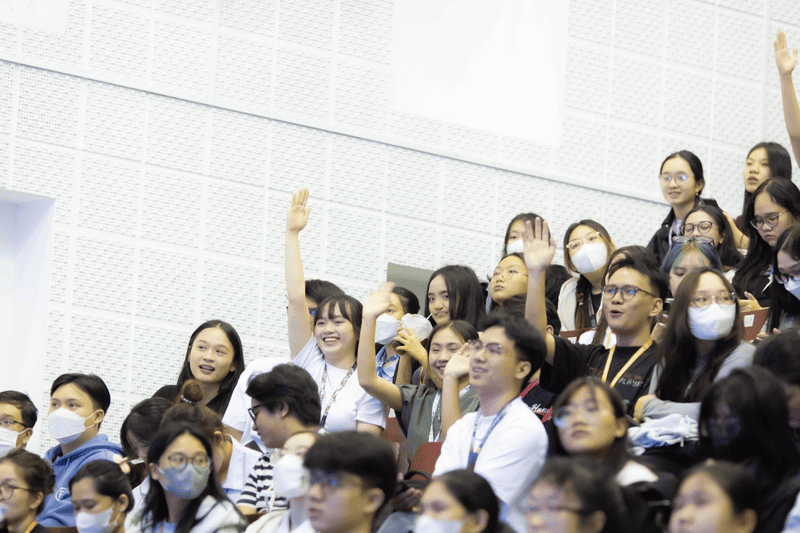
Avoiding basic communication mistakes helps students improve exchange effectiveness and build a professional image
Frequently asked questions about students’ communication skills
I am insecure when communicating; how do I overcome it?
Insecurity is a very common feeling and almost everyone has experienced it, including good communicators. To improve, you should start from small actions such as greeting, asking questions in class and practising before speaking. Participating in clubs and activity groups helps you communicate in a more comfortable environment and gradually increase confidence. Most importantly, focus on the content you convey instead of worrying too much about others’ judgement.
What should I do when a conflict or misunderstanding occurs in communication?
When a conflict occurs, keeping calm is the key factor to avoid making the situation more tense. You need to listen to the other party’s viewpoint, ask questions to clarify the misunderstanding and show respect in your way of responding. If you have a fault, frankly admit it and apologise. Finally, both parties should together find a common solution to maintain a positive relationship.
How to self-evaluate and improve your own communication skills?
You can self-evaluate by recording audio or video of your communication and presentation process to recognise your strengths and limitations. Asking for feedback from friends and lecturers will help you have a more objective perspective. In addition, set specific communication goals suitable to your ability. Tracking progress through each small step will help you maintain motivation and improve skills effectively.
Students’ communication skills are not an innate talent but can completely be trained through study and regular practice. In the context of many students lacking soft skills and having difficulty finding jobs, training communication skills is extremely urgent. HUFLIT with its interaction-rich study environment, TOEIC 550+ standard and more than 50+ clubs helps students confidently communicate, expanding study and career opportunities.
>>>> CONTINUE READING THE RELATED ARTICLES:
7 effective ways to overcome exam pressure for candidates 2026
CONTACT INFO
Apply for admission at
tuyensinh.huflit.edu.vn
Find out information
huflit.edu.vn
Advising education enrollment