


-
Proud to be HUFLITers #07 | M.A. Tran My Uyen – A lectern where a teacher wishes only to “watch her children grow up”At the HUFLIT Faculty of Foreign Languages, M.A. Tran My Uyen (Vice Dean) goes by many names. Some call her “Ms My”; her students call her “mother”. Colleagues often compare her to Mother Au Co with a hundred children. Yet to become the “mother” of the lecture hall she is today, she went through a profound shift in thinking that completely changed a teaching philosophy built over more than 30 years.
-
New Cybersecurity Regulations: Opportunities for the Cybersecurity Field in the Digital EraThe new cybersecurity regulations taking effect on 1 July 2026 not only help complete the legal framework but also drive demand for talent in cybersecurity. This is also the moment when the discipline becomes a promising choice for young people who love technology and information security.
-
“GenZ Major Insights 2026” – Episode 9: Boundless Journeys with HUFLIT’s Tourism and Hospitality ProgramsMany students choose the Tourism and Hospitality field simply because they love to travel. But passion alone is not enough to pursue this field in the long run. What matters more is understanding the nature of the discipline, its professional requirements, and the qualities needed to grow in a professional service environment.
Student Scientific Conference of the Faculty of Oriental Languages and Cultures, Academic Year 2025-2026
NGÀY: 07/05/2026
Chia Sẻ Qua
The conference was a great success, with quality presentations, sincere feedback from the lecturers and the enthusiasm of more than 100 participating students.
10 outstanding research topics at the Student Scientific Conference 2025 – 2026
This year’s scientific conference recorded 10 presentation groups with rich and highly topical subjects:
- The development of the K-occult film genre within Korea’s cultural ‘soft power’ enhancement policy (Student group: Tống Kiết Tường – Đỗ Cung Như – Trần Thu Huyền – Phan Bảo Trâm)
- Pansori and Hat Xam: Similarities in the folk performing arts of Korea and Vietnam (Student group: Lê Kiều Bảo Trân – Nguyễn Trí Kiệt – Đỗng Thị Thùy Duy – Lê Thị Cẩm Ly)
- Feng shui in the traditional architecture of Koreans: The case of Baesamsu (Student group: Nguyễn Anh Vy – Nguyễn Huỳnh Đăng Khôi – Nguyễn Thúy Hiền – Đào Khánh Xuân)
- Comparing the role of goddesses in Japan’s Shinto and Vietnam’s Mother Goddess worship (Student: Nguyễn Mai Khanh)
- The role of school discipline in shaping students’ character in Japan (Student: Phan Văn Hiền)
- The Japanese concept of Giri through everyday living habits (Student: Lê Thị Nương)
- The recruiters’ perspective on e-sports athletes in the Korean labour market through the media (Student group: Trần Anh Thư – Hoàng Thị Ngọc Anh)
- The declining birth rate in Korea: Economic consequences in the context of an ageing population (Student group: Đoàn Thanh Phương – Phan Thị Thanh)
- A survey of the actual use of Korean honorifics by students of the Korean Language programme (The case of third-year students at Ho Chi Minh City University of Foreign Languages – Information Technology) (Student: Phạm Minh Hà)
- The Korean – Vietnamese linguistic landscape in Korean F&B brands in Ho Chi Minh City (Student group: Lê Thị Yến Nhi – Nguyễn Thanh Quân – Nguyễn Nhật Hưng)
The student groups presented their research results one by one with careful, meticulous preparation, and received much positive feedback along with sincere, in-depth suggestions from the Faculty Board, the Scientific Council and the attending lecturers.
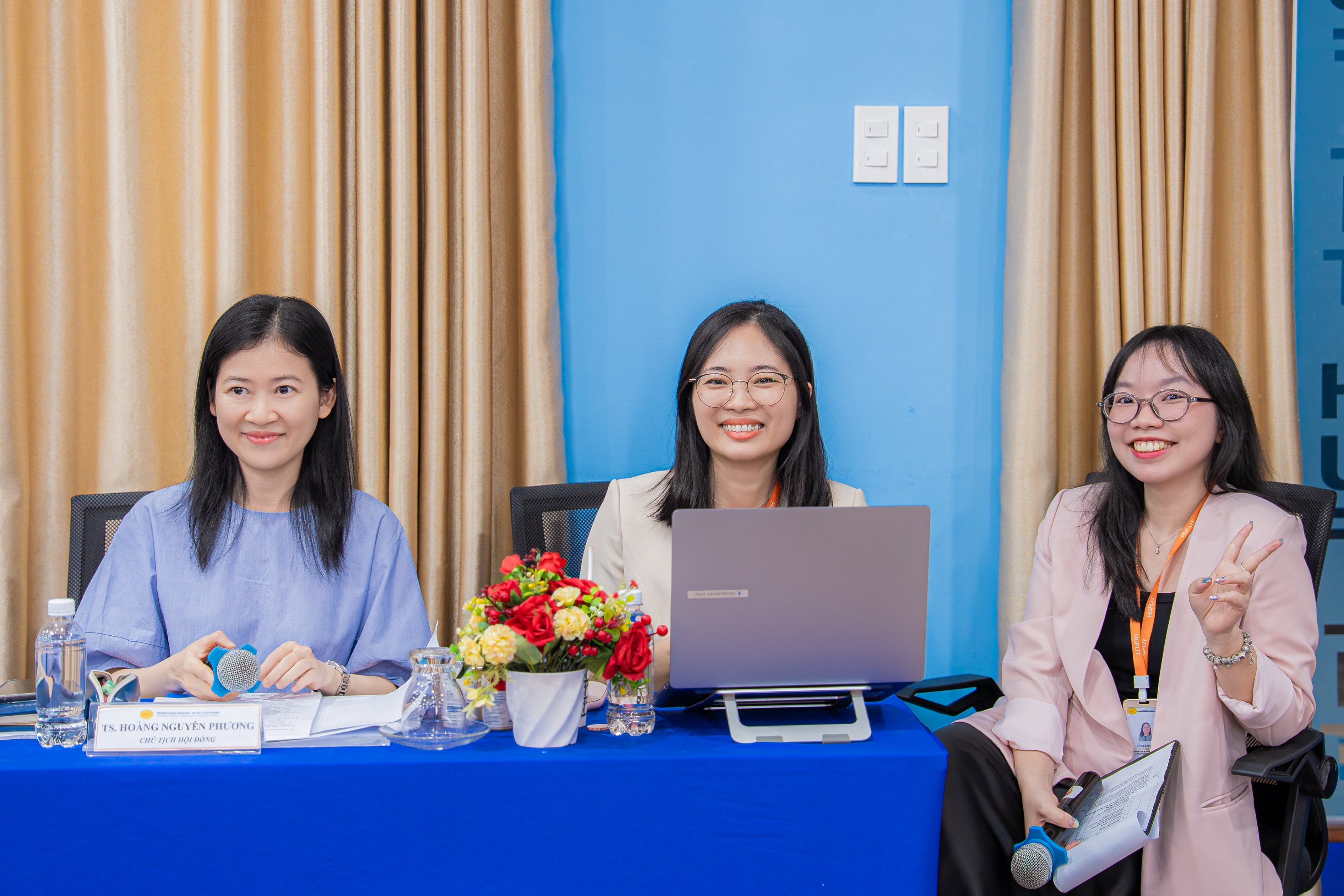
Chair of the Council – Dr. Hoàng Nguyên Phương (left), Secretary – Nguyễn Thị Phương Thảo (centre) and the programme MC (right).
Highlights of the 2025–2026 Conference
Continuing the success of previous years’ conferences, this year’s conference again showed diversity in its research topics. Many groups did not stop at theoretical knowledge but also explored issues close to life, such as popular culture, economics and society. This shows that students are becoming increasingly proactive in choosing topics and know how to apply research methods to practical issues.
In addition, the conference was also an opportunity for students to develop their presentation and teamwork skills. The process of preparing content, designing slides and debating with the council helped each member feel more confident when presenting in front of a crowd – an essential skill in both academic and professional environments.
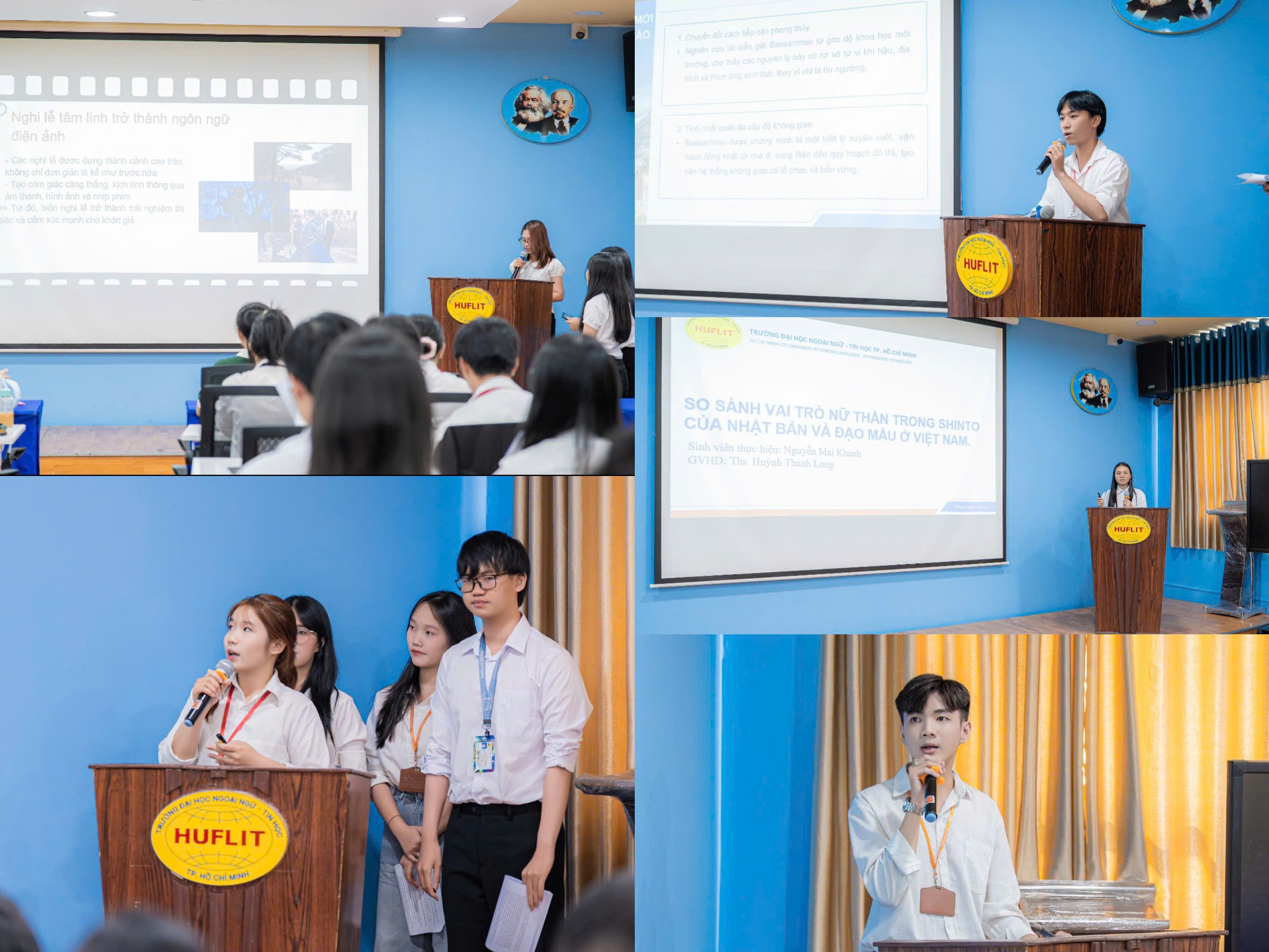
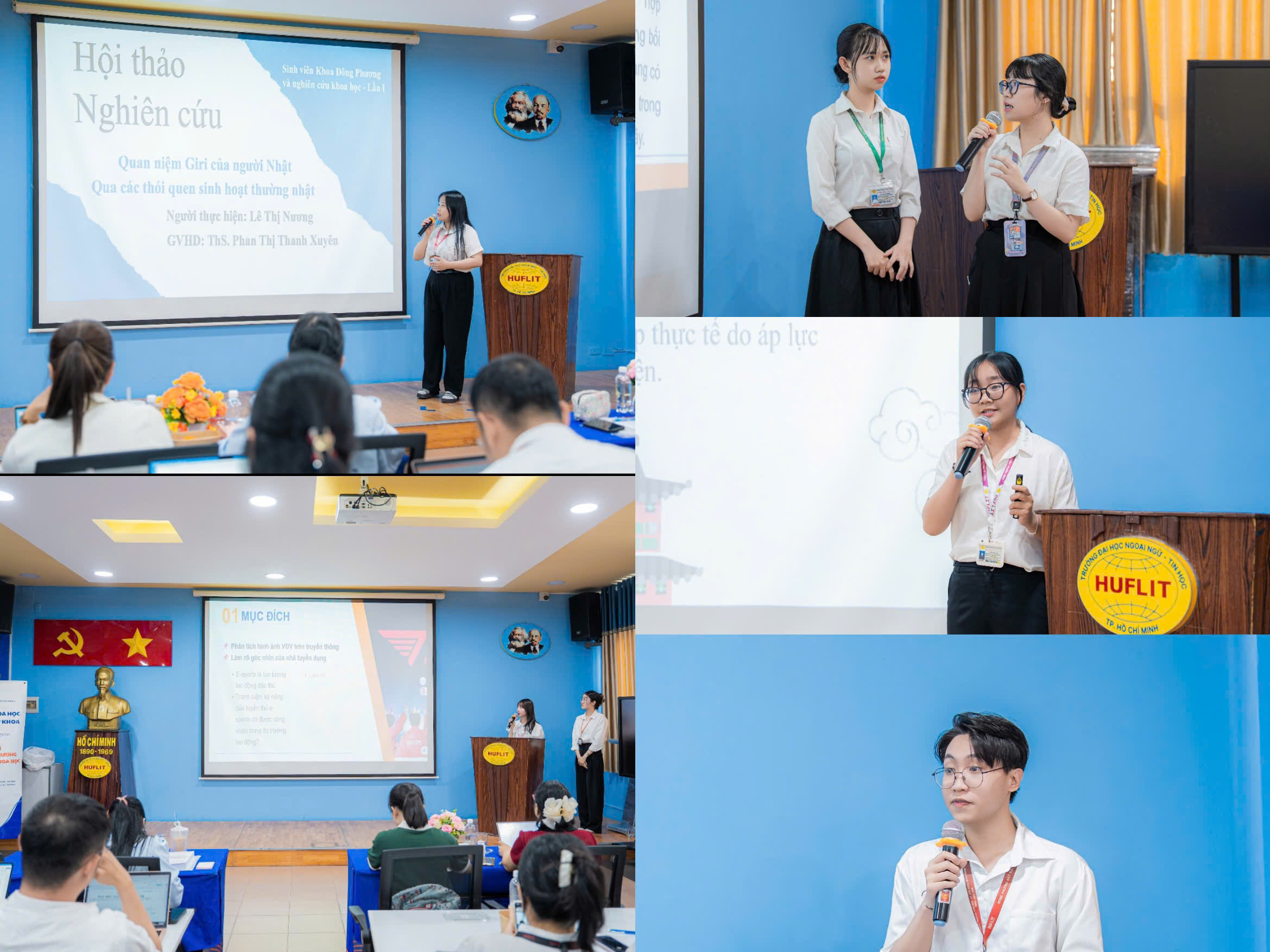
A student presenting a topic
The significance of student scientific research activities
The comments and feedback in the critique section from the lecturers helped the groups see more clearly the strengths and weaknesses in their work. Through this, students not only perfected their research but also learned to think and present issues more logically and clearly.
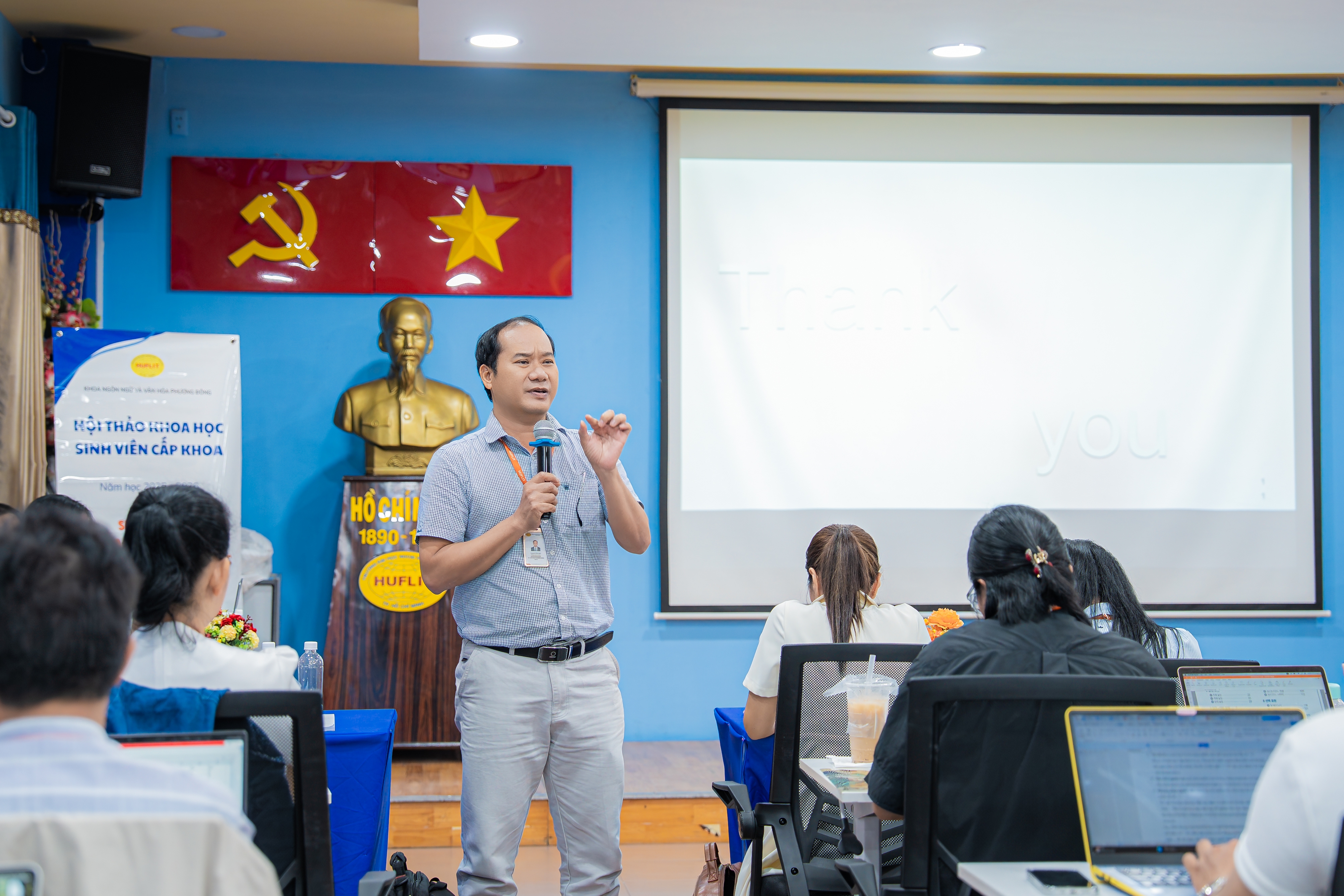
Dr. Thạch Văn Việt gives comments and suggestions on the students’ research topics.
The Student Scientific Conference of the Faculty of Oriental Languages and Cultures not only provides professional knowledge but also helps students accumulate more of the practical experience needed for their studies and later career orientation.
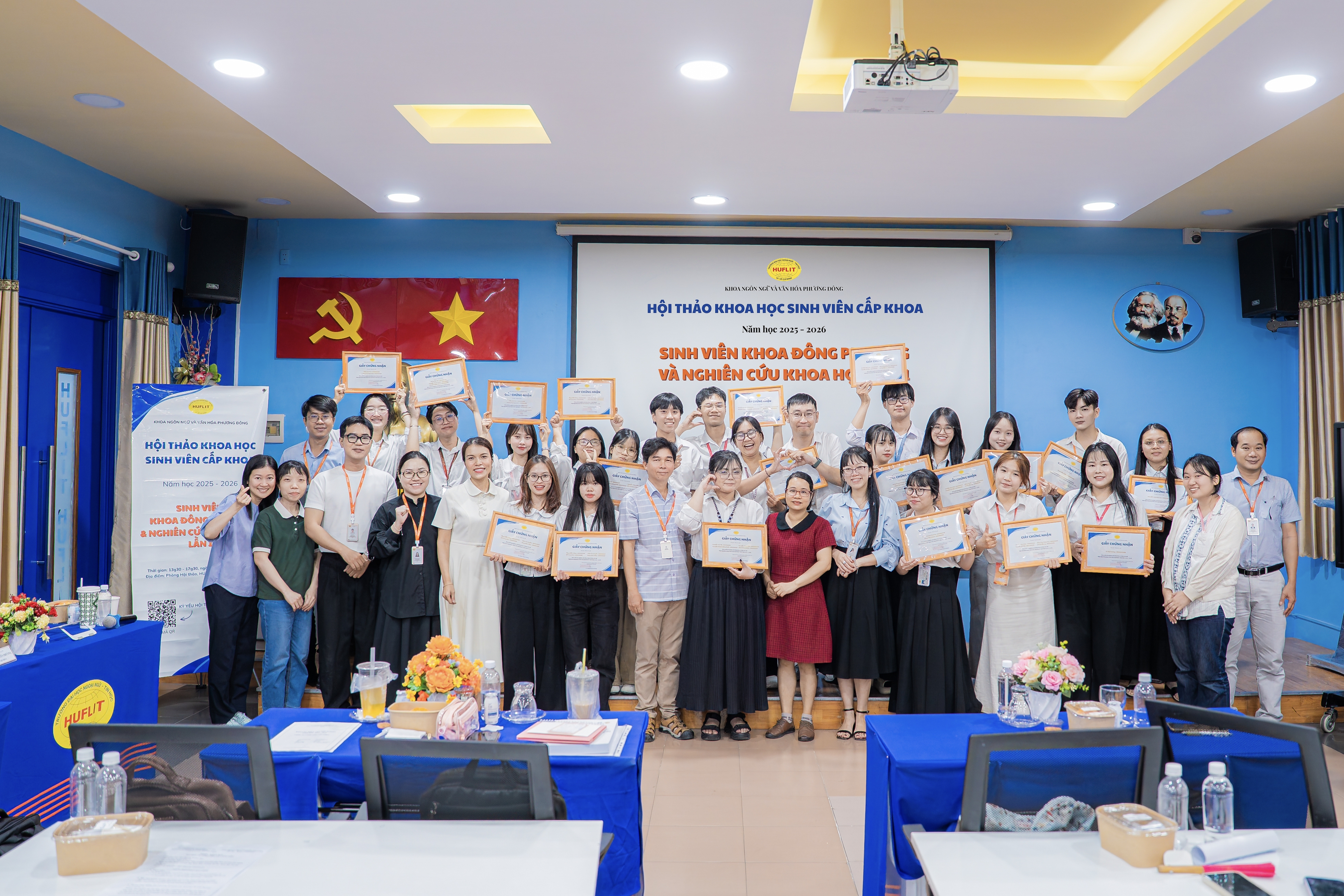
The student groups receive certificates after the conference ends.
CONTACT INFO
Apply for admission at
tuyensinh.huflit.edu.vn
Find out information
huflit.edu.vn
Advising education enrollment