



-
Proud to be HUFLITers #07 | M.A. Tran My Uyen – A lectern where a teacher wishes only to “watch her children grow up”At the HUFLIT Faculty of Foreign Languages, M.A. Tran My Uyen (Vice Dean) goes by many names. Some call her “Ms My”; her students call her “mother”. Colleagues often compare her to Mother Au Co with a hundred children. Yet to become the “mother” of the lecture hall she is today, she went through a profound shift in thinking that completely changed a teaching philosophy built over more than 30 years.
-
New Cybersecurity Regulations: Opportunities for the Cybersecurity Field in the Digital EraThe new cybersecurity regulations taking effect on 1 July 2026 not only help complete the legal framework but also drive demand for talent in cybersecurity. This is also the moment when the discipline becomes a promising choice for young people who love technology and information security.
-
“GenZ Major Insights 2026” – Episode 9: Boundless Journeys with HUFLIT’s Tourism and Hospitality ProgramsMany students choose the Tourism and Hospitality field simply because they love to travel. But passion alone is not enough to pursue this field in the long run. What matters more is understanding the nature of the discipline, its professional requirements, and the qualities needed to grow in a professional service environment.
Prosecutor or Lawyer, Who Is Higher? A Detailed A-Z Comparison
NGÀY: 01/04/2026
Chia Sẻ Qua
What is a prosecutor? What is a lawyer?
According to the provisions of the 2006 Law on Lawyers, a lawyer is a person who meets the standards and conditions to practise according to the law, providing legal services at the request of individuals, agencies and organisations (collectively called clients). A lawyer has the role of legal consultancy, representation outside proceedings or participating in proceedings to protect the legitimate rights and interests of clients.
A prosecutor is a person representing the State in exercising the right to prosecute, responsible for accusing the person alleged to have violated the law in criminal cases. The prosecutor takes part in the court session to present the indictment, provide evidence and argue in order to protect the public interest and ensure that crimes are handled in accordance with the law.

The lawyer and the prosecutor are two important positions taking part in proceedings
Prosecutor or lawyer, who is higher?
The prosecutor and the lawyer have no distinction of “who is higher” in terms of hierarchy. These two positions take on the counterbalancing and equal roles at the court, together taking part in the proceedings to ensure justice and objective truth.
Specifically, the prosecutor represents the State in exercising the right of prosecution, with the task of prosecuting and accusing the person alleged to have committed a crime. Meanwhile, the lawyer represents an individual or organisation, taking part in proceedings to protect the legitimate rights and interests of the client. At the court session, each side performs its own function and both are subject to the direction of the Trial Panel.
>>>> DON’T MISS: The salary of the Economic Law field in Vietnam in 2026 in detail
A detailed comparison of the Prosecutor and the Lawyer
In the criminal-proceedings system, the prosecutor and the lawyer are two subjects holding central roles, taking part directly in the case-resolution process. Comparing the prosecutor and the lawyer helps clarify the difference in the function, skills and responsibilities of each side.
Debating skills and oratory skills
Both the prosecutor and the lawyer need good debating and oratory skills to present their viewpoints before the Court. The prosecutor uses this skill to argue and prove criminal conduct based on evidence and legal provisions. Meanwhile, the lawyer applies oratory ability to refute the accusation arguments and protect the legitimate rights and interests of the client.

Both the prosecutor and the lawyer need good debating and oratory skills
Problem-solving skills
In the criminal-proceedings process, both the prosecutor and the lawyer must face many complex legal situations. The prosecutor needs to make accurate decisions about prosecution, suspension or changing the charge in line with the developments of the case. The lawyer, in turn, focuses on finding the best option for the client, such as mitigating criminal liability or protecting legitimate interests at each stage of proceedings.
Analysis and information-research skills
The prosecutor is responsible for carefully studying the case file, analysing evidence and testimony to ensure that prosecution is of the right person, the right crime and in accordance with the law. For the lawyer, analysis and information-research skills help detect contradictions, gaps in the evidence or procedural violations, thereby building an effective defence strategy.
Withstanding pressure
The prosecutor bears great pressure from the responsibility of representing the State and the requirement to ensure justice, avoiding wrongful conviction or letting crime slip through. The lawyer also bears no less pressure when shouldering the trust and interests of the client and facing cases of a complex, prolonged nature.
>>>> SEE MORE: Studyeconomic law – is it easy to find a job? Things to know
Details of the roles of the Prosecutor and the Lawyer in criminal proceedings
In criminal proceedings, the prosecutor and the lawyer are two subjects taking part directly in the case-resolution process. Each side takes on its own function and responsibility. Specifically as follows.
Prosecutor
The responsibilities and powers of the procurator in criminal proceedings are specifically prescribed by law to ensure that the exercise of the right of prosecution and the supervision of judicial activity are in accordance with the law. These duties and powers are prescribed in Article 42 of the 2015 Criminal Procedure Code:
- Supervise the receipt and handling of crime-related information sources of competent agencies and persons.
- Directly handle and compile files for handling crime-related information sources according to regulations.
- Supervise the acceptance and handling of crime-related information sources; the activities of prosecution and investigation; the application of preventive measures, coercive measures and the compilation of case files of competent agencies.
- Directly supervise investigation activities such as scene examination, autopsy, confrontation, identification, voice recognition, investigation experiments and searches.
- Supervise the suspension and resumption of handling crime-related information sources; the suspension of investigation, termination of investigation, resumption of investigation and conclusion of investigation.
- Set investigation requirements; request the Investigation Agency to pursue or terminate the pursuit of the accused.
- Summon and interrogate the accused; take testimony from denouncers, the denounced, persons recommended for prosecution, witnesses, victims, litigants and persons held in urgent cases.
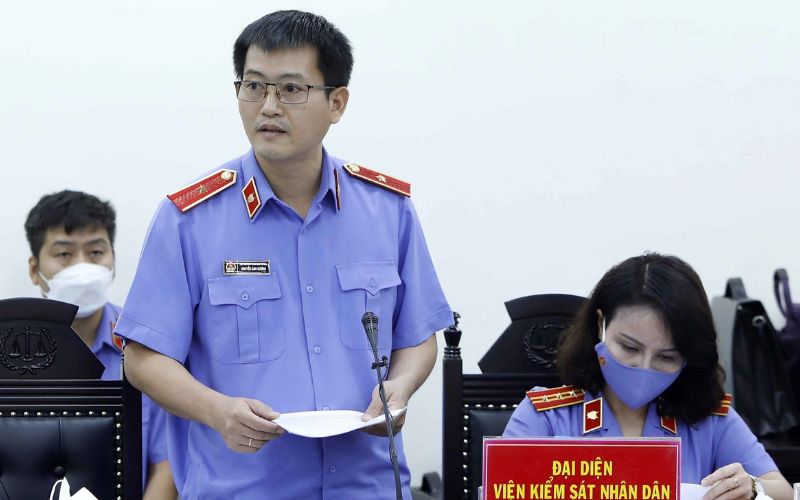
Supervise the receipt and handling of crime-related information sources
Lawyer
The lawyer holds a particularly important role in criminal proceedings, not only protecting the legitimate rights and interests of the accused but also contributing to ensuring the fairness and transparency of the judicial system. Through participating throughout from the investigation stage to trial, the lawyer helps protect human rights and limit procedural violations.
- Protecting the legitimate interests of the accused: The lawyer represents the accused in the proceedings, ensuring the client’s legitimate rights are respected; while also providing legal consultancy and explaining the rights and obligations of the accused according to legal provisions.
- Consulting and preparing for the court session: The lawyer supports collecting documents and evidence, building a suitable defence strategy; analysing the evidence provided by the Procuracy to find unreasonable points or points favourable to the client.
- Participating in and supervising the investigation process: The lawyer takes part in procedural activities to supervise the investigation, ensuring it does not infringe on the accused’s interests; while also being able to request the collection of evidence in a direction favourable to the client.
- Protecting the interests of the accused at the court session: The lawyer presents defence viewpoints, provides favourable evidence and witnesses; poses questions to proceedings participants and the Procuracy to clarify the details of the case and effectively protect the accused.
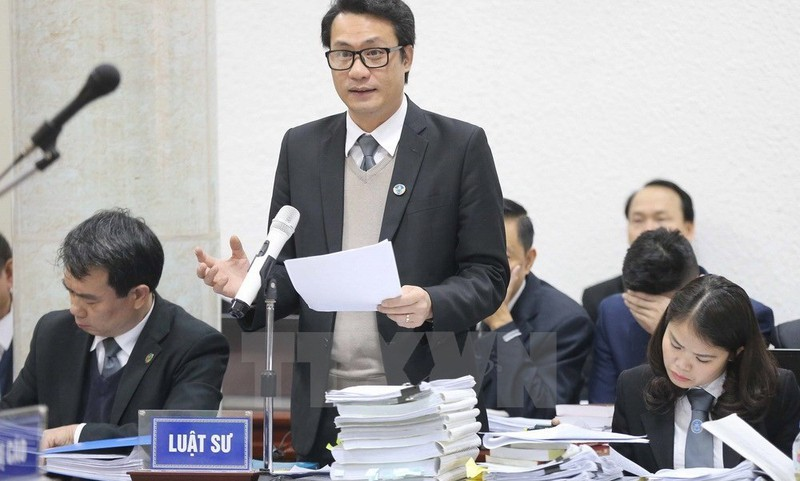
The lawyer holds a particularly important role in criminal proceedings
>>>>CLICK NOW:How does business law differ from economic law? Admission answers
Should you study the Prosecutor and Law field at HUFLIT?
The Law programme at HUFLIT is a suitable choice for those who love the legal field. The training programme focuses on balancing professional knowledge and practical skills. Let’s find out right away.
Knowledge conveyed hand in hand with career practice
The training programme of the Prosecutor and Law field at HUFLIT is built along an application orientation, closely combining theoretical knowledge and career practice. Students not only learn legal provisions but also get access to real situations, analyse case files and train legal thinking close to their future working environment.
A team of lecturers who are Associate Professors and PhDs with rich experience
HUFLIT has a team of lecturers who are Associate Professors, PhDs and legal experts rich in teaching, research and law-practice experience. The lecturers’ in-depth guidance helps students master professional knowledge, while orienting a clear career right from their time at school.
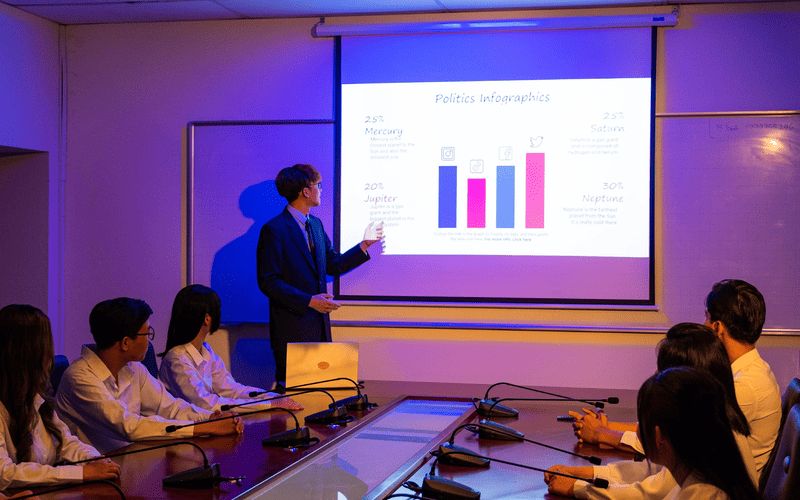
HUFLIT has a team of lecturers who are Associate Professors, PhDs and experts
Cultivating career capacity, perfecting skills
Besides professional knowledge, students are also focused on cultivating the skills necessary for the law profession. For example, legal analysis – argumentation, document drafting, litigation, situation-handling and teamwork. These skills help students confidently adapt to the professional environment and enhance their competitiveness after graduation.
At the same time, students also have many opportunities for real-world experience through activities such as visiting courts, taking part in moot courts, workshops, thematic talkshows and academic contests on law. These activities not only help consolidate knowledge but also create conditions for students to train career skills and develop legal thinking.
Frequently asked questions about the Prosecutor and the Lawyer
The prosecutor and the lawyer are two positions holding counterbalancing roles, equal before the law, together taking part in proceedings to ensure justice, objectivity and fairness in adjudication. Below are the frequently asked questions about these two positions.
Do the Prosecutor and the Lawyer differ in whom they serve?
Yes. The prosecutor serves the public interest, representing the State in protecting the law and social order. Meanwhile, the lawyer serves the legitimate interests of the client, who is an individual or organisation, according to the request and scope of authorisation.
Is there a difference in the income of the Prosecutor and the Lawyer?
Yes. The prosecutor’s income is usually stable and paid according to the State’s salary system. Conversely, the lawyer’s income is flexible and volatile, depending on experience, professional capacity, personal reputation and the form of practice.
Is there a Prosecutor in Vietnam?
The answer is no. In Vietnam, the title “prosecutor” in the sense common in some other countries does not exist. Instead, the procurator is the person who performs equivalent functions and duties in criminal proceedings.
Prosecutor or lawyer, who is higher, is not a story about hierarchy or power, but a difference in role and function in the judicial system. Correctly understanding the nature of these two professions will help law learners clearly identify their career orientation and a suitable development path in the future. Refer to the Law field at HUFLIT to shape your dream.
>>>> DON’T MISS THE USEFUL ARTICLES:
CONTACT INFO
Apply for admission at
tuyensinh.huflit.edu.vn
Find out information
huflit.edu.vn
Advising education enrollment