



-
Proud to be HUFLITers #07 | M.A. Tran My Uyen – A lectern where a teacher wishes only to “watch her children grow up”At the HUFLIT Faculty of Foreign Languages, M.A. Tran My Uyen (Vice Dean) goes by many names. Some call her “Ms My”; her students call her “mother”. Colleagues often compare her to Mother Au Co with a hundred children. Yet to become the “mother” of the lecture hall she is today, she went through a profound shift in thinking that completely changed a teaching philosophy built over more than 30 years.
-
New Cybersecurity Regulations: Opportunities for the Cybersecurity Field in the Digital EraThe new cybersecurity regulations taking effect on 1 July 2026 not only help complete the legal framework but also drive demand for talent in cybersecurity. This is also the moment when the discipline becomes a promising choice for young people who love technology and information security.
-
“GenZ Major Insights 2026” – Episode 9: Boundless Journeys with HUFLIT’s Tourism and Hospitality ProgramsMany students choose the Tourism and Hospitality field simply because they love to travel. But passion alone is not enough to pursue this field in the long run. What matters more is understanding the nature of the discipline, its professional requirements, and the qualities needed to grow in a professional service environment.
Personal Study Plan Template: Detailed A–Z Guide
NGÀY: 16/03/2026
Chia Sẻ Qua
What is a personal study plan template understood to be?
A personal study plan template is a detailed plan set up by the learner. The purpose is to clearly determine study goals, reasonably allocate time for each subject, each specific task within a certain period. This is not simply a dry timetable but also a self-management tool.
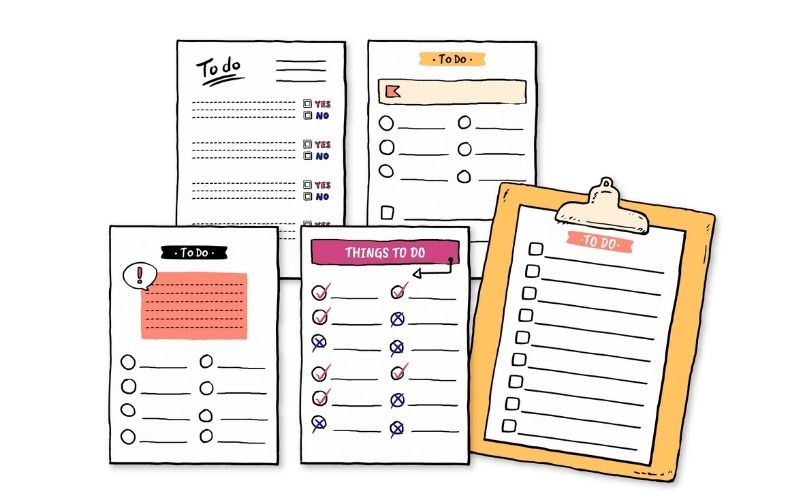
A personal study plan template is a detailed plan
The role of a personal study plan template
Building a personal study plan template brings many practical benefits. Specifically as follows:.
- Enhancing study effectiveness and time management: If you have a clear study plan, the learner knows exactly what they need to study, when to study and for how long. Thanks to this, time will be allocated reasonably between subjects, avoiding cramming before the exam or forgetting important content.
- Reducing stress and creating study motivation: When you clearly know what you need to do, how to do it and in how much time, the learner will feel more proactive, reducing stress and worry. Each small goal completed will create a feeling of achievement, thereby promoting the motivation to continue studying. This is especially important for first-year students when just entering the university environment with many changes.
- Developing self-management skills and discipline: Making and implementing a study plan requires the learner to have self-motivation, discipline and self-control ability. These are extremely important soft skills, not only in study but also in later work. Employers always highly value candidates with the ability to self-manage time and work effectively.
- Balancing between study and other activities: A good plan not only focuses on study but also spends time on extracurricular activities, sports, entertainment and rest. This helps the learner develop comprehensively, avoiding burnout or life imbalance.
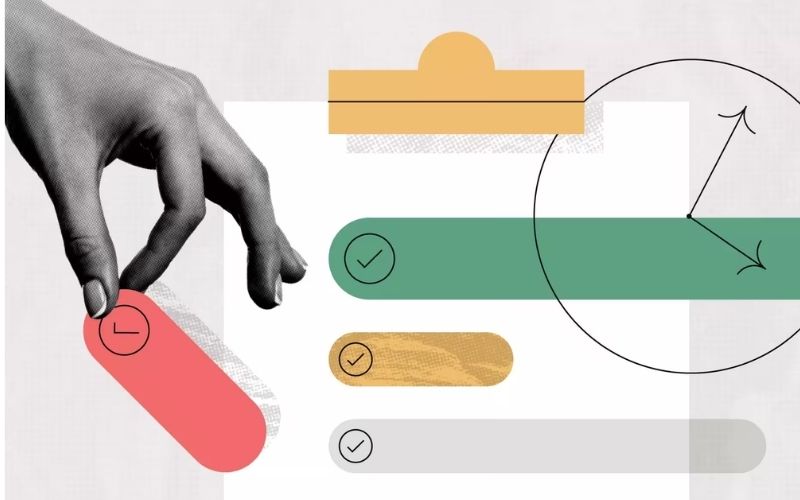
Building a personal study plan template brings many benefits
>>>> EXPLORE IN DETAIL: Top 5 AI-related disciplines that are hottest 2026
Detailed guide to building a personal study plan template
To build an effective personal study plan template, you need to follow a systematic process. Below is a detailed step-by-step guide to help you create a plan suitable to yourself.
Step 1: Determine your capacity and personal study goals
Before planning, you need to realistically assess your current capacity. Ask yourself: Which subject is your strength? Which subject needs improvement? What is your maximum study-concentration time? Which study style suits you best?
After assessing your capacity, determine specific goals according to the SMART principle. Specific, Measurable, Achievable, Relevant, Time-bound. For example: “Achieve a score of 8.5 in Advanced Mathematics this semester” instead of “Study Maths well”.
Step 2: Build according to the Eisenhower Matrix
After clearly determining your capacity and study goals, the next step is to make a scientific study plan, avoiding spreading study or sprinting before the exam. One of the effective methods applied by many students is the Eisenhower Matrix, which helps classify work by the level of importance and the level of urgency. Specifically, study tasks are divided into 4 groups:
- Important & Urgent: assignments about to be due, midterm – final exam revision, presentations needing urgent preparation.
- Important but not urgent: studying new lessons in advance, reviewing foundational knowledge, doing long-term practice tests.
- Not important but urgent: arising activities such as sudden group meetings, supporting friends for a short time.
- Not important & not urgent: scrolling social media, entertainment beyond the allowed time.

When you have a clear goal, you need to divide the plan by stages
Step 3: Implement the plan, track progress and adjust in time
After having a detailed plan, the most important thing is to implement it seriously and track progress regularly. Create a habit of checking the plan every day, marking the things completed and noting the things remaining.
Each week, spend 15-20 minutes to evaluate what percentage of the plan you have done, which part you did well, which part needs improvement. If you find the plan not feasible or there is a change in the study schedule, adjust immediately instead of trying to follow the old plan mechanically.
You can use support tools such as time-management apps (Google Calendar, Notion, Trello), a paper notebook, or an Excel spreadsheet to track progress. The important thing is to choose the tool suitable to your working style and use it consistently.
>>>> LEARN MORE: What do students need to do to graduate with a job: Detailed roadmap
A specific example of a personal study plan template
Below is a weekly study plan template that you can refer to and adjust to suit your circumstances:
- Important & Urgent (Do now)
| Task | Time to do | Note |
| Complete assignments with a near deadline | During the week | High priority |
| Revise for the midterm / final exam | Before the exam day | Directly affects scores |
| Prepare presentations, reports | According to the subject schedule | Cannot be late |
- Important but Not urgent (Plan)
| Task | Expected time | Goal |
| Revise after each lesson | 30–60 minutes/day | Remember long, understand deeply |
| Learn supplementary skills (informatics, foreign languages, data analysis, etc.) | 3–4 sessions/week | Serve the long term |
| Read specialised materials | Weekend | Expand knowledge |
- Not important but Urgent (Limit time)
| Task | How to handle |
| Reply to class group messages | Only check at set time frames |
| Email, general notices | Handle quickly, don’t get absorbed |
| Small arising tasks | Combine and do at once |
- Not important & Not urgent (Limit)
| Activity | How to control |
| Scrolling social media | Limit the time each day |
| Watch irrelevant content | Only do after completing the main work |
| Studying without a goal | Always have a to-do list |
Note that this is only a reference template. You need to adjust based on your actual study schedule, personal characteristics and your own goals. The important thing is to maintain a balance between study, rest and other activities.
>>>> SAVE NOW: Which school is good for distance university study? Secrets to choosing a school 2026
FAQ on the personal study plan template
A personal study plan template is an important tool that helps learners proactively organise their time and study path more effectively. So that you clearly understand how to use and optimise this plan template, below are the frequently asked questions with detailed answers.
What should you note about a personal study plan template?
When building a personal study plan template, learners need to especially emphasise a sense of responsibility and determination in implementation. A plan, no matter how detailed, will not be effective if not strictly followed. In addition, the plan needs time for stress relief and reasonable rest to avoid burnout and help the brain maintain the ability to absorb.
What mistakes are common when making a personal study plan?
One of the most common mistakes is allocating time unreasonably, spending too much time on one subject and forgetting other subjects. In addition, many people also don’t spend enough rest time, leading to fatigue and reduced study performance. Not tracking and evaluating progress regularly also makes the plan easily deviate from the initial goal.
How to adjust a personal study plan when you can’t keep up with progress?
When you find you can’t keep up with the plan, learners should review the study volume and the level of suitability to their current capacity. Prioritising completing important content first will help reduce pressure and ensure the core goals are still achieved. At the same time, you need to flexibly readjust the study time and rest time so the plan becomes more realistic and effective.
The personal study plan template is an indispensable tool that helps you organise study effectively, achieve the set goals and develop self-management skills. At HUFLIT, the school always encourages students to be proactive in study and self-development through making detailed plans. Start making a plan for yourself today to reap success in the future!
>>>> EXPLORE MORE USEFUL CONTENT:
How to write a professional and impressive job-application CV for students
How to answer interviews when you have no experience (A-Z guide)
CONTACT INFO
Apply for admission at
tuyensinh.huflit.edu.vn
Find out information
huflit.edu.vn
Advising education enrollment