


-
Proud to be HUFLITers #07 | M.A. Tran My Uyen – A lectern where a teacher wishes only to “watch her children grow up”At the HUFLIT Faculty of Foreign Languages, M.A. Tran My Uyen (Vice Dean) goes by many names. Some call her “Ms My”; her students call her “mother”. Colleagues often compare her to Mother Au Co with a hundred children. Yet to become the “mother” of the lecture hall she is today, she went through a profound shift in thinking that completely changed a teaching philosophy built over more than 30 years.
-
New Cybersecurity Regulations: Opportunities for the Cybersecurity Field in the Digital EraThe new cybersecurity regulations taking effect on 1 July 2026 not only help complete the legal framework but also drive demand for talent in cybersecurity. This is also the moment when the discipline becomes a promising choice for young people who love technology and information security.
-
“GenZ Major Insights 2026” – Episode 9: Boundless Journeys with HUFLIT’s Tourism and Hospitality ProgramsMany students choose the Tourism and Hospitality field simply because they love to travel. But passion alone is not enough to pursue this field in the long run. What matters more is understanding the nature of the discipline, its professional requirements, and the qualities needed to grow in a professional service environment.
Multimedia Communication – Crafting Digital Content in Sync with the Digital Era
NGÀY: 01/05/2025
Chia Sẻ Qua
1. GENERAL INTRODUCTION
In today’s technological age, Multimedia Communication has become an attractive and pivotal field in the digital world. Not merely confined to transmitting information to the public, this discipline focuses on creating compelling, effective media products across various platforms: from journalism, social media, television to digital applications and interactive technology.
At HUFLIT (Ho Chi Minh City University of Foreign Languages & Information Technology), the Multimedia Communication program is structured with a practical, modern orientation, integrating communication, technology, and design. Students do not just learn storytelling through words—they also master narrative through visuals, sound, video, digital effects, and user experience. This is the learning environment for young creatives passionate about technology who aspire to lead in content creation in the digital age.

2. PROGRAM CODE & TRAINING DURATION
- Program code: 7320104
- Duration: 3.5 years
3. DISTINCTIVE FEATURES OF THE PROGRAM
- Tri-pillar integration: Communication – Technology – Design: Students are trained in journalism writing, digital media content production, graphic design, video production, digital effects, interactive programming, and use of modern digital tools. The Multimedia Communication program at HUFLIT includes two specializations: Media Project and Journalism – Broadcast.
- Emphasis on practice & real projects: Throughout the course of study, students engage in real media production work such as TV commercials (TVC), short films, social media campaigns, brand graphics, infographics, podcasts, interactive websites … under guidance from lecturers and industry professionals.
- Creative technology with modern equipment: Students practice in specialized studios, editing rooms, graphic labs equipped with professional hardware and software for design, video, and visual effects. The curriculum is also updated with trends like interactive media, user experience (UX/UI), digital content, and digital transformation.

4. SKILLS ACQUIRED AFTER GRADUATION
- Writing and producing digital media content for multiple platforms
- Designing graphic works in 2D/3D, image processing, video editing, production
- Proficiency in multimedia and creative tools: Photoshop, Illustrator, Premiere, After Effects, Figma …
- Film shooting, editing, scriptwriting, production
- Aesthetic sense and creativity in brand media design
- Project management skills and collaborative work in multidisciplinary environments
- Foreign language competency and ability to use new technologies in media
5. TRAINING METHODS
The Multimedia Communication program at HUFLIT is designed with an application-oriented approach, allowing students to learn through projects (project-based learning) and solve practical media scenarios. Students regularly participate in workshops, talkshows with industry experts, creative design competitions, and student media campaigns. The teaching method combines theory, practice, and individual mentoring to ensure students gain exposure to the professional environment early and develop their own creative work even while studying.
6. CURRICULUM
The curriculum is divided into three major components:
- Communication: Multimedia journalism, digital PR, social media strategies, content editing & writing
- Design: Visual principles, graphic design in 2D/3D, digital illustration, UI/UX design
- Technology & Production: Filming & editing, visual effects, multimedia programming, interactive design, digital content production
In addition, students complete a graduation thesis or a creative capstone project to synthesize knowledge and practical skills.
7. CAREER OPPORTUNITIES
Graduates of the Multimedia Communication program from HUFLIT can take on multiple roles in media agencies, digital communication firms, advertising agencies, entertainment companies, tech startups, or embark on a creative entrepreneurial path. Positions include:
- Digital Content Creator
- Graphic / Brand Designer / UI-UX Designer
- Video Editor, Visual Effects Artist, Post-Production Specialist
- Social Media Manager / Channel Admin
- Multimedia Journalist / Editor
- Creative Content Director
- YouTube or media platform creator, or independent freelancer
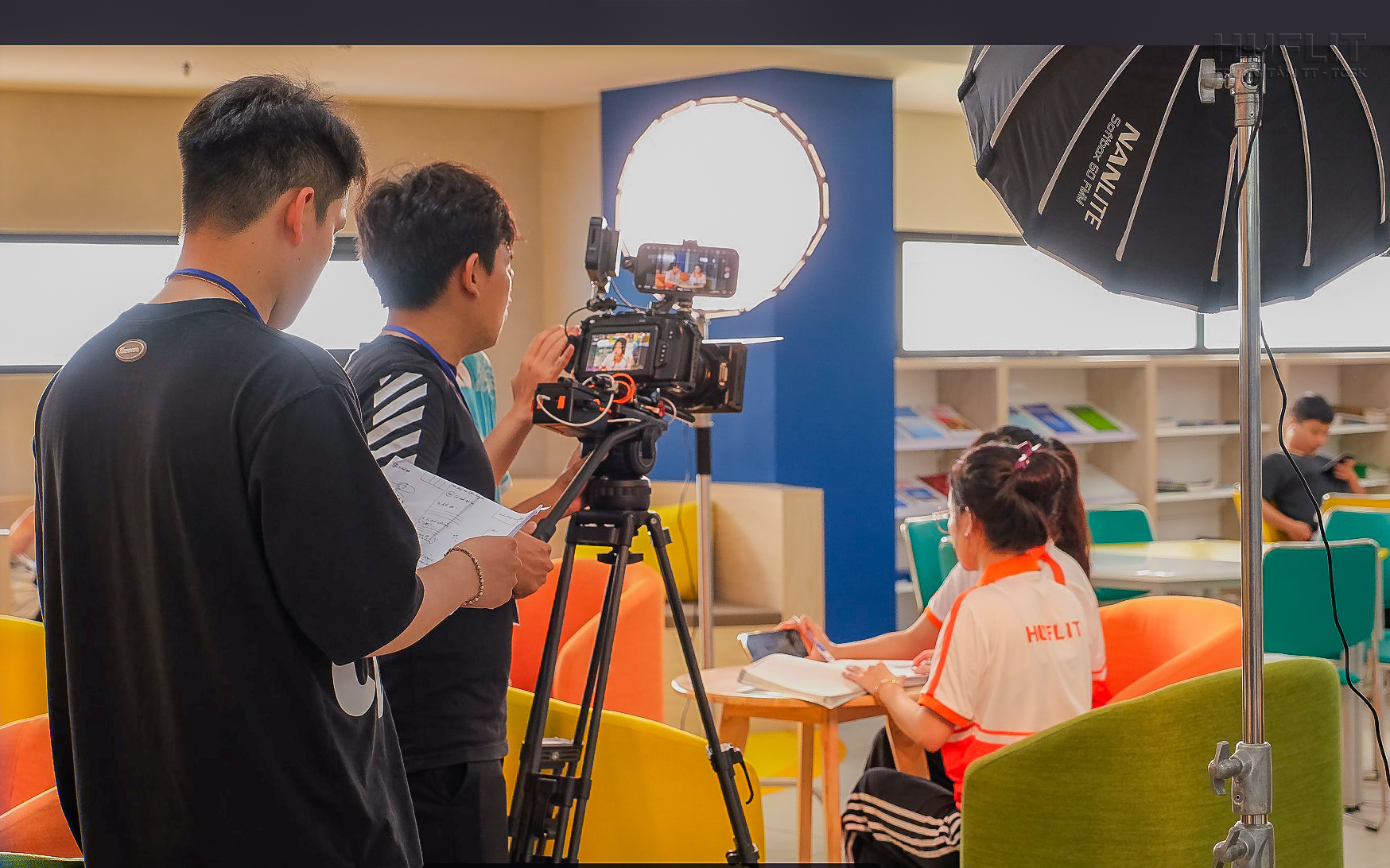
If you are passionate about creativity, technology, and aspire to tell stories through imagery, sound, and emotion in the digital era — the Multimedia Communication major at HUFLIT is an ideal starting point for your career journey.
CONTACT INFO
Apply for admission at
tuyensinh.huflit.edu.vn
Find out information
huflit.edu.vn
Advising education enrollment