



-
Proud to be HUFLITers #07 | M.A. Tran My Uyen – A lectern where a teacher wishes only to “watch her children grow up”At the HUFLIT Faculty of Foreign Languages, M.A. Tran My Uyen (Vice Dean) goes by many names. Some call her “Ms My”; her students call her “mother”. Colleagues often compare her to Mother Au Co with a hundred children. Yet to become the “mother” of the lecture hall she is today, she went through a profound shift in thinking that completely changed a teaching philosophy built over more than 30 years.
-
New Cybersecurity Regulations: Opportunities for the Cybersecurity Field in the Digital EraThe new cybersecurity regulations taking effect on 1 July 2026 not only help complete the legal framework but also drive demand for talent in cybersecurity. This is also the moment when the discipline becomes a promising choice for young people who love technology and information security.
-
“GenZ Major Insights 2026” – Episode 9: Boundless Journeys with HUFLIT’s Tourism and Hospitality ProgramsMany students choose the Tourism and Hospitality field simply because they love to travel. But passion alone is not enough to pursue this field in the long run. What matters more is understanding the nature of the discipline, its professional requirements, and the qualities needed to grow in a professional service environment.
The “Japanese corporate culture” class is officially back with a brand new version after 4 years
NGÀY: 08/04/2024
Chia Sẻ Qua
After 4 years of being conducted online, 2024 marks the first time the “Japanese Corporate Culture” class was held directly at HUFLIT with the accompaniment of 2 economic experts from Japan, Mr. Fumio Okita and Ms. Ayaka Fujiwara.
In order to support HUFLIT students to gain more knowledge and skills to work in Japanese companies after graduation, with the enthusiastic proposal of an economic expert from Japan – Mr. Fumio Okita, Ho Chi Minh City University of Foreign Languages and Information Technology continues to bring the class “Japanese Corporate Culture”.
This is an annual class held at universities in Ho Chi Minh City for students who love this subject. Notably, after 4 years of being conducted online to respond to the epidemic situation, 2024 marks the first time the class is held in person.
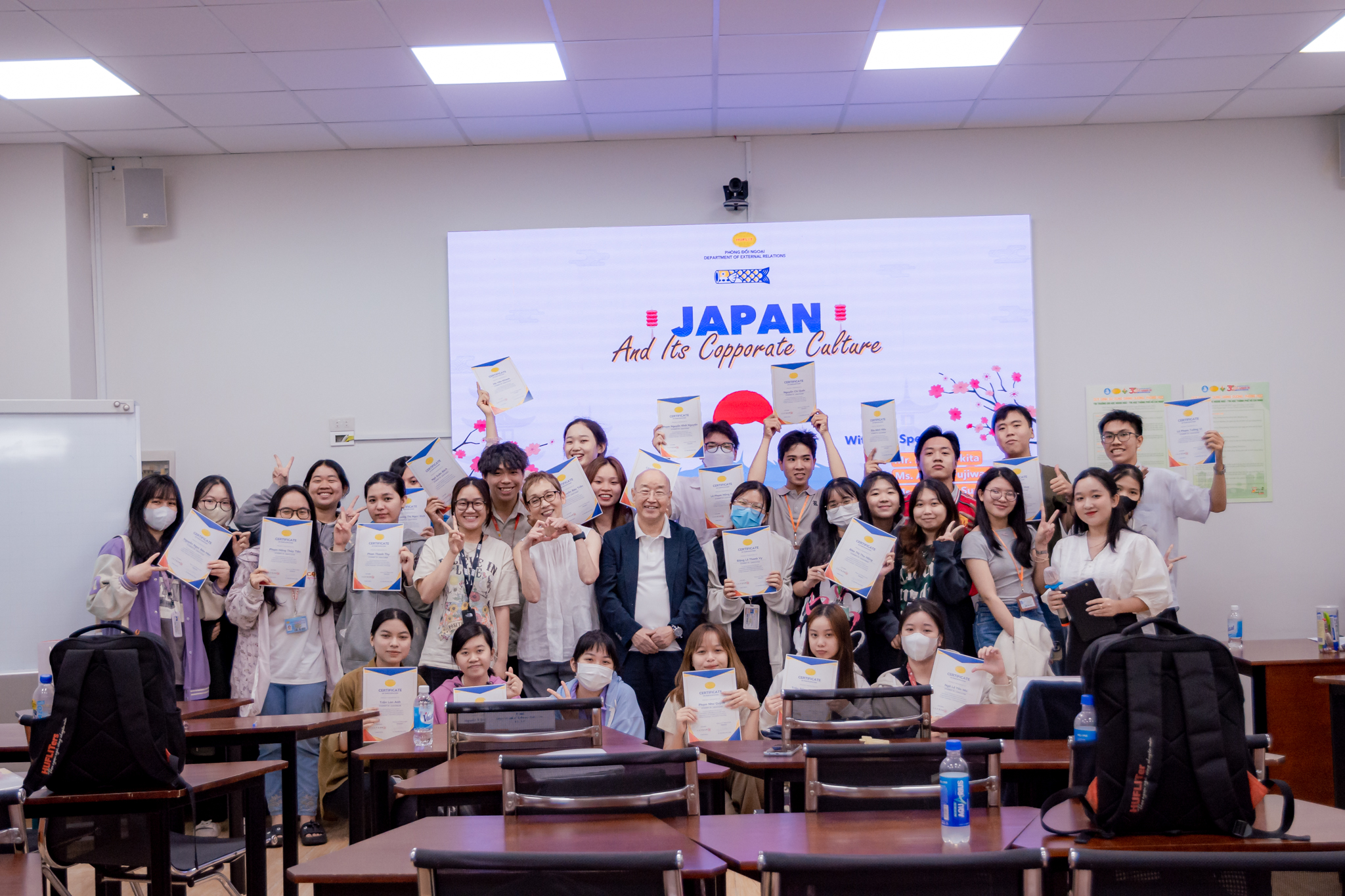
After 4 years of being conducted online, 2024 marks the first time the "Japanese Corporate Culture" class is held directly at HUFLIT
The class consists of two sessions. The first session on March 18, 2024, was presented in Japanese for students majoring in Japanese Studies, Faculty of Oriental Studies. The speakers of this session were Mr. Fumio Okita and Ms. Ayaka Fujiwara . The two teachers respectively delivered lectures on Japanese Corporate Culture and Typical Examples of International Business.
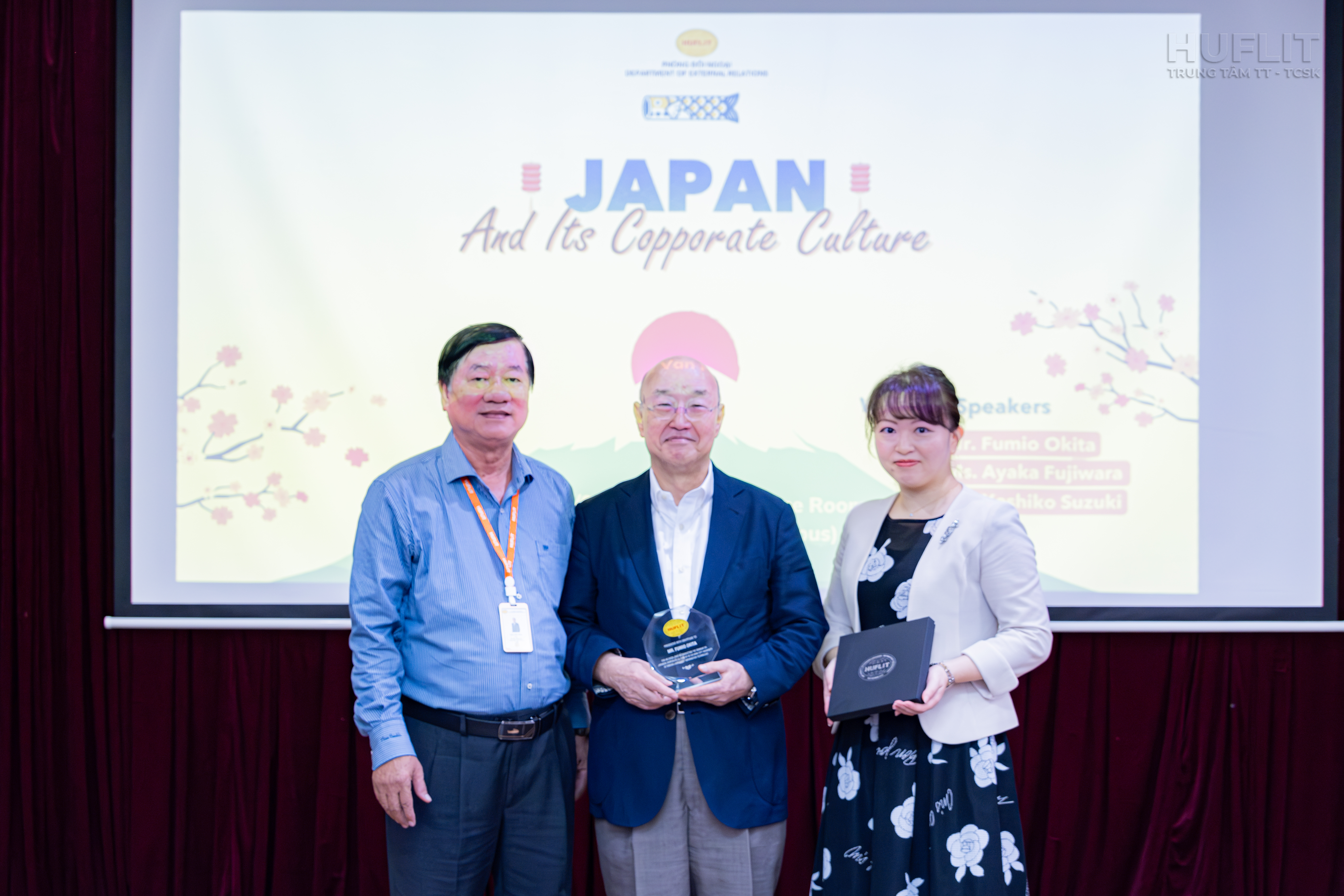
Speakers of the March 18, 2024 class: Mr. Fumio Okita and Ms. Ayaka Fujiwara
To meet the needs of students in other majors who are still interested in Japanese businesses, the second class on March 21, 2024 was presented in English with 2 topics: Japanese corporate culture (presented by Mr. Fumio Okita) and International Marketing (presented by Ms. Yoshiko Suzuki ).
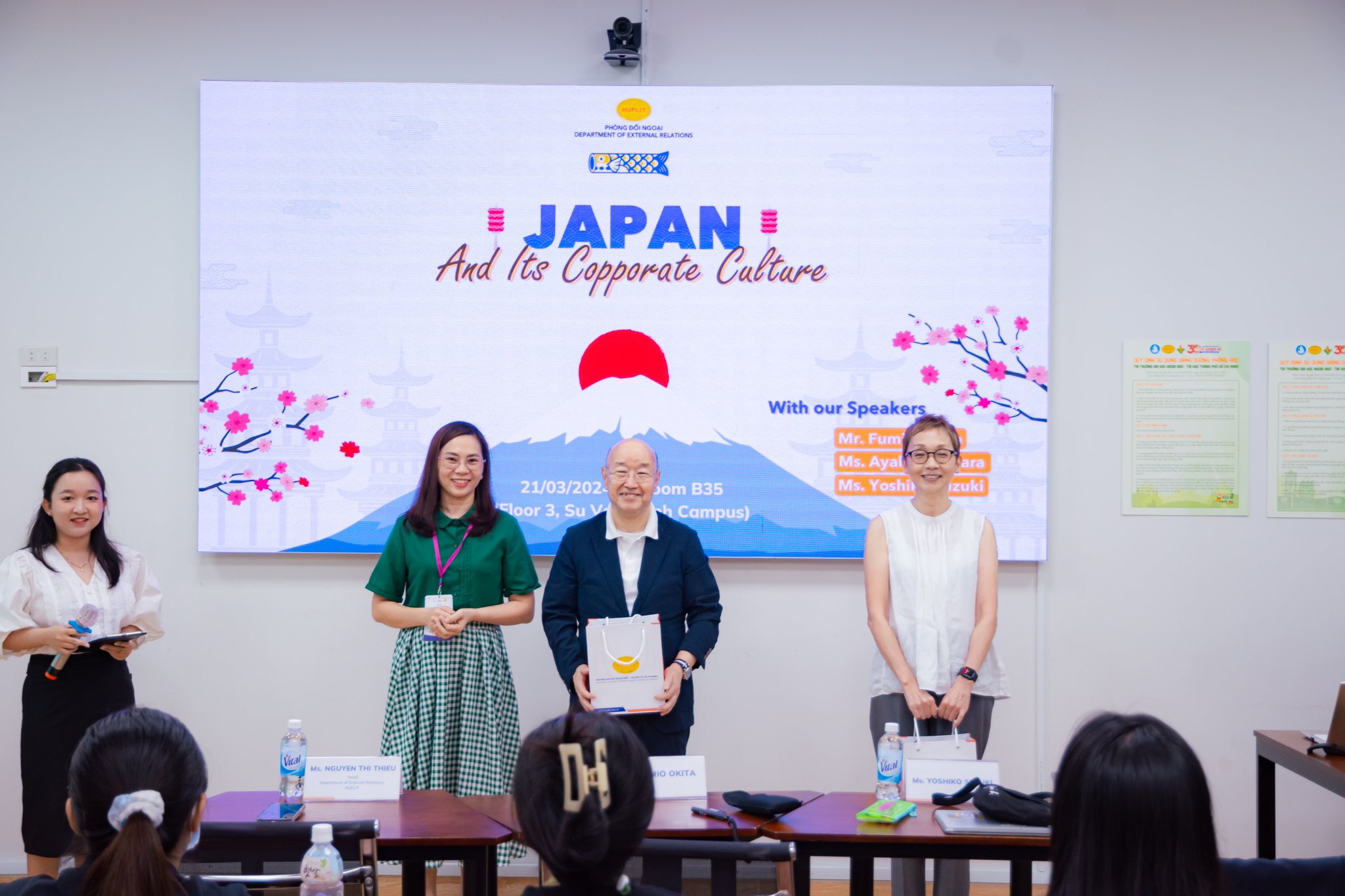
Speakers of the March 21, 2024 class: Mr. Fumio Okita and Ms. Yoshiko Suzuki
In the section “Japanese Corporate Culture”, Mr. Okita introduced the Overview of Japanese History, Japanese Business Management, Practical Understanding of Japanese Companies, Japanese Business Management in the New Era and Three Good Directions (Sanpo Yoshi). Through his lecture, he hopes that more and more young Vietnamese people will understand the thinking and behavior of Japanese people and Japanese companies, thereby helping people of the two countries understand each other better.
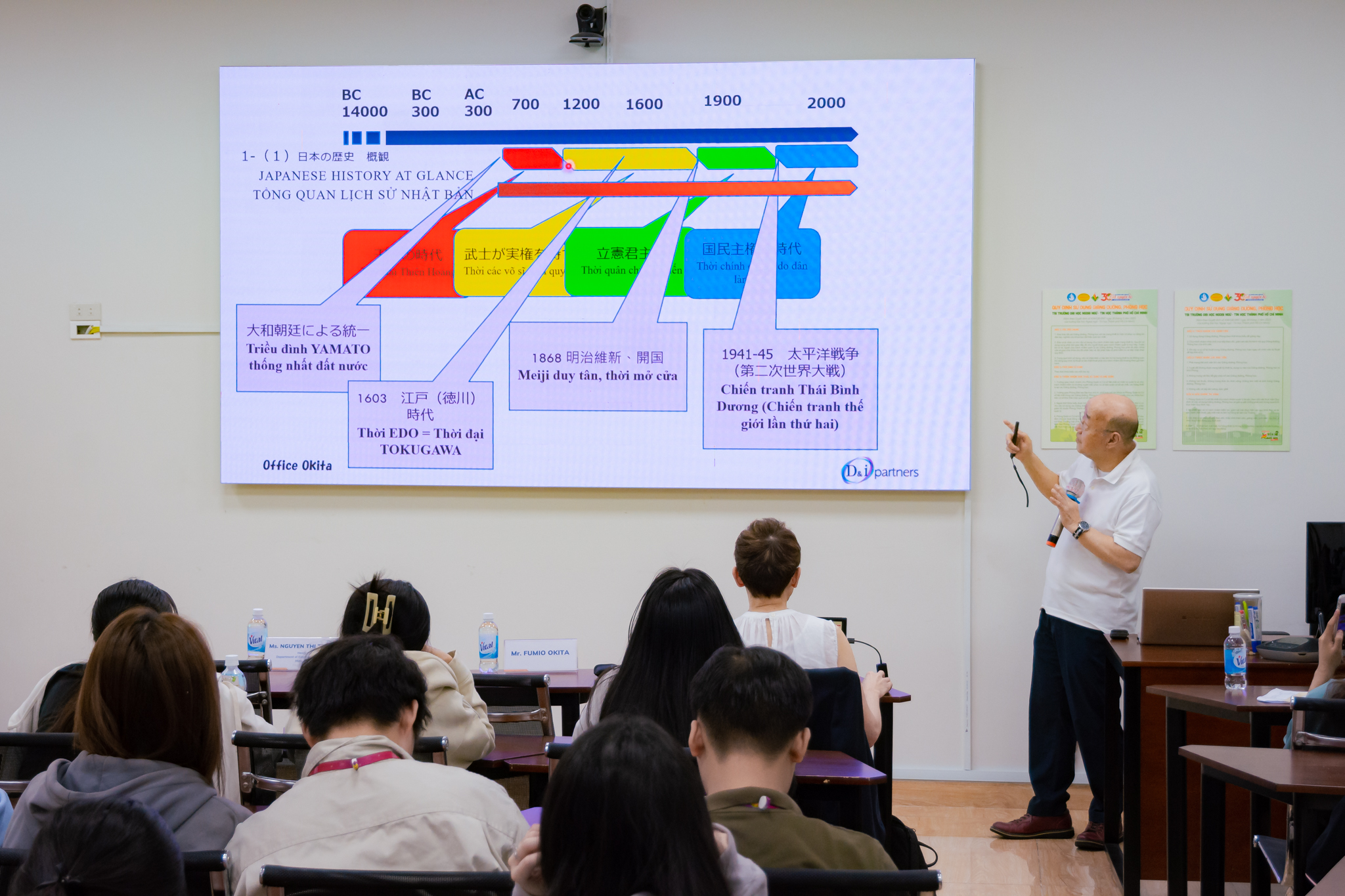
Mr. Fumio Okita was a speaker in the section "Japanese Corporate Culture"
Ms. Ayaka Fujiwara hopes that through the contents: Current status of Japanese food exports, Issues Japanese companies face in exporting and Key points in export business, you can grasp the basics of export work. This will be especially helpful if you pursue this path in the future.
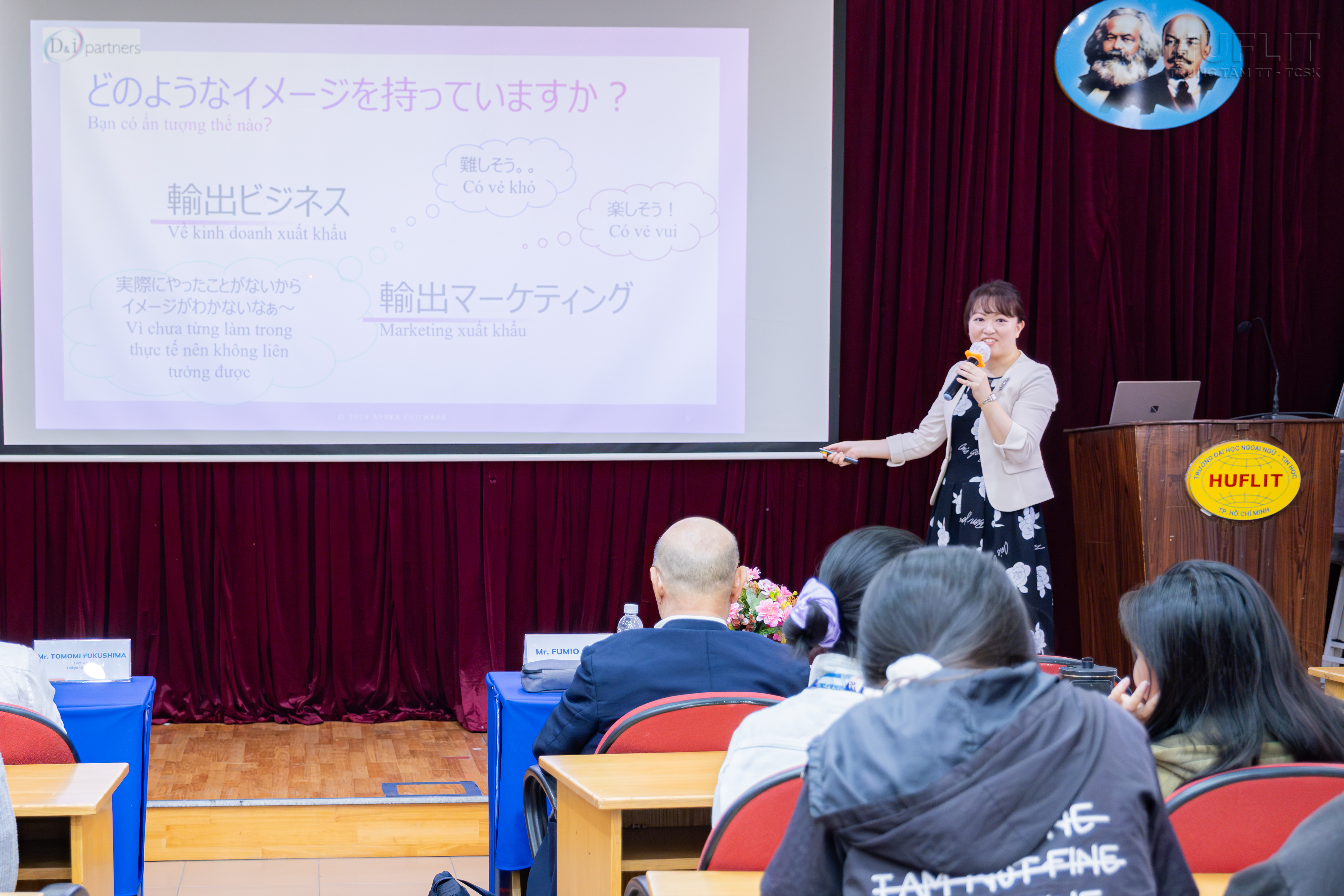
Ms. Ayaka Fujiwara and the lecture “Case Study of International Business”
In the “International Marketing” section, Ms. Suzuki helped students distinguish between international and domestic business, grasp the most important things about marketing, and understand the importance of building “bridges” between countries as well as the keys to a successful international business strategy.
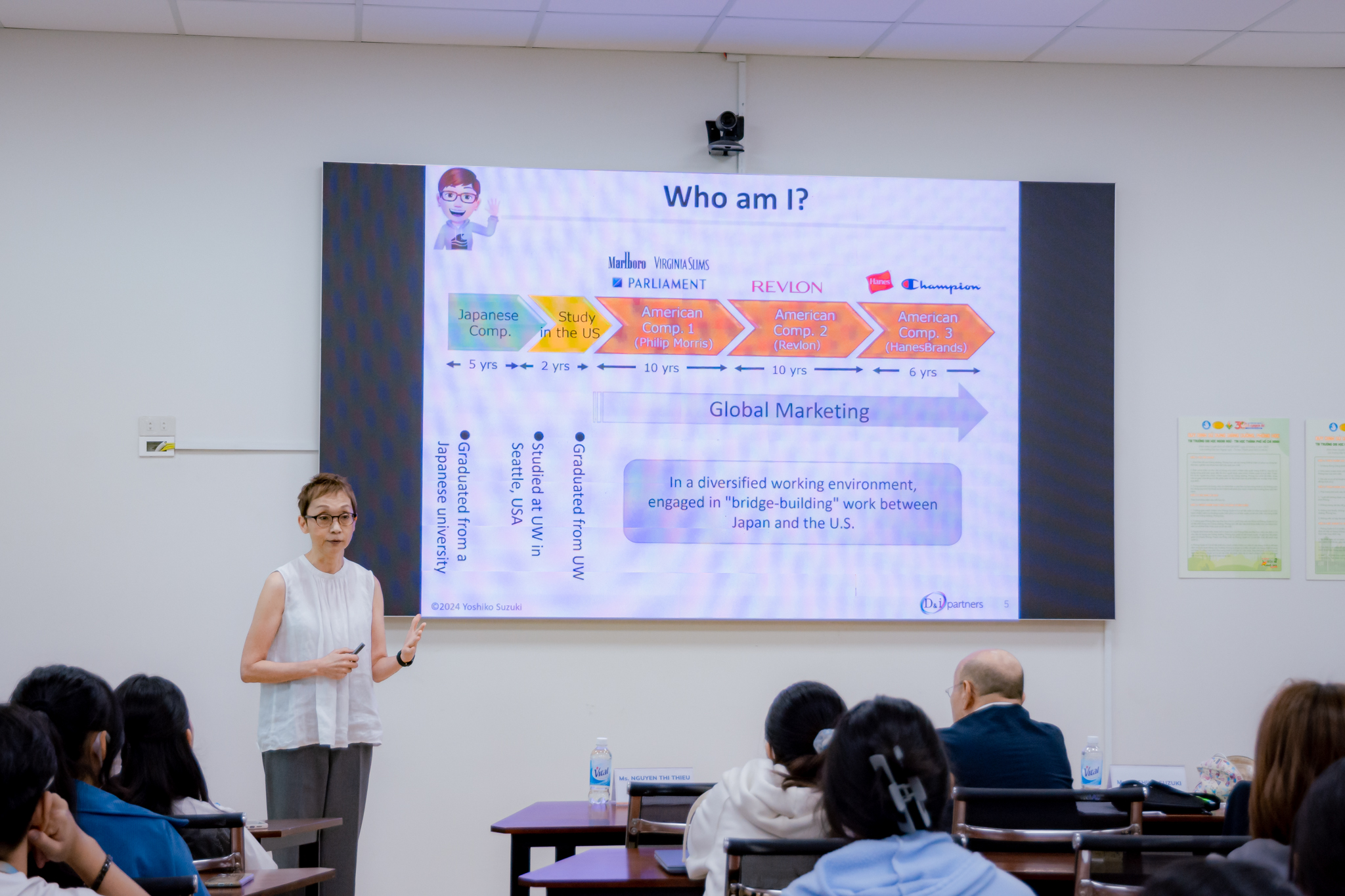
Ms. Yoshiko Suzuki brings the topic "International Marketing"
Hopefully, through this class, participants will gain basic knowledge about Japanese business culture in general, from there delve deeper into corporate culture, communication culture in Japanese enterprises in particular, such as: basic social knowledge necessary for an adult working in an organization; basic communication knowledge and culture necessary to handle work; communication skills necessary to build good relationships with colleagues and partners.
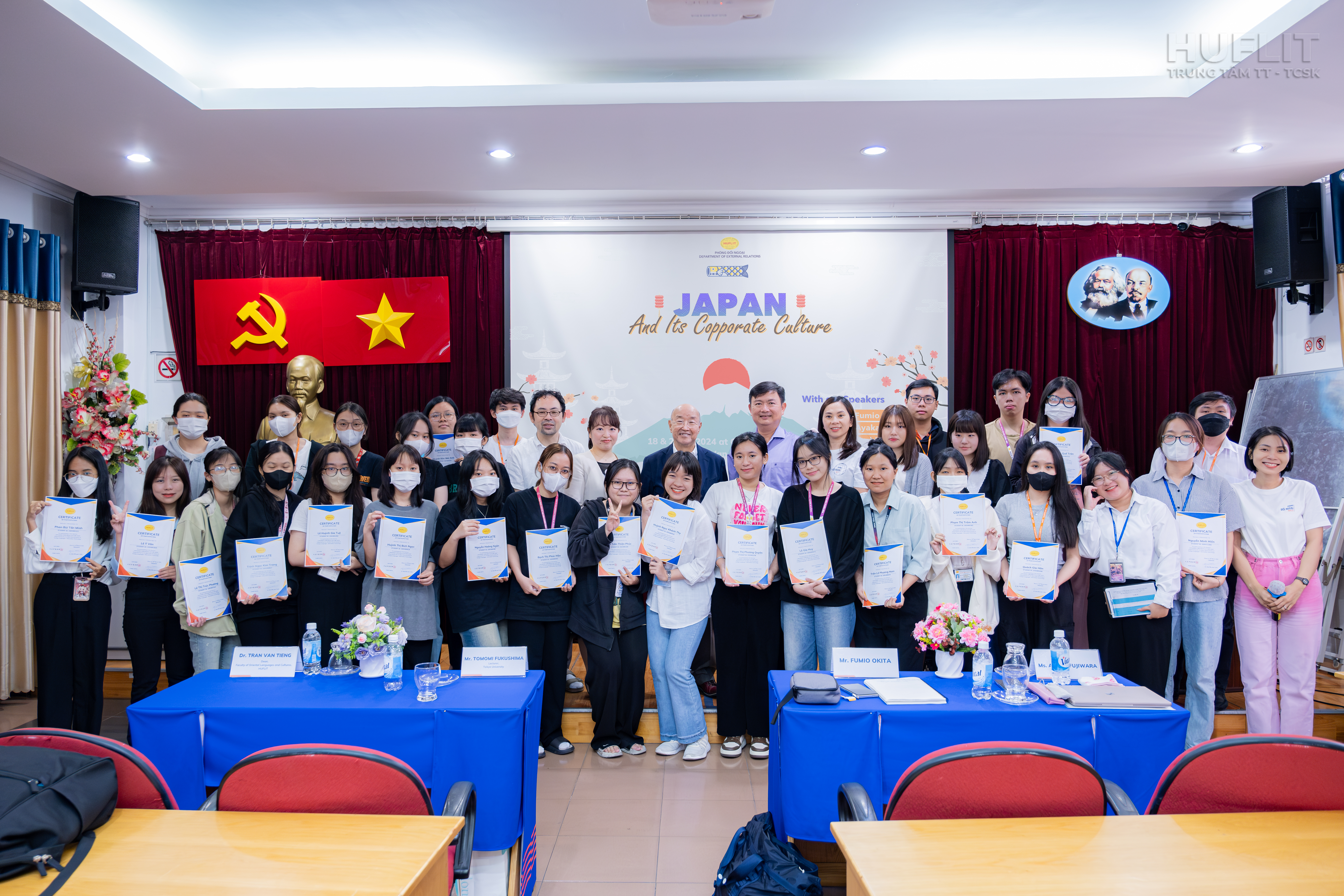
Students were awarded certificates of course completion by Mr. Okita and HUFLIT
CONTACT INFO
Apply for admission at
tuyensinh.huflit.edu.vn
Find out information
huflit.edu.vn
Advising education enrollment