


-
Proud to be HUFLITers #07 | M.A. Tran My Uyen – A lectern where a teacher wishes only to “watch her children grow up”At the HUFLIT Faculty of Foreign Languages, M.A. Tran My Uyen (Vice Dean) goes by many names. Some call her “Ms My”; her students call her “mother”. Colleagues often compare her to Mother Au Co with a hundred children. Yet to become the “mother” of the lecture hall she is today, she went through a profound shift in thinking that completely changed a teaching philosophy built over more than 30 years.
-
New Cybersecurity Regulations: Opportunities for the Cybersecurity Field in the Digital EraThe new cybersecurity regulations taking effect on 1 July 2026 not only help complete the legal framework but also drive demand for talent in cybersecurity. This is also the moment when the discipline becomes a promising choice for young people who love technology and information security.
-
“GenZ Major Insights 2026” – Episode 9: Boundless Journeys with HUFLIT’s Tourism and Hospitality ProgramsMany students choose the Tourism and Hospitality field simply because they love to travel. But passion alone is not enough to pursue this field in the long run. What matters more is understanding the nature of the discipline, its professional requirements, and the qualities needed to grow in a professional service environment.
HUFLITers Remove the “Curse” of Media Crisis with Pharmacist Tiến at “Breaking the Spell”
NGÀY: 22/04/2026
Chia Sẻ Qua
From the student perspective, media crises usually take place at the individual or small-group level, such as incidents related to statements or behaviour on social media or in the study environment, thereby affecting personal image and reputation. However, when entering the enterprise environment after graduation, media crises take place at the organisational level, with a wider degree of influence, directly impacting brand reputation, customer trust and business activity.
Therefore, equipping the mindset and crisis-handling skills right from when still a student is seen as an important foundation, helping students proactively adapt and effectively respond to media situations in the enterprise environment later.
The workshop had the participation of guest speaker Phạm Minh Hữu Tiến – Pharmacist, CEO & Founder of T.A Pharma, media and personal-image-building expert. With practical experience in the field of media and image building, each sharing part was integrated with real-world situations and in-depth analysis, contributing to bringing a comprehensive view of how enterprises handle crises in the modern context.
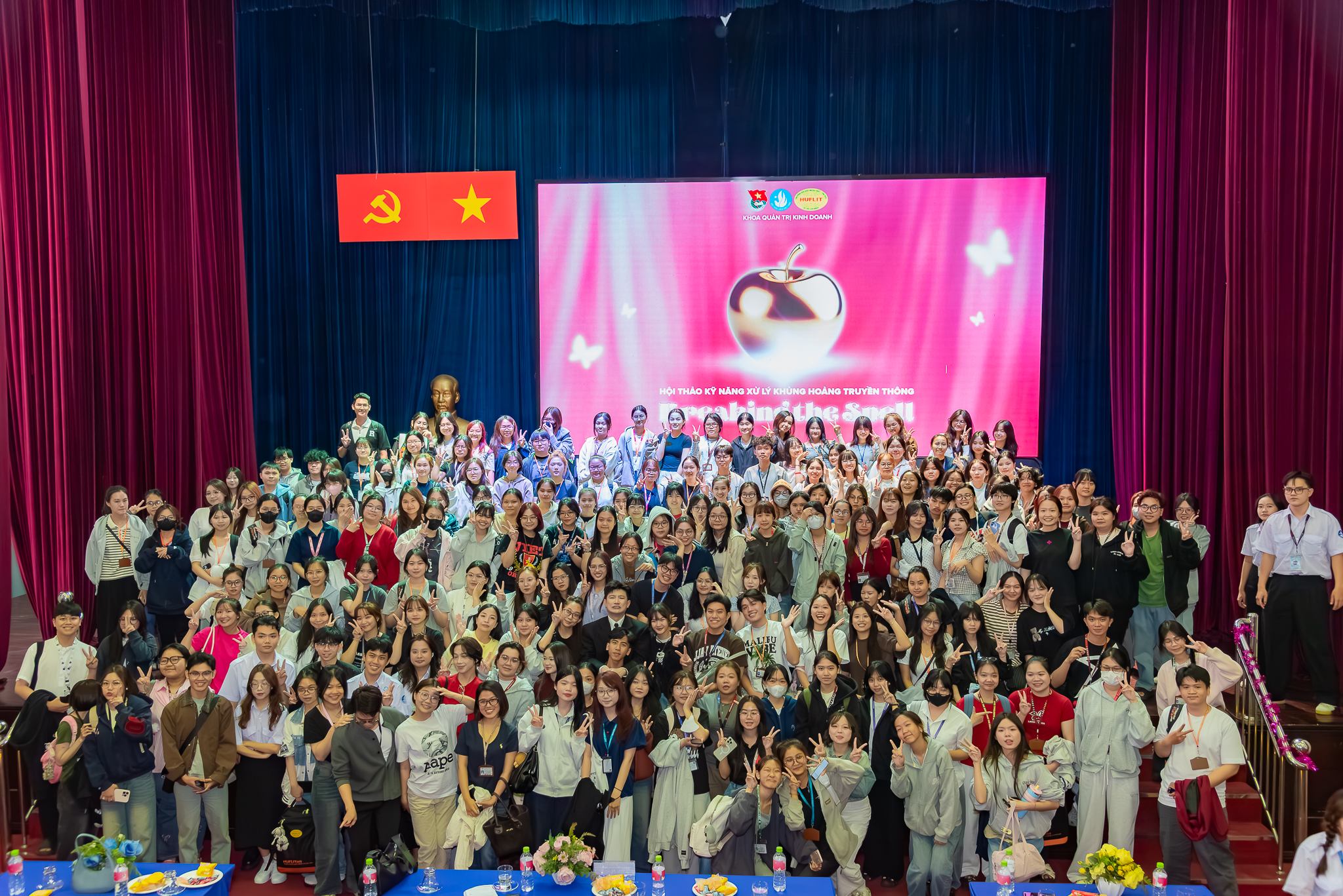
Speaker Phạm Minh Hữu Tiến (Pharmacist Tiến) and students attending the workshop
“Breaking the Spell” was inspired by the image of “The Golden Apple”, which is the combination of the poisoned apple (Snow White) representing the risks leading to a media crisis and the golden apple (Greek mythology) symbolising conflict and dispute. From there, the programme emphasises the role of early identifying the “spark” of crisis and proactively coming up with a handling solution.
Through the Snow White storyline, the workshop interpreted the journey of an enterprise facing a crisis, seeking a response solution and restoring reputation. The speaker played the role of “The Prince”, a guiding compass, giving analyses, arguments and some options and advice on how to handle a media crisis in an enterprise. Thereby, the workshop aimed at equipping students with the mindset and skills necessary to react to, handle and overcome a media crisis in the enterprise environment.
In order to help students approach the issue systematically and visually, the workshop content was built into three main parts, corresponding to each stage in the process of identifying, responding to and recovering after a media crisis.
The programme content was deployed through 03 main parts: ”Looking in the Mirror” (rough translation: Identifying the crisis), “How to Find the Prince?” (rough translation: Building a response strategy) and “Revival of the Kingdom” (rough translation: The solutions to restore reputation after a crisis). Besides, the direct exchange part created an opportunity for students to exchange, ask questions and approach the issue more practically.
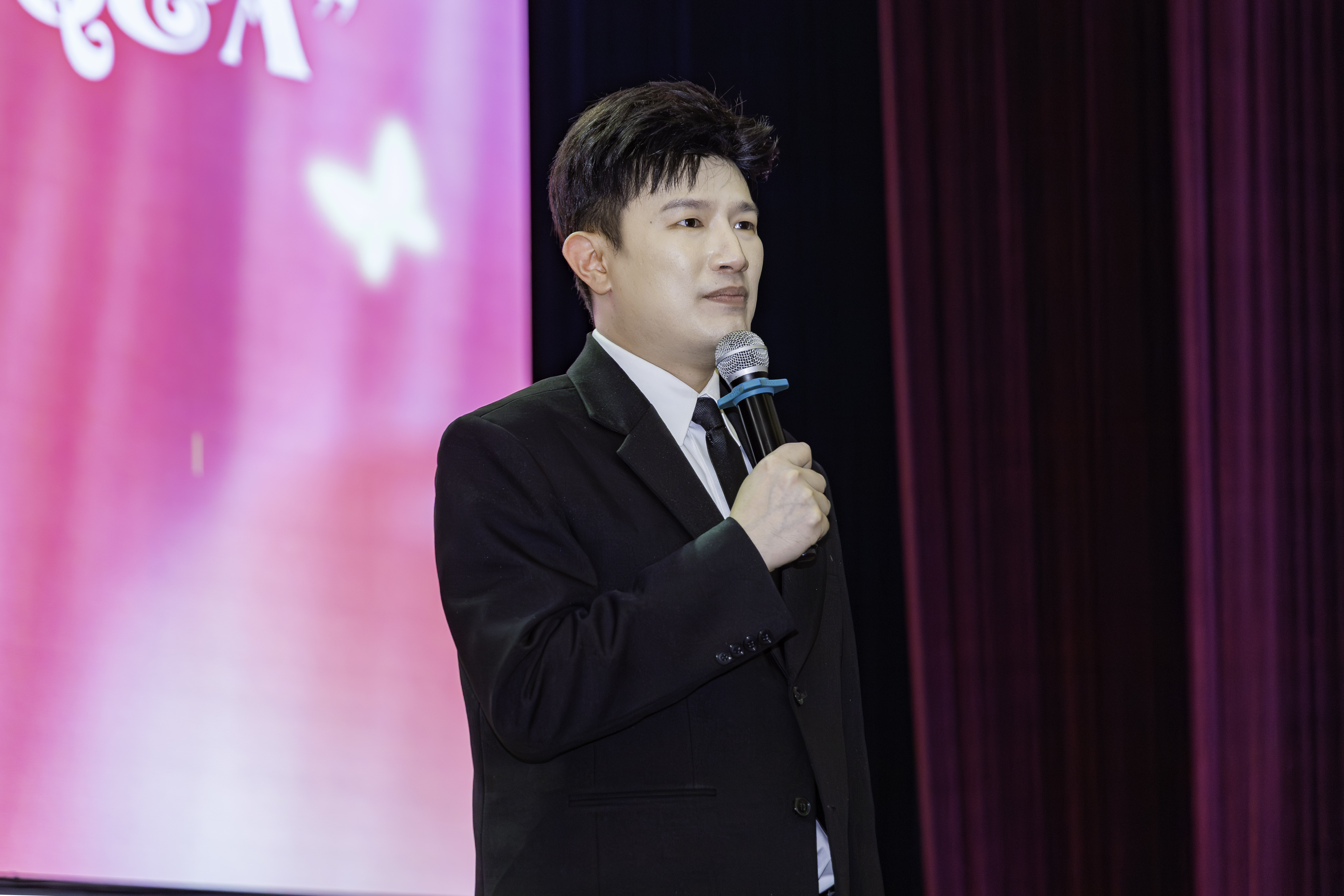
Speaker Phạm Minh Hữu Tiến (Pharmacist Tiến)
In the “Looking in the Mirror” part, the speaker focused on clarifying the concept of media crisis, the common types of crisis together with the causes and consequences. Through real-world situations, students accessed specific lessons, while also identifying the role of media in amplifying or controlling a crisis.
Next, “How to Find the Prince?” went deep into the prevention and response strategies in an enterprise, from building a plan, shaping the message to choosing suitable media channels. This content also raised practical issues, such as determining the moment to stay silent or proactively speak out under the pressure of public opinion.
Closing is “Revival of the Kingdom”, focusing on the solutions to restore reputation after a crisis. The speaker emphasised using media tools such as press releases and event organisation, while also maintaining consistency in the message and building a sustainable relationship with stakeholders during the process of rebuilding the enterprise’s image.
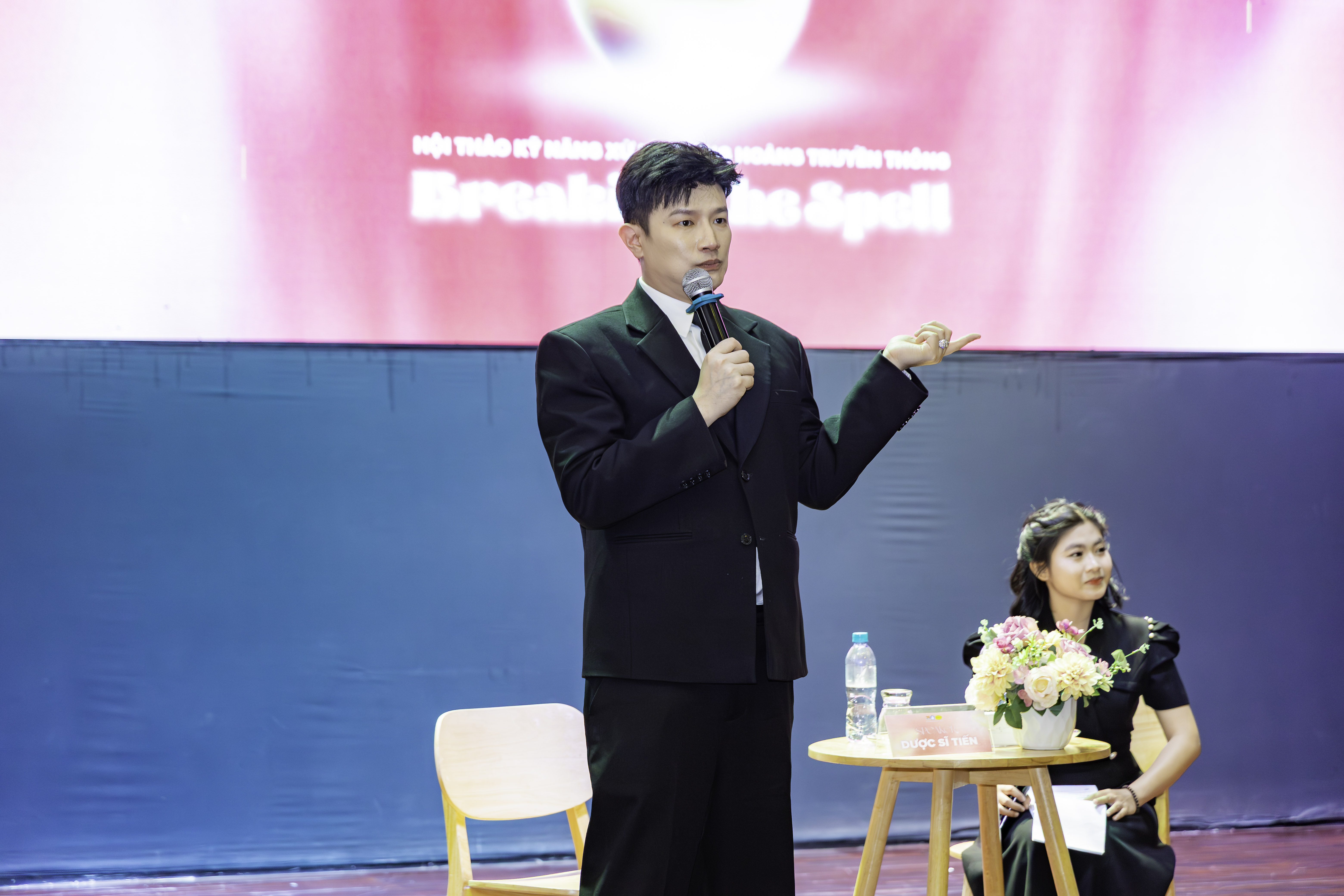
The speaker in the Q&A part with the students
The exchange part with the speaker took place in a lively and open atmosphere, attracting special interest from the students. Many practical questions surrounding how to handle a specific crisis situation, the strategy of building a personal image in the digital era or how to respond when an enterprise faces a “wave” of public opinion were raised.
The speaker dedicatedly shared, giving profound analyses accompanied by close illustrative examples, helping students easily visualise and apply them in reality. Thereby, the exchange part not only helped answer questions but also created a bridge connecting the speaker and students, contributing to the complete success of the programme.
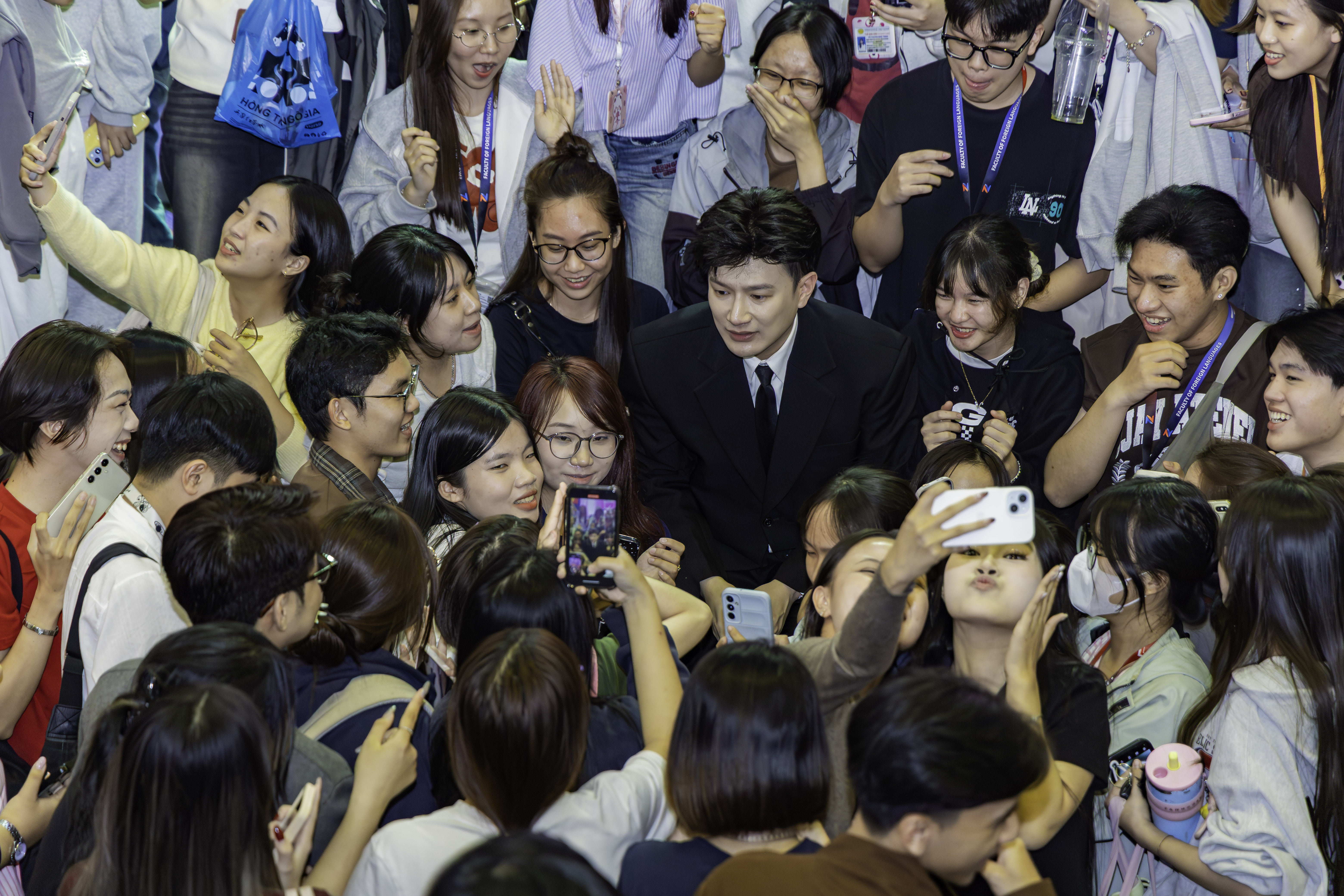
Students exchange with the speaker after the programme
Closing the workshop, “Breaking the Spell” not only brought foundational knowledge but also inspired students to proactively equip media-crisis handling skills in the context of an increasingly complex digital environment. The programme contributed to helping students more clearly recognise the role of media in enterprise activity, while also enhancing critical thinking and the ability to improvise before real-world situations. It is believed that, with the practical values received, each student will have more solid baggage to confidently step into the professional environment in the future.
CONTACT INFO
Apply for admission at
tuyensinh.huflit.edu.vn
Find out information
huflit.edu.vn
Advising education enrollment