


-
Proud to be HUFLITers #07 | M.A. Tran My Uyen – A lectern where a teacher wishes only to “watch her children grow up”At the HUFLIT Faculty of Foreign Languages, M.A. Tran My Uyen (Vice Dean) goes by many names. Some call her “Ms My”; her students call her “mother”. Colleagues often compare her to Mother Au Co with a hundred children. Yet to become the “mother” of the lecture hall she is today, she went through a profound shift in thinking that completely changed a teaching philosophy built over more than 30 years.
-
New Cybersecurity Regulations: Opportunities for the Cybersecurity Field in the Digital EraThe new cybersecurity regulations taking effect on 1 July 2026 not only help complete the legal framework but also drive demand for talent in cybersecurity. This is also the moment when the discipline becomes a promising choice for young people who love technology and information security.
-
“GenZ Major Insights 2026” – Episode 9: Boundless Journeys with HUFLIT’s Tourism and Hospitality ProgramsMany students choose the Tourism and Hospitality field simply because they love to travel. But passion alone is not enough to pursue this field in the long run. What matters more is understanding the nature of the discipline, its professional requirements, and the qualities needed to grow in a professional service environment.
HUFLIT and Yuan Ze University (Taiwan) join hands to “decode” artificial intelligence (AI)
NGÀY: 03/09/2025
Chia Sẻ Qua
Recently, Yuan Ze University (YZU), Taiwan, delivered a special lecture titled “AI – A More Realistic Review” at HUFLIT, offering HUFLIT students diverse, in-depth, and insightful perspectives on the real impacts of artificial intelligence (AI) in today’s context.
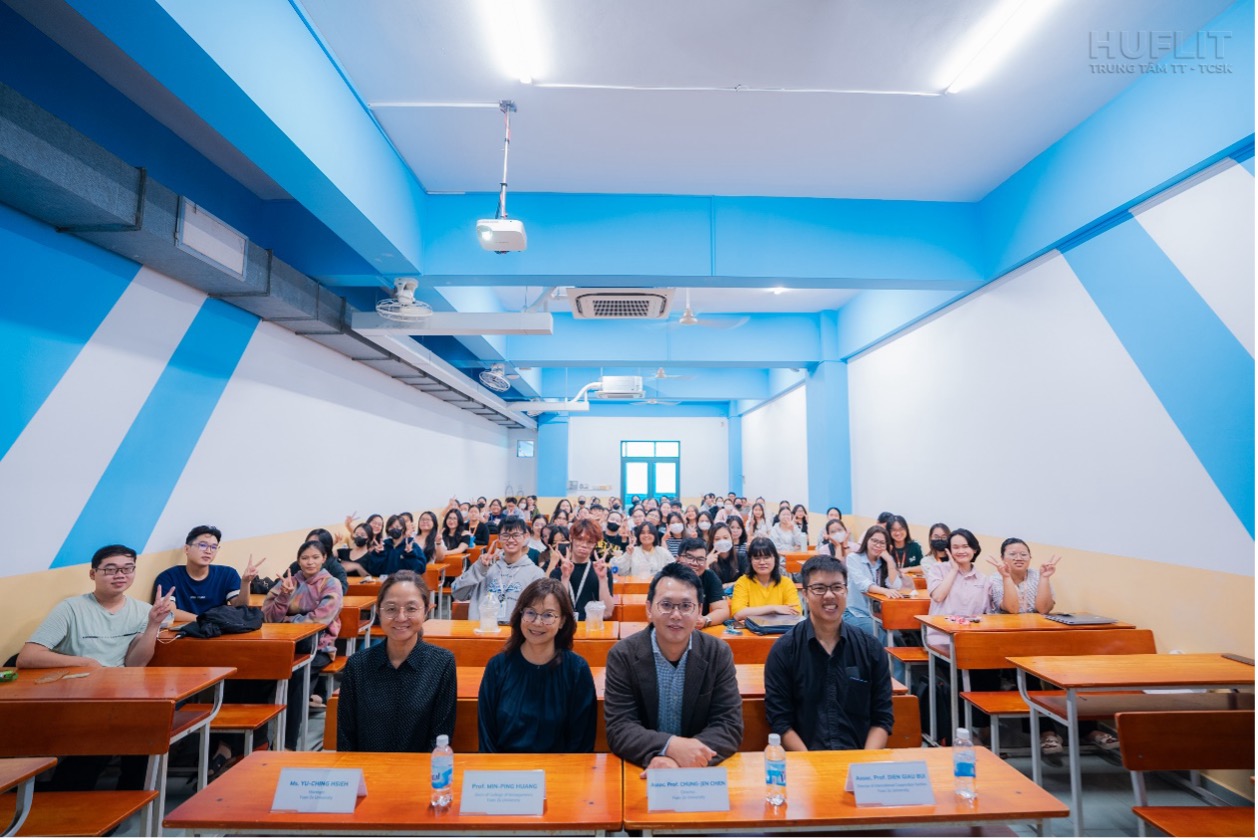
The special lecture *“AI – A More Realistic Review”* for students was delivered by Dr. Richard Bui
Earlier, a meeting between representatives of the two universities opened up various possibilities for collaboration through new programs for students of the Faculty of Economics – Finance, Business Administration, as well as postgraduate initiatives such as 2+2, 3+2, and teaching internships. This underscores both institutions’ commitment to strengthening academic and research cooperation, creating valuable learning and exchange opportunities for students in the future.
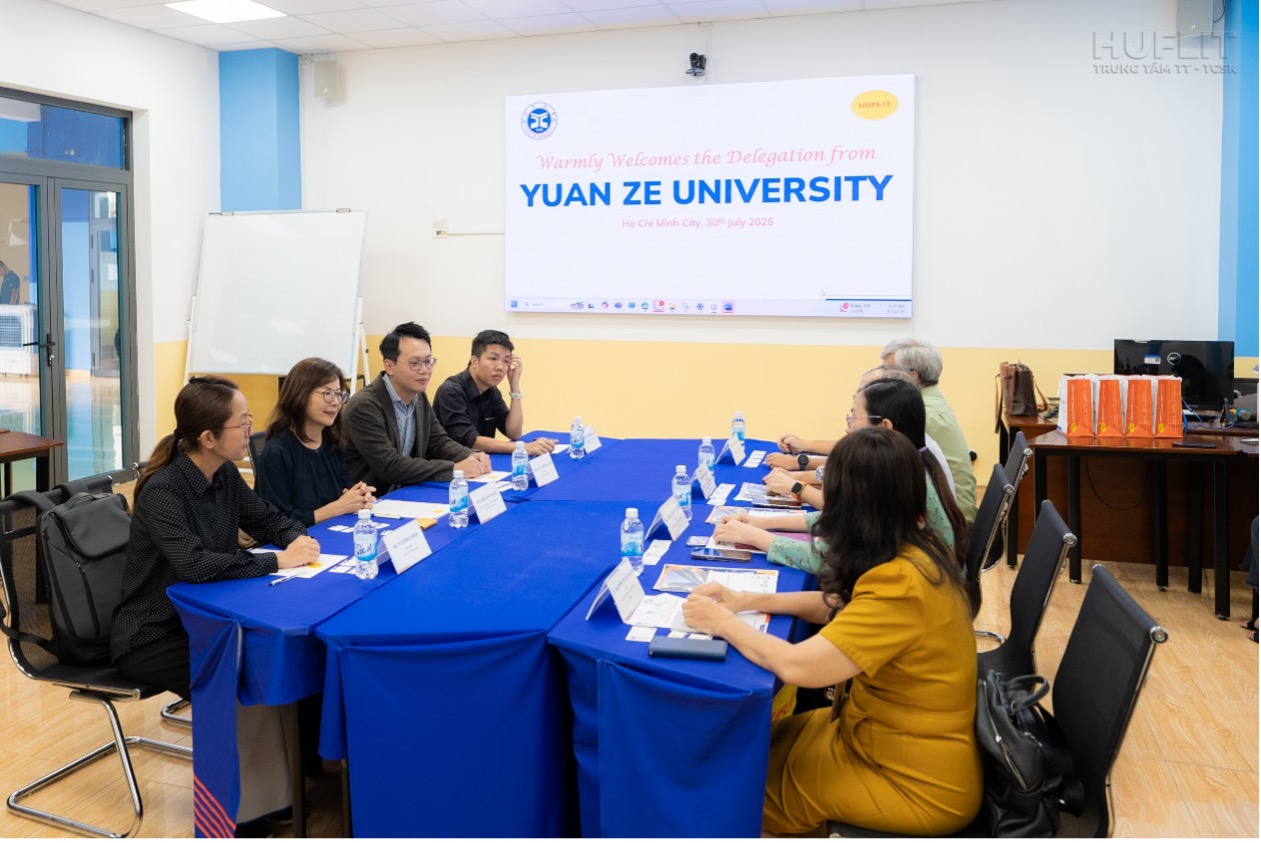
The meeting opened up various possibilities for collaboration through new programs for students of both universities
The highlight of the meeting was a special lecture for students titled “AI – A More Realistic Review”, presented by Dr. Richard Bui. Instead of focusing on optimistic predictions, the session offered a critical and evidence-based perspective on the real impacts of AI on the economy, various industries, and the labor market.
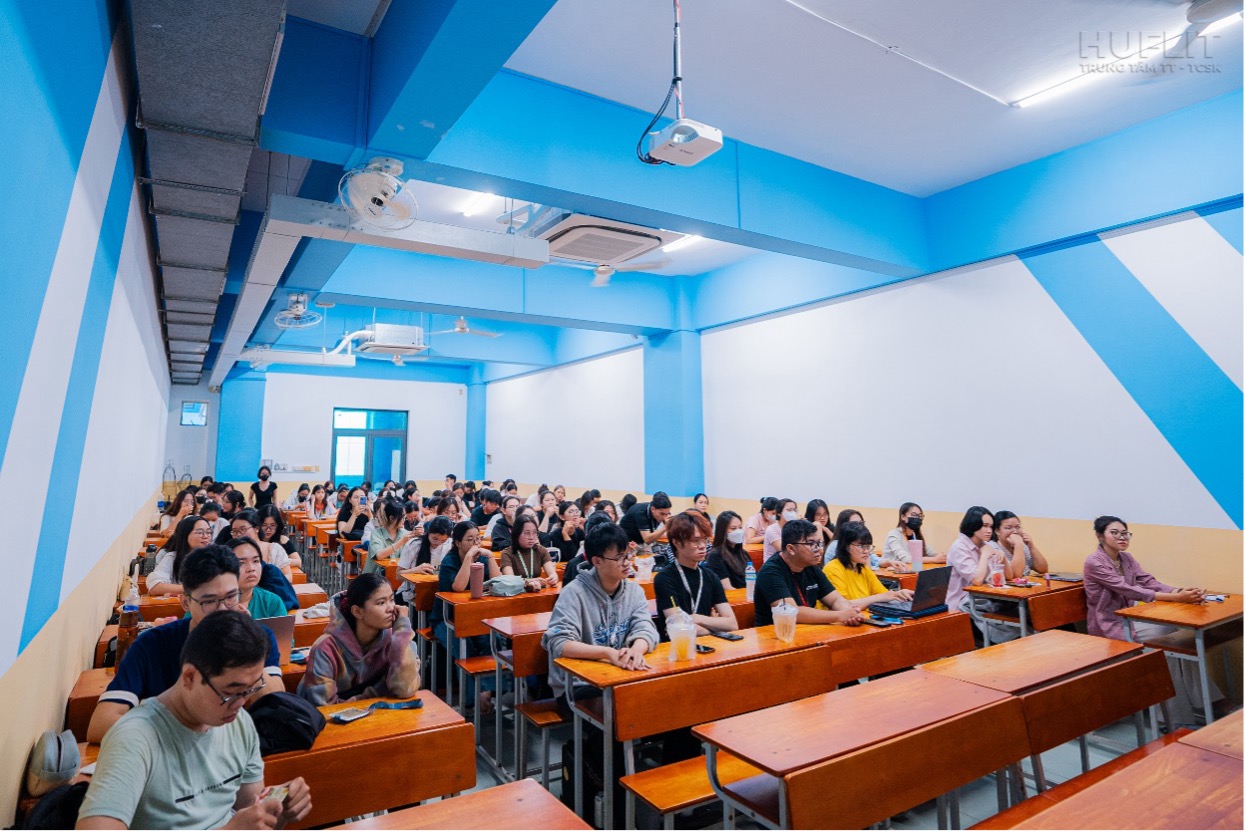
The lecture provided diverse, in-depth, and well-researched perspectives on the impact of AI in today’s context
At the beginning of his presentation, Dr. Richard Bui acknowledged the tremendous public interest in AI and ChatGPT, as reflected in search statistics and optimistic forecasts from major organizations such as Goldman Sachs and McKinsey regarding their potential to boost GDP. While AI promises significant advancements, its actual impact on economic growth appears to be more modest than initially predicted.
One of the most engaging parts of the seminar was the analysis of AI exposure across different labor groups. Contrary to the common assumption that AI mainly replaces low-skilled or manual jobs, the data charts revealed that highly educated and higher-income professions (college and postgraduate levels) are among the most affected groups.
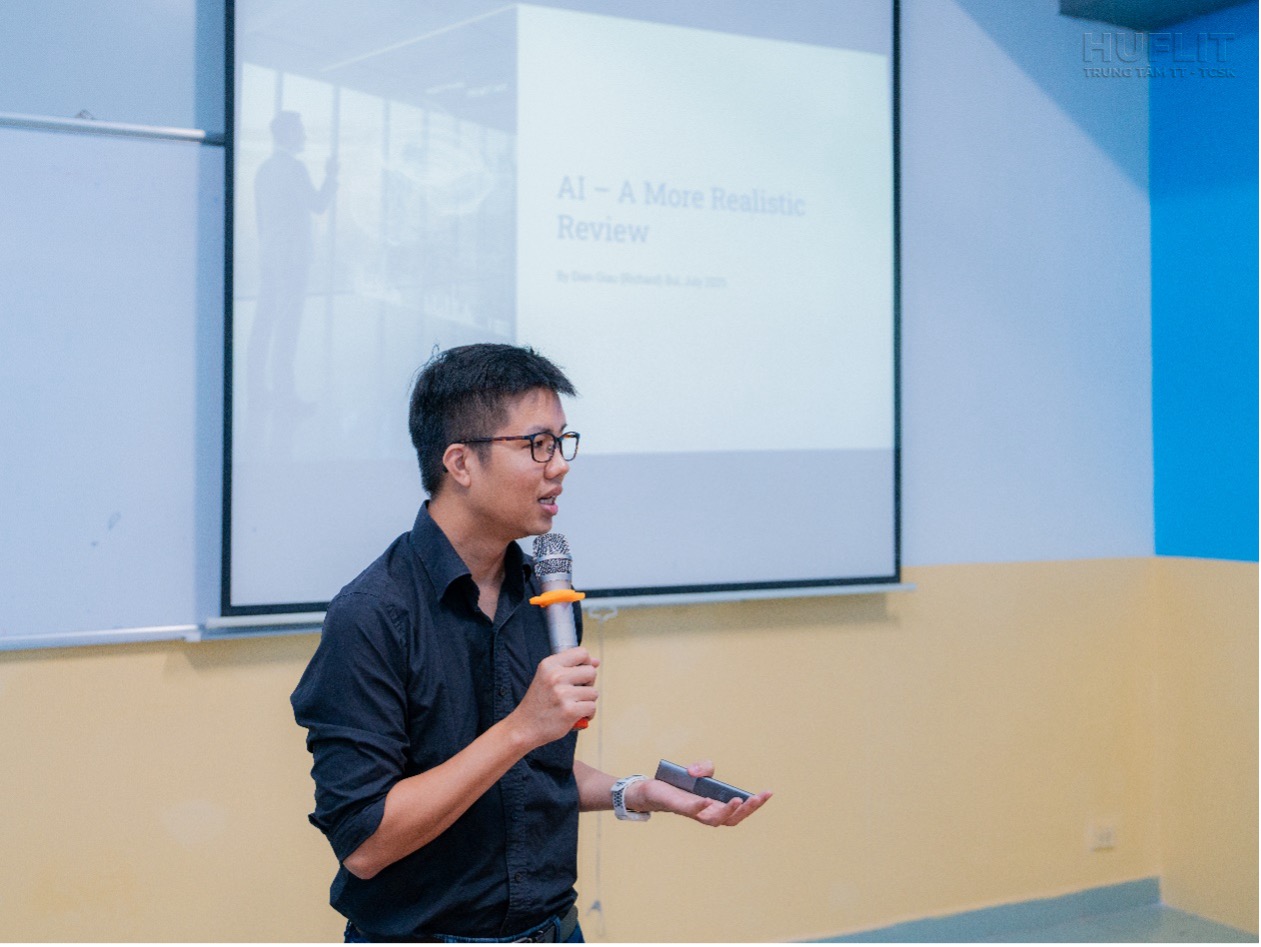
Dr. Richard Bui offered direct advice to students, emphasizing that they need to learn more than previous generations in order to secure good job opportunities
The final part of the presentation introduced the “Skills Demand Paradox.” Surprisingly, the skills that are increasingly in demand in the age of AI — such as Engineering, Analytics, Marketing, Finance, and IT — are also the ones experiencing a decline in demand. The speaker explained that this does not mean these skills are becoming obsolete; rather, the labor market now requires a deeper, more advanced level of these skills, integrated and enhanced by AI.
From this, Dr. Richard Bui offered direct advice to students: they need to learn more than previous generations in order to secure good job opportunities. Students should not avoid fields affected by AI but instead proactively learn new AI-related skills to turn technology into their own competitive advantage.
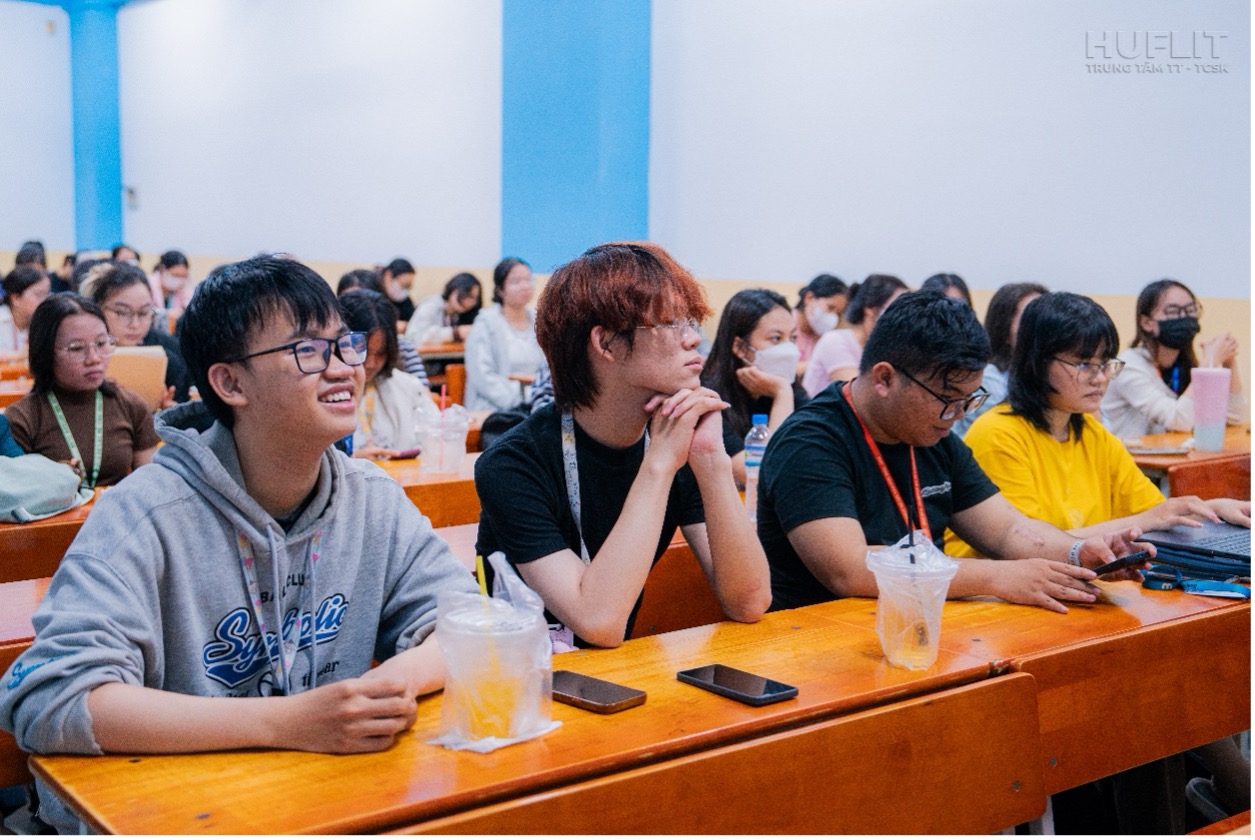
The event offered fresh and practical insights: the world is changing, and AI stands as the greatest driving force behind that transformation
The seminar concluded with a lively Q&A session, where HUFLIT students confidently raised questions, exchanged ideas, and delved deeper into the topics discussed. The event ended successfully, offering fresh and practical insights: the world is changing, and AI is the greatest driving force behind that transformation. Instead of worrying, students are encouraged to view this as an opportunity to equip themselves with advanced knowledge and skills, turning AI into a powerful tool to conquer the future.
CONTACT INFO
Apply for admission at
tuyensinh.huflit.edu.vn
Find out information
huflit.edu.vn
Advising education enrollment