



-
Proud to be HUFLITers #07 | M.A. Tran My Uyen – A lectern where a teacher wishes only to “watch her children grow up”At the HUFLIT Faculty of Foreign Languages, M.A. Tran My Uyen (Vice Dean) goes by many names. Some call her “Ms My”; her students call her “mother”. Colleagues often compare her to Mother Au Co with a hundred children. Yet to become the “mother” of the lecture hall she is today, she went through a profound shift in thinking that completely changed a teaching philosophy built over more than 30 years.
-
New Cybersecurity Regulations: Opportunities for the Cybersecurity Field in the Digital EraThe new cybersecurity regulations taking effect on 1 July 2026 not only help complete the legal framework but also drive demand for talent in cybersecurity. This is also the moment when the discipline becomes a promising choice for young people who love technology and information security.
-
“GenZ Major Insights 2026” – Episode 9: Boundless Journeys with HUFLIT’s Tourism and Hospitality ProgramsMany students choose the Tourism and Hospitality field simply because they love to travel. But passion alone is not enough to pursue this field in the long run. What matters more is understanding the nature of the discipline, its professional requirements, and the qualities needed to grow in a professional service environment.
HUFLIT Japanese Field Group: A Passport Opening Up Limitless Career Opportunities
NGÀY: 26/06/2026
Chia Sẻ Qua
Not limited to a language role, the Faculty’s alumni take part directly in operation, management and connection activities in an international working environment. Those career journeys show that Japanese is not only a skill but also a foundation opening up many development opportunities in different fields.
From a HUFLIT student to Project Manager at a Japanese enterprise
Nearly a decade after graduation, Thương Huệ Mẫn (cohort 2016) currently holds the position of Project Manager at Brain Communications – a Japanese enterprise operating in the field of communication and event organisation.
According to Huệ Mẫn, to develop in a Japanese corporate environment, Japanese capacity is a necessary condition but not the only factor determining success. More important are communication ability, teamwork, a proactive spirit and leadership capacity.
She sums up: “A good employee is someone who proactively seeks information, is not afraid to ask questions when they don’t understand an issue, and skilfully connects customers, partners and suppliers so that work flows smoothly.”
From the perspective of someone holding a project-management position, Huệ Mẫn believes that training soft skills while still studying at the university helped her adapt quickly to a professional working environment.
Not only making a mark at Japanese-invested enterprises domestically, many HUFLIT alumni also confidently ‘reach out to the big sea’, working and advancing directly in the land of cherry blossoms. Nguyễn Trúc Quỳnh Anh is one such example.
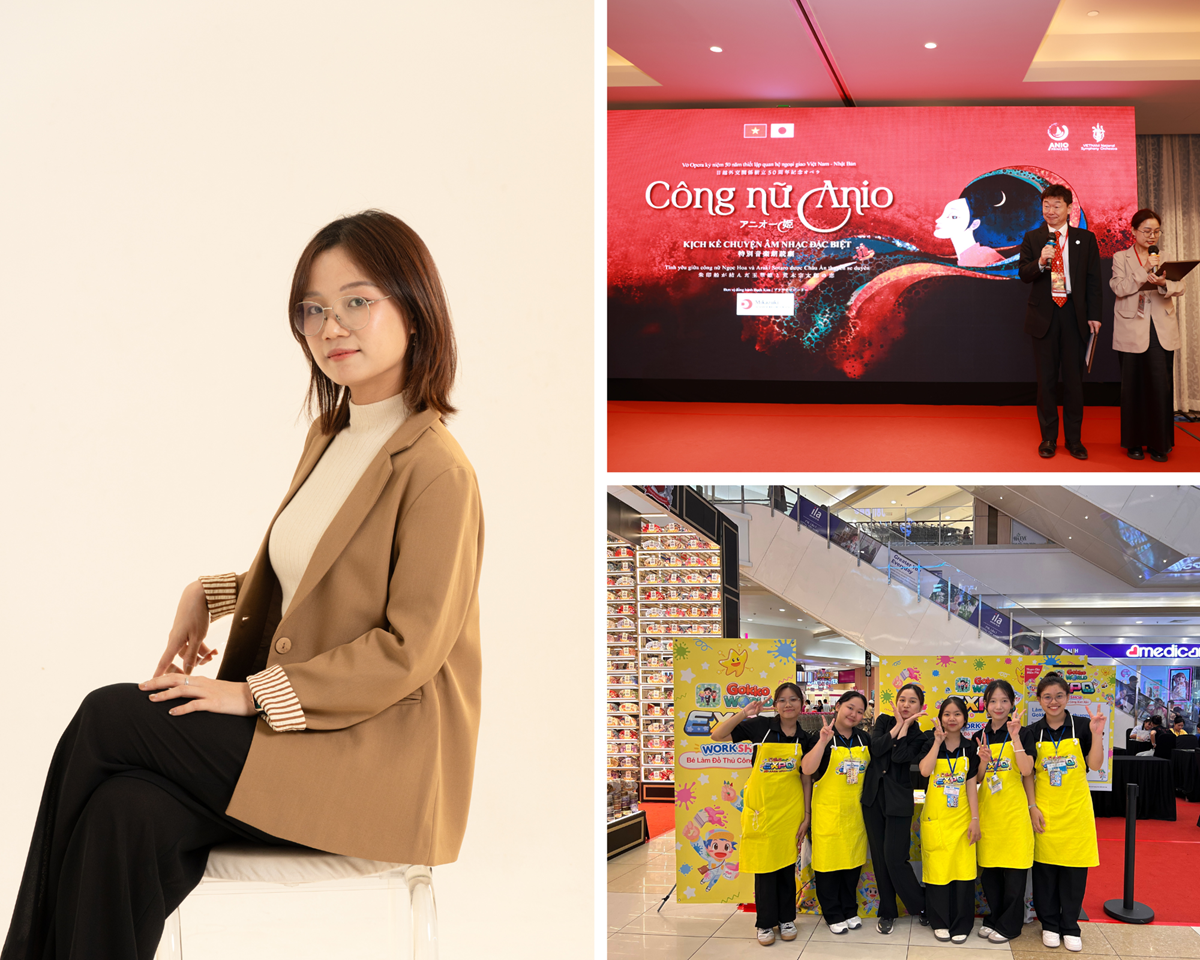
Thương Huệ Mẫn (alumna of cohort 2016), currently Project Manager at Brain Communications.
From the Japanese Club to a job in Japan
Nguyễn Trúc Quỳnh Anh (cohort 2016) currently works at the Nitori retail corporation – one of the leading retail enterprises in Japan.
Before going to Japan to work, Quỳnh Anh was Head of the HUFLIT Japanese Club and actively took part in Japanese debate contests as well as cultural-exchange activities. In her view, the experiences outside the lecture hall brought many valuable lessons in communication, connection and working with a team.
“I learned how to communicate, connect and work with many different people. Even now, those experiences still greatly support my work and life,” Quỳnh Anh shared.
Currently, she regularly works directly with Japanese customers, advising on products and taking part in managing sales activities at the store. The working environment in Japan requires not only foreign language capacity but also adaptability, communication skills and a professional working manner.
From club activities and academic contests to real work in Japan, Quỳnh Anh’s journey at HUFLIT shows the value of proactively experiencing and accumulating skills right from being a student.
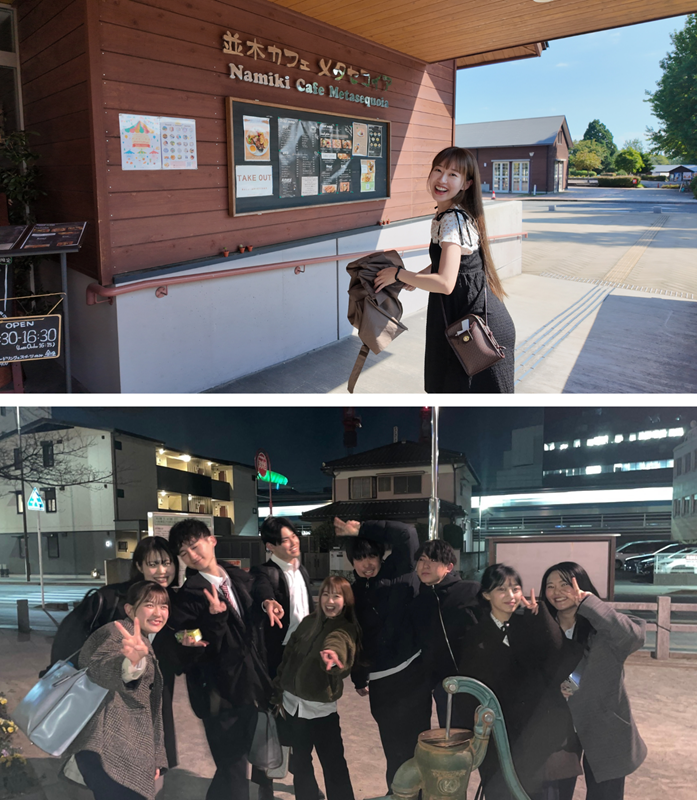
Nguyễn Trúc Quỳnh Anh, alumna of cohort 2026, working at the Nitori corporation in Japan
A learning environment tied to the practical requirements of Japanese enterprises
A common point in the alumni’s sharing is that Japanese enterprises look not only for candidates good at foreign languages but also highly value personnel with professional working skills, a sense of responsibility and the ability to adapt to an international environment.
Agreeing with this view, many generations of alumni all affirm that the Japanese corporate environment demands rigour in soft skills. If Lê Thụy Ngọc Hạnh and Nguyễn Minh Trang (in the IT and Communication fields) both emphasise the Ho-Ren-So principle (Report – Contact – Discuss) and meticulousness as the ‘guiding compass’ to score points with superiors; then Võ Thị Ngọc Loan (an administrative staff member) values office-informatics ability and time management.
From a management angle, Ms Triệu Thị Thanh Vân (Project Manager at Gonosen International) sums up: “Boldly take on the team-leader role when working at university and proactively practise communication. Good foreign languages combined with management skills are the ‘golden key’ that opens up every opportunity.’
The skills mentioned by the alumni such as communication, teamwork, problem-solving, Ho-Ren-So or the ability to adapt to the Japanese corporate environment are also the very content emphasised in the training programme of the Japanese field group, Faculty of Oriental Studies, HUFLIT.
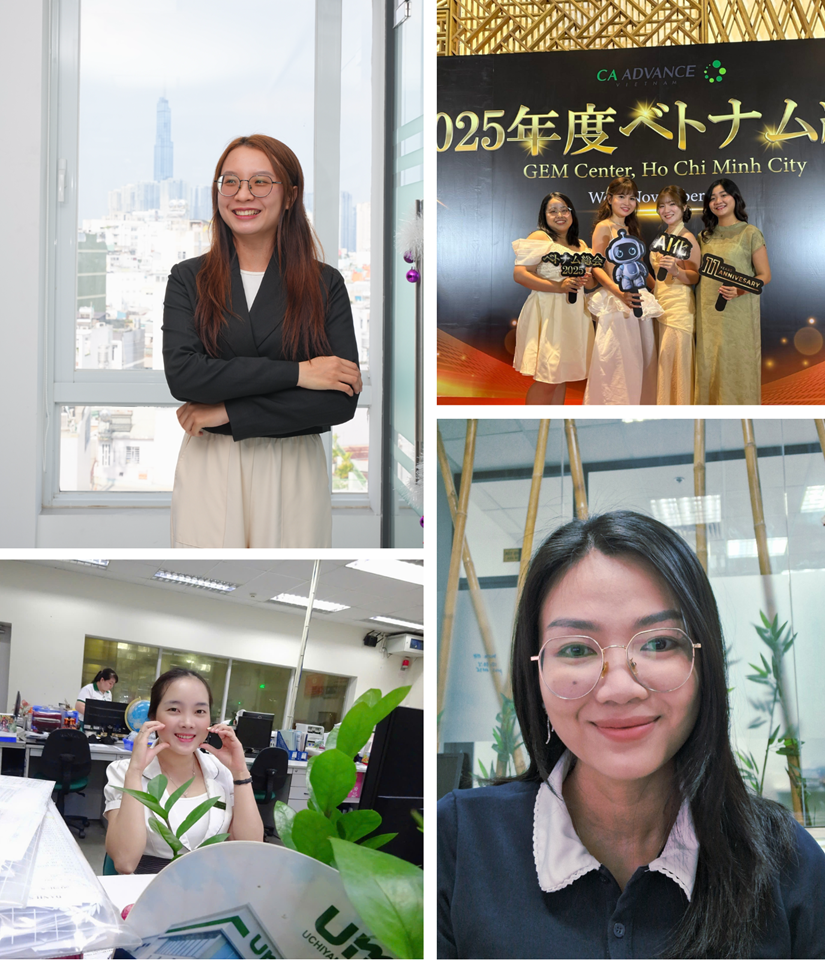
From top to bottom, left to right, respectively: Lê Thụy Ngọc Hạnh (alumna of cohort 2016), Nguyễn Minh Trang (alumna of cohort 2019), Võ Thị Ngọc Loan (alumna of cohort 2019), Triệu Thị Thanh Vân (alumna of cohort 2018)
Besides developing the ability to use Japanese, students also have conditions to take part in academic activities, cultural-exchange programmes and study projects to enhance career skills and international-integration capacity. It is thanks to that reality-focused training philosophy that HUFLIT students are always ready in mindset to step into the domestic and international labour market.
Choosing the HUFLIT Japanese field group – Choosing an opportunity to develop in an international environment
From the career stories of generations of alumni, it can be seen that students of the Japanese field group, Faculty of Oriental Languages and Cultures HUFLIT, are developing in many different fields such as communication, retail, information technology, import-export, administration – human resources or project management. Although they choose different directions, they all share a common point of a solid Japanese foundation, an understanding of Japanese culture and the ability to adapt to a professional working environment.
In the context of the ever-developing Vietnam – Japan cooperation relationship, the demand for recruiting personnel who know Japanese and understand Japanese culture continues to increase in many fields. This opens up many job and career-development opportunities for learners in both domestic and international environments.
At HUFLIT, students can choose to study:
- The Japanese Language programme;
- The Japanese Studies specialisation (belonging to the Oriental Studies programme).
The training programme focuses not only on language capacity but also equips knowledge of Japanese culture, society and working environment, while creating conditions for students to take part in academic activities, cultural exchange and real-world experience with enterprises.
After graduation, students can work in many fields such as translation – interpreting, administration – human resources, import-export, trade, communication, education, tourism, information technology or continue studying and researching at higher levels.
If Japanese is the door to access a culture rich in identity, then the learning and practical experiences at HUFLIT are the luggage that helps learners step by step broaden their career opportunities and develop in an international environment.
CONTACT INFO
Apply for admission at
tuyensinh.huflit.edu.vn
Find out information
huflit.edu.vn
Advising education enrollment