



-
Proud to be HUFLITers #07 | M.A. Tran My Uyen – A lectern where a teacher wishes only to “watch her children grow up”At the HUFLIT Faculty of Foreign Languages, M.A. Tran My Uyen (Vice Dean) goes by many names. Some call her “Ms My”; her students call her “mother”. Colleagues often compare her to Mother Au Co with a hundred children. Yet to become the “mother” of the lecture hall she is today, she went through a profound shift in thinking that completely changed a teaching philosophy built over more than 30 years.
-
New Cybersecurity Regulations: Opportunities for the Cybersecurity Field in the Digital EraThe new cybersecurity regulations taking effect on 1 July 2026 not only help complete the legal framework but also drive demand for talent in cybersecurity. This is also the moment when the discipline becomes a promising choice for young people who love technology and information security.
-
“GenZ Major Insights 2026” – Episode 9: Boundless Journeys with HUFLIT’s Tourism and Hospitality ProgramsMany students choose the Tourism and Hospitality field simply because they love to travel. But passion alone is not enough to pursue this field in the long run. What matters more is understanding the nature of the discipline, its professional requirements, and the qualities needed to grow in a professional service environment.
CRISIS SENSE Skills Workshop – “Decoding” Communication Crises in the School Environment
NGÀY: 28/01/2026
Chia Sẻ Qua
With the aim of accompanying HUFLIT students in raising awareness and equipping them with essential skills to respond calmly and responsibly to public pressure, the Youth Union and Student Association of the Faculty of Oriental Languages and Cultures organized the skills workshop “Managing Communication Crises and Online Conduct in the Educational Environment” – CRISIS SENSE.
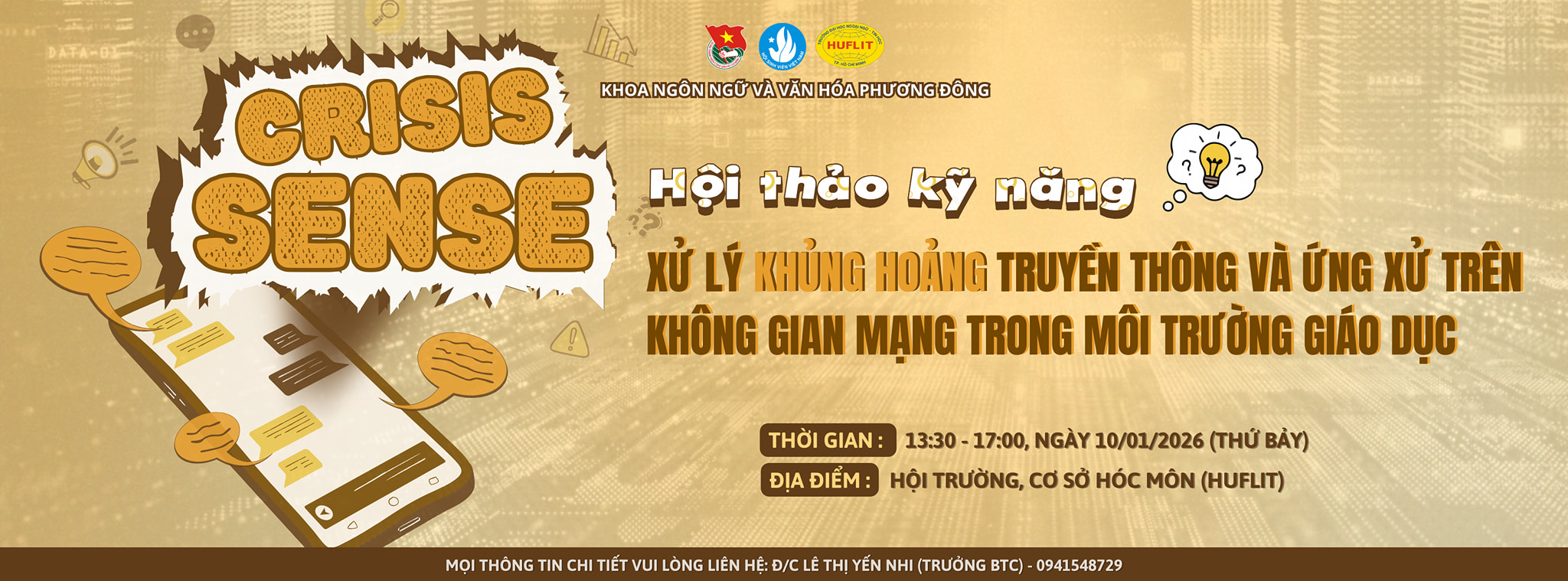
Cover of the Skills Workshop on Managing Communication Crises and Online Conduct in the Educational Environment – CRISIS SENSE.
In the digital era, a single share or an uncontrolled reaction can quickly trigger a wave of public opinion with unpredictable consequences. Particularly within the educational environment—where students interact frequently in online spaces—communication risks are becoming increasingly complex and difficult to manage.
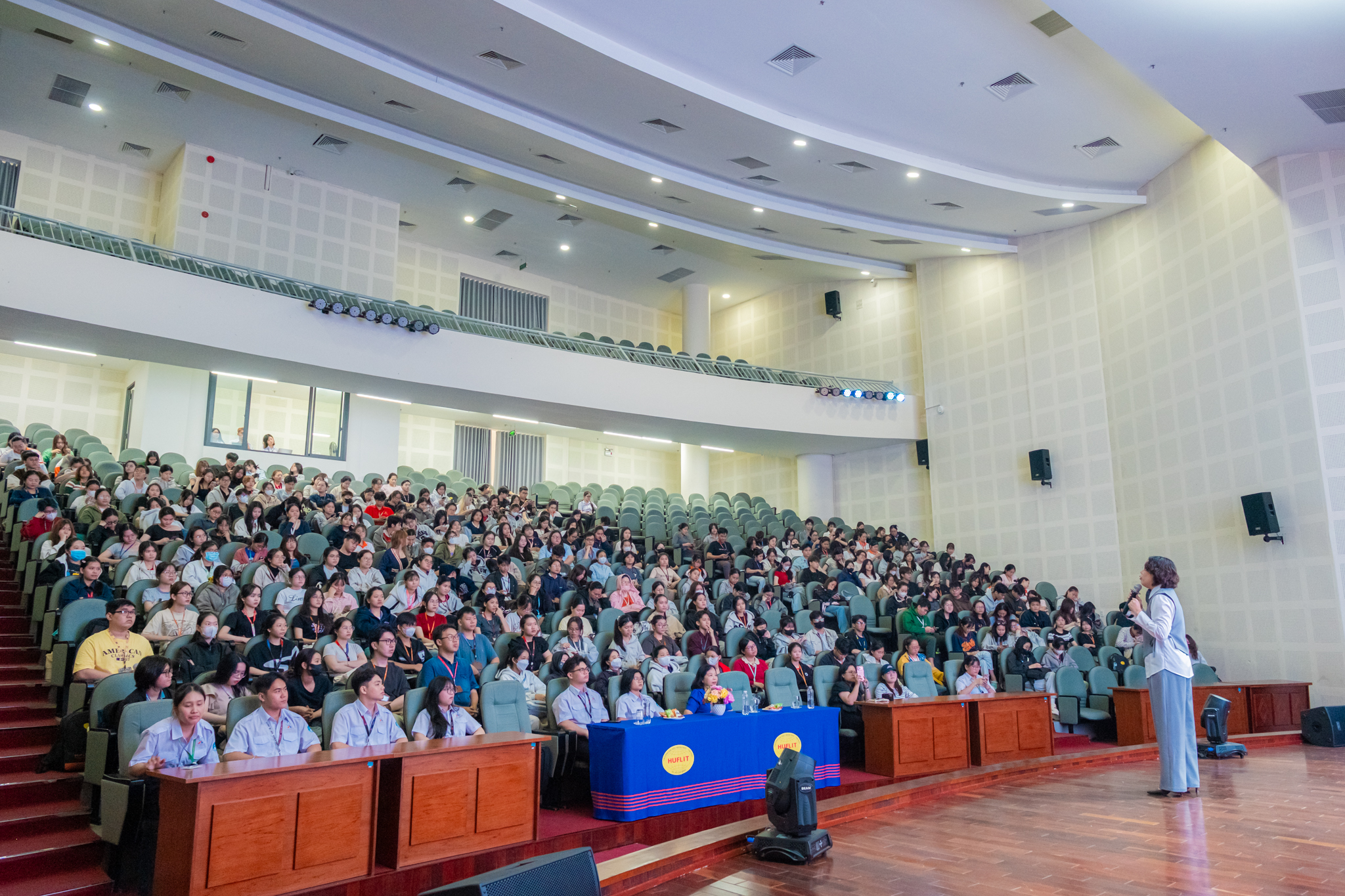
An Overview of the Workshop.
When “Communication Crisis” Is No Longer a Distant Concept
The workshop opened with a short theatrical performance portraying a group of students confused and anxious over false rumors related to their own school. Under the pressure of rapidly spreading public opinion on social media, each character chose a different way to respond—yet all led to unintended consequences, pushing the situation further out of control.
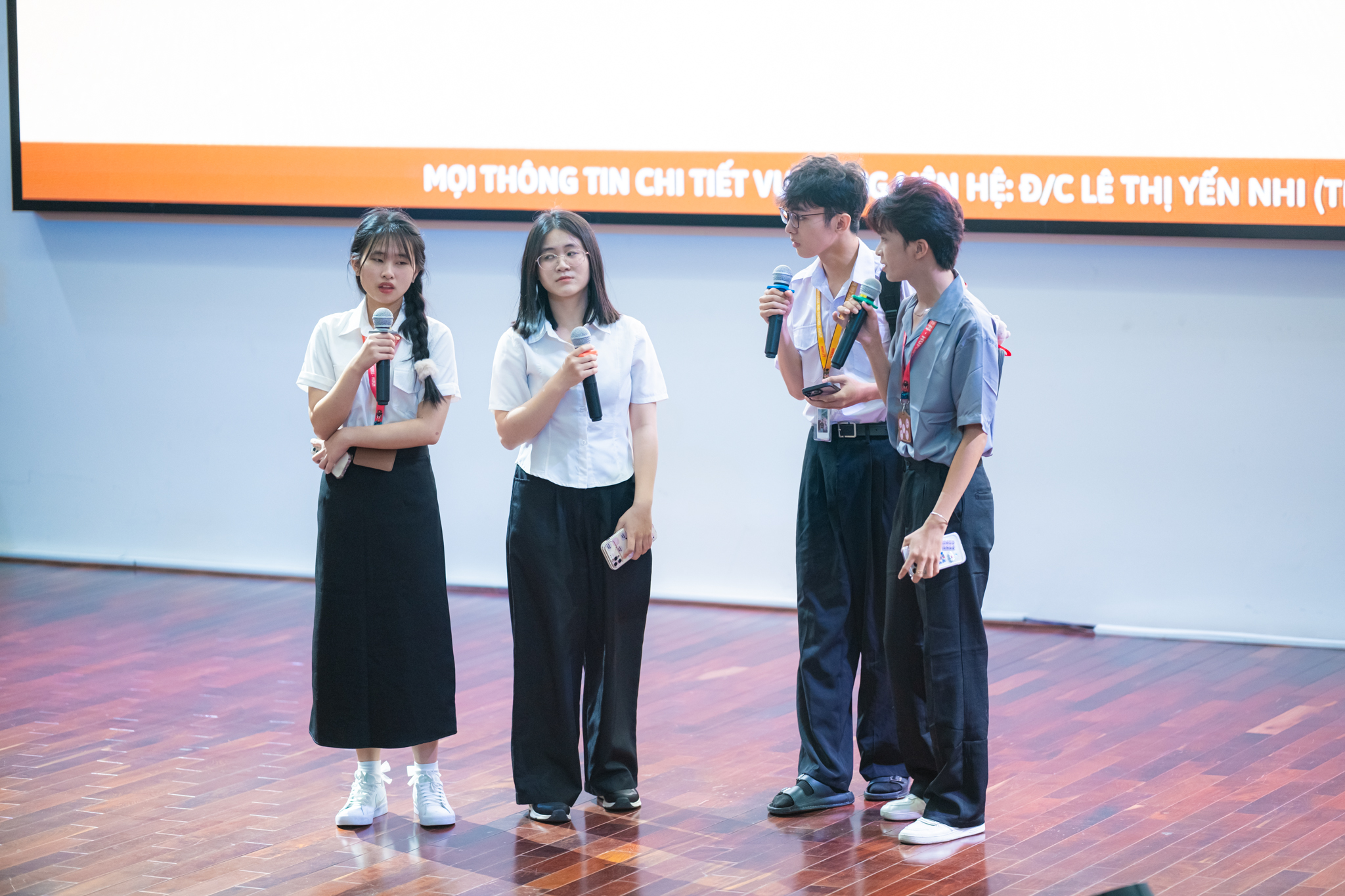
Opening skit of the program.
Building on the emotional momentum of the opening, the speaker—Nguyen Huu Hoang Thi, Lecturer of the Faculty of International Relations and Communication at HUFLIT—delivered in-depth yet accessible insights into communication crises within the educational environment. With over 10 years of experience in professional practice, teaching, and research in communication and culture, she has accompanied and guided generations of students in developing responsible participation and conduct in the digital space.
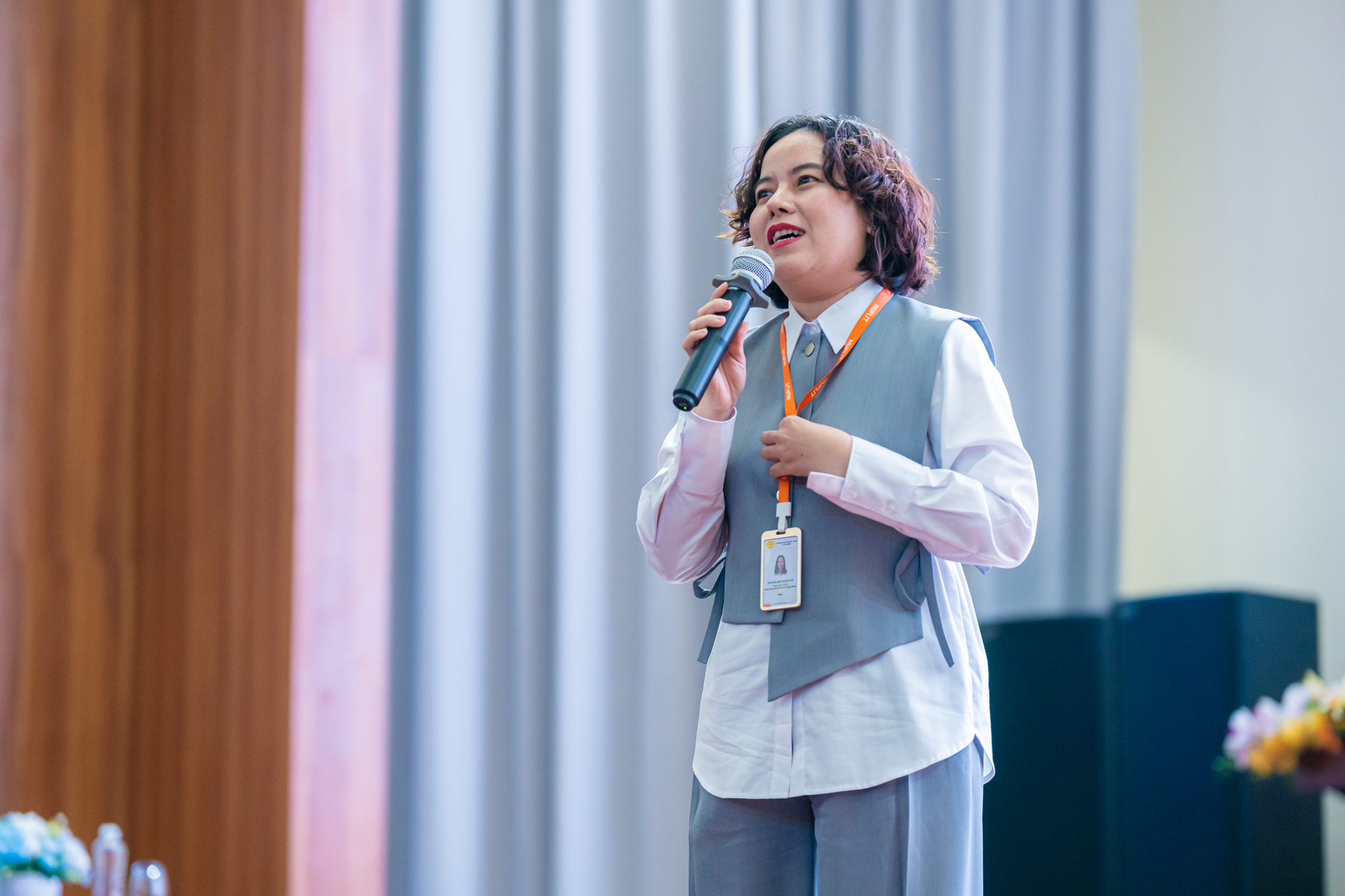
Ms. Nguyen Huu Hoang Thi – Lecturer, Faculty of International Relations and Communication, HUFLIT
Through practical examples and detailed analysis, the speaker helped students clearly understand the nature of communication crises, how they form, and why seemingly minor incidents can quickly escalate into major issues. From there, students were guided to approach problems with composure and critical thinking, rather than reacting emotionally to public opinion.
Effective Digital Footprint Management
One of the workshop’s most engaging and central topics was digital footprint management. During the interactive discussion, many students actively raised questions related to social media behaviors such as sharing habits, commenting, and building a personal image online, and received highly practical and insightful responses from the speaker. The atmosphere became especially lively around this topic.
The speaker emphasized that every post, comment, or interaction leaves a “digital footprint” that can have long-term impacts on one’s personal image. Students were guided on how to control shared content, identify appropriate and inappropriate behaviors on social media, and thereby minimize communication risks in the school environment as well as in their future careers.
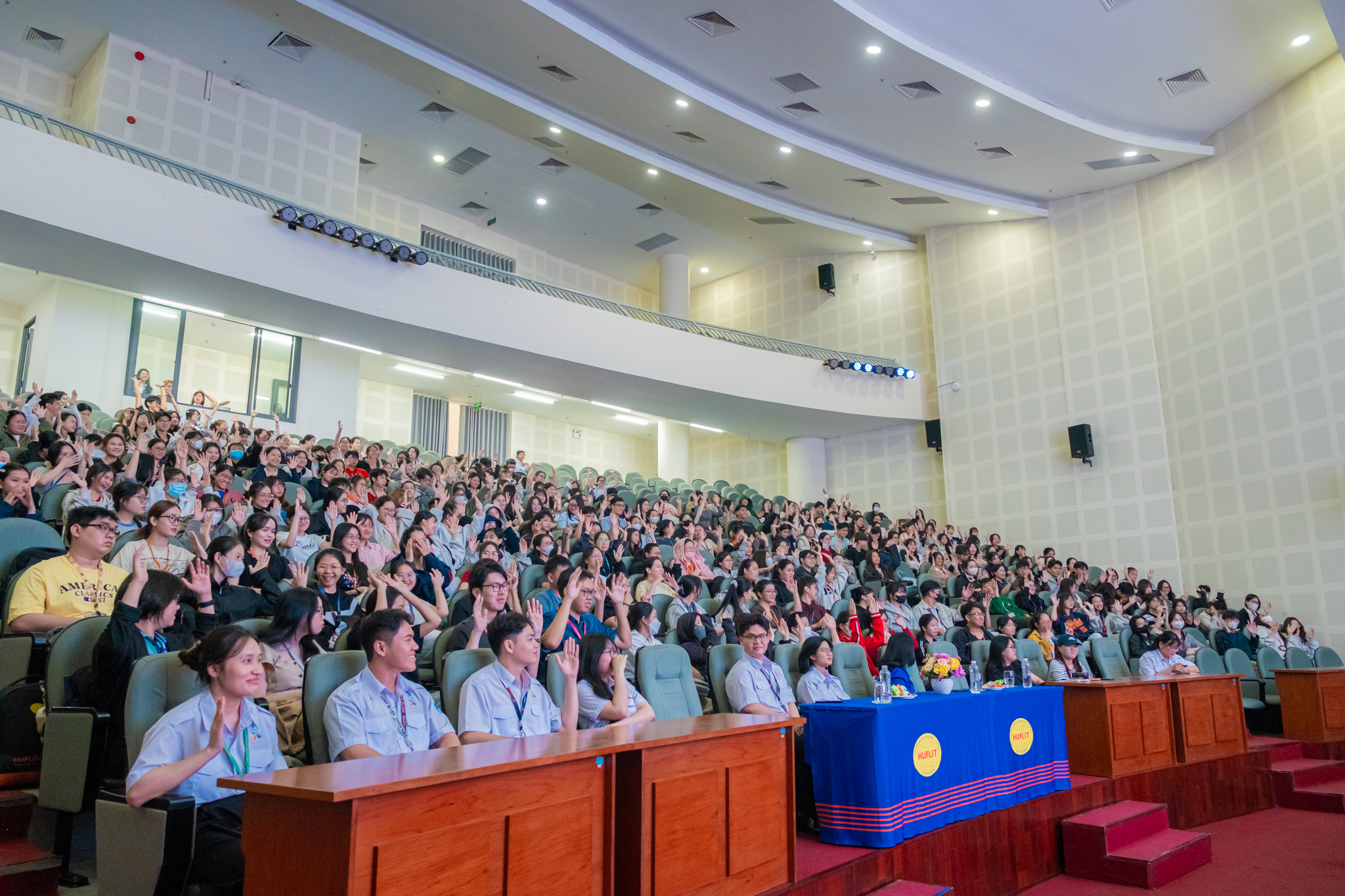
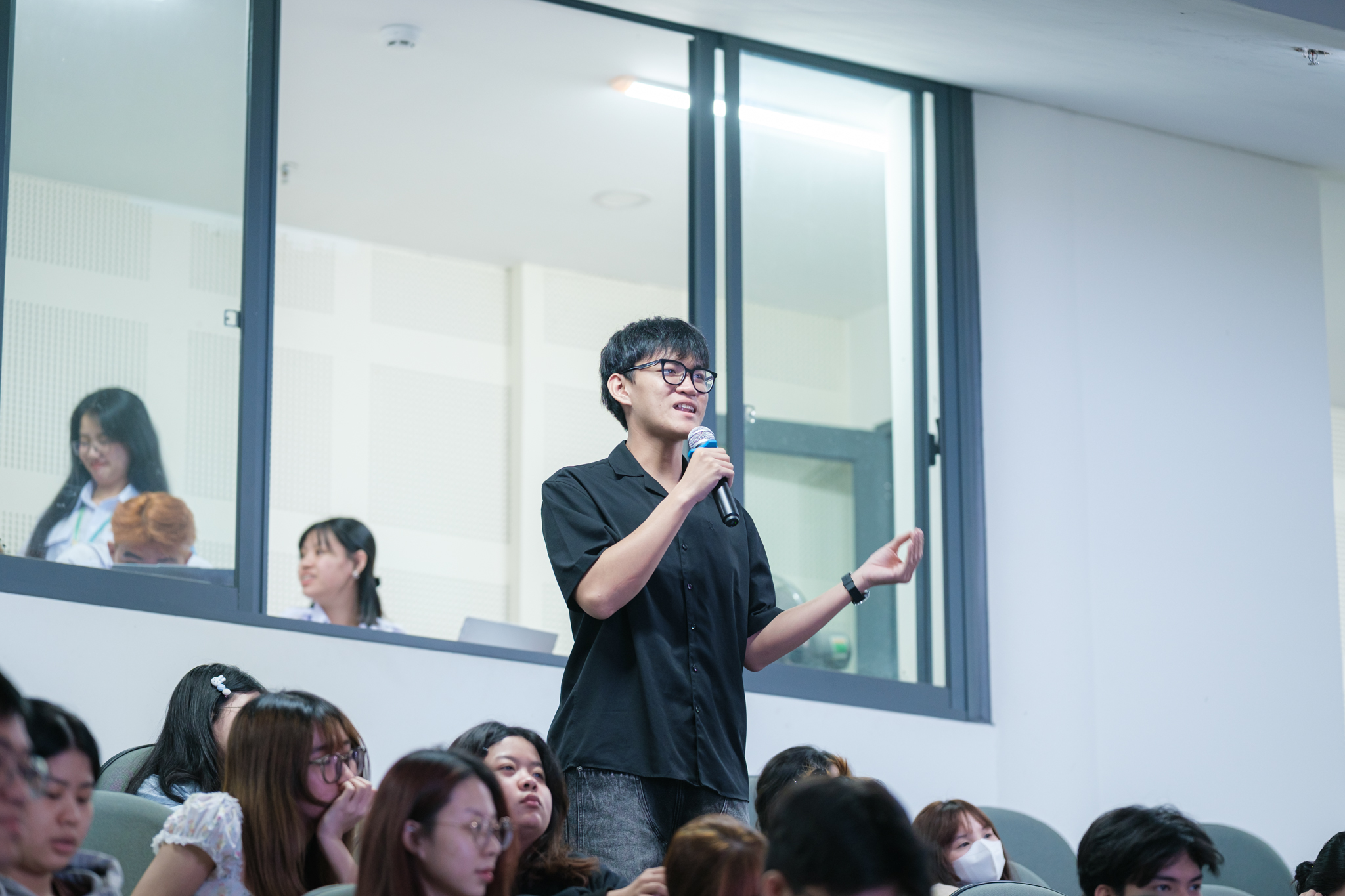
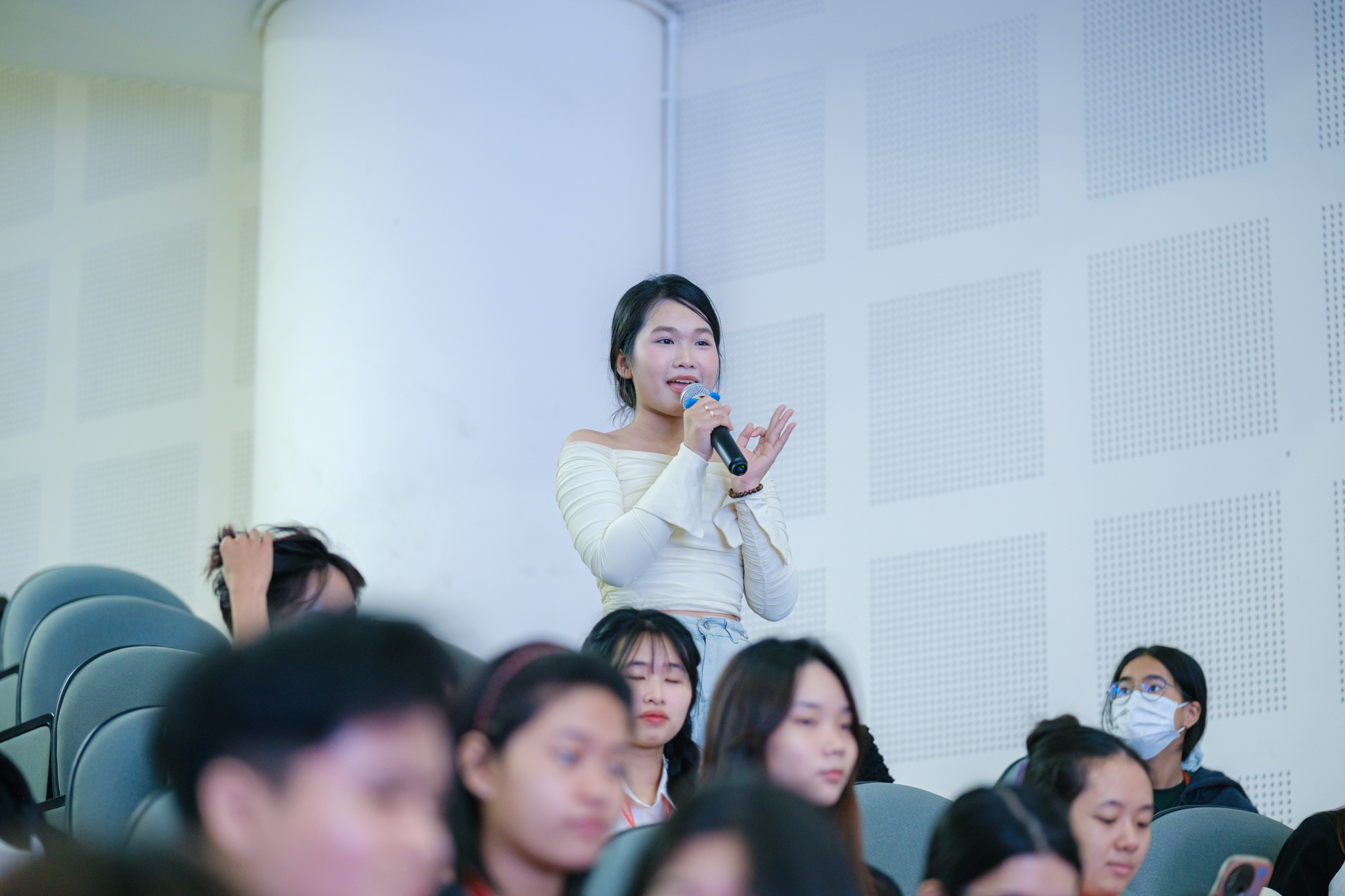
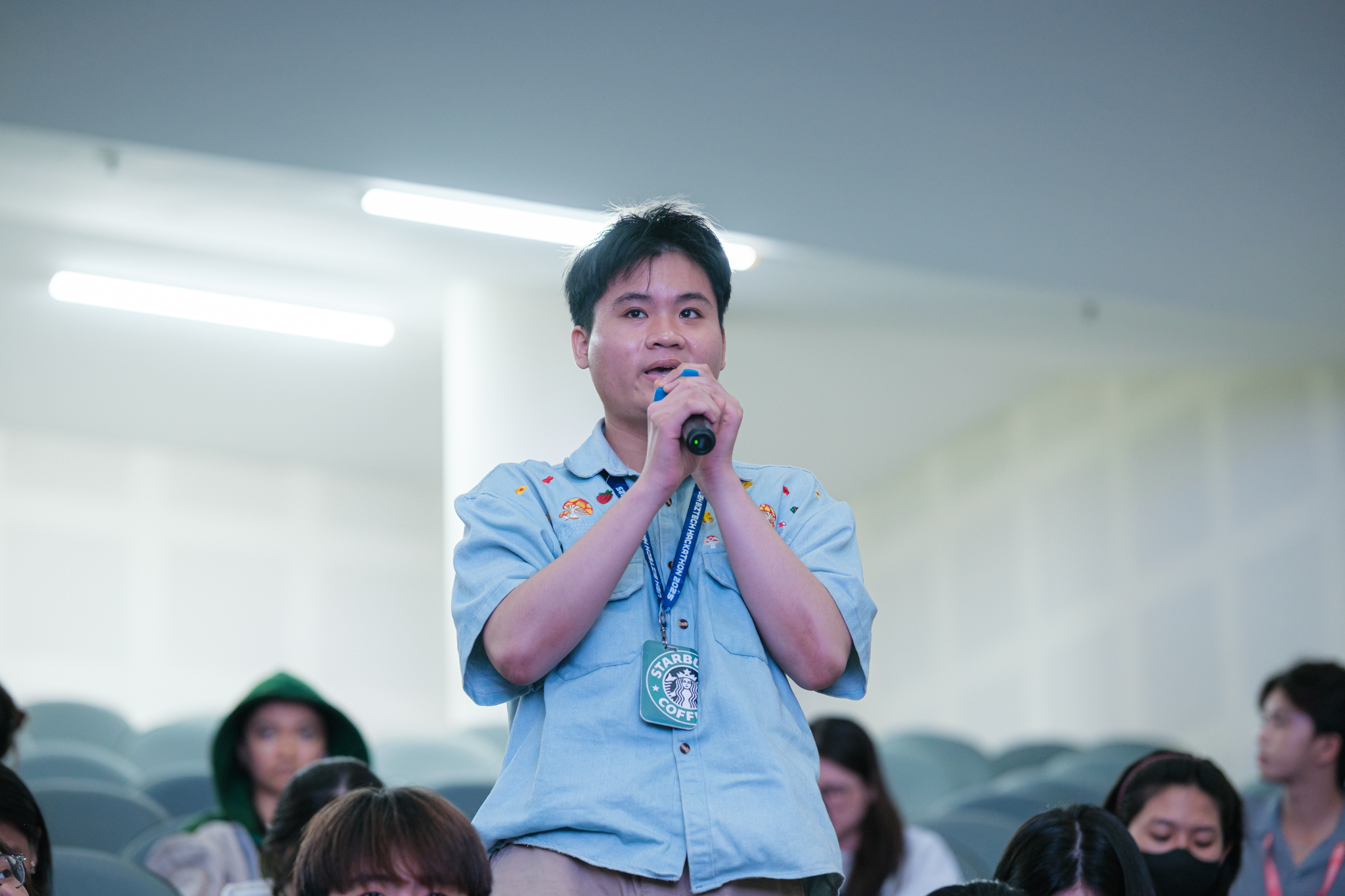
Students interacting and raising questions with the speaker.
The speaker emphasized that every post, comment, or interaction leaves a “digital footprint” that can have long-term impacts on one’s personal image. Students were guided on how to manage shared content, distinguish between appropriate and inappropriate behaviors on social media, and thereby reduce communication risks in the school environment as well as in their future careers.
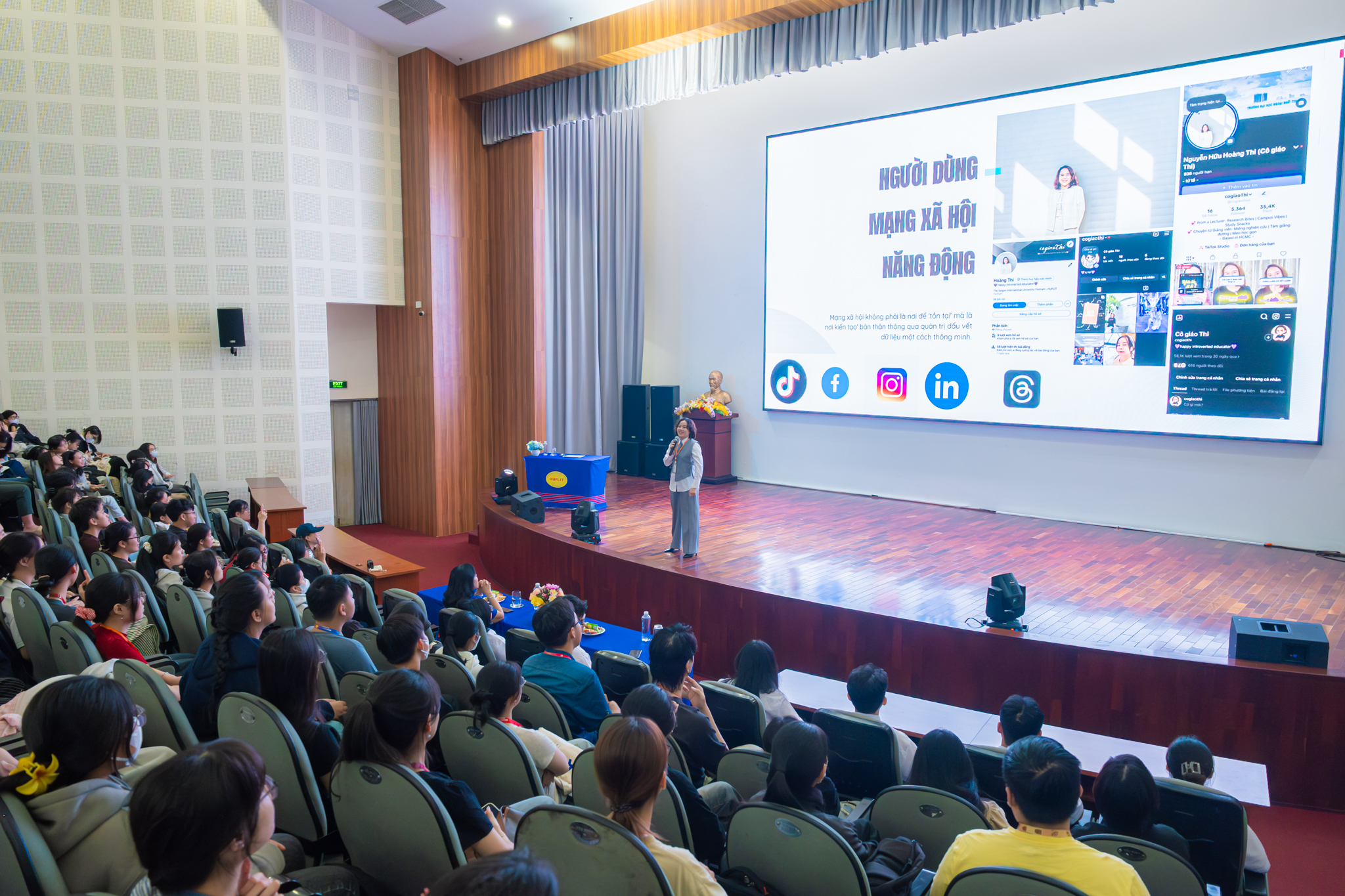
The speaker addressing students’ questions and concerns.
The workshop atmosphere became even more vibrant during the mid-session interactive mini-game, which helped students review key knowledge presented earlier. The three students with the highest scores were awarded valuable prizes.
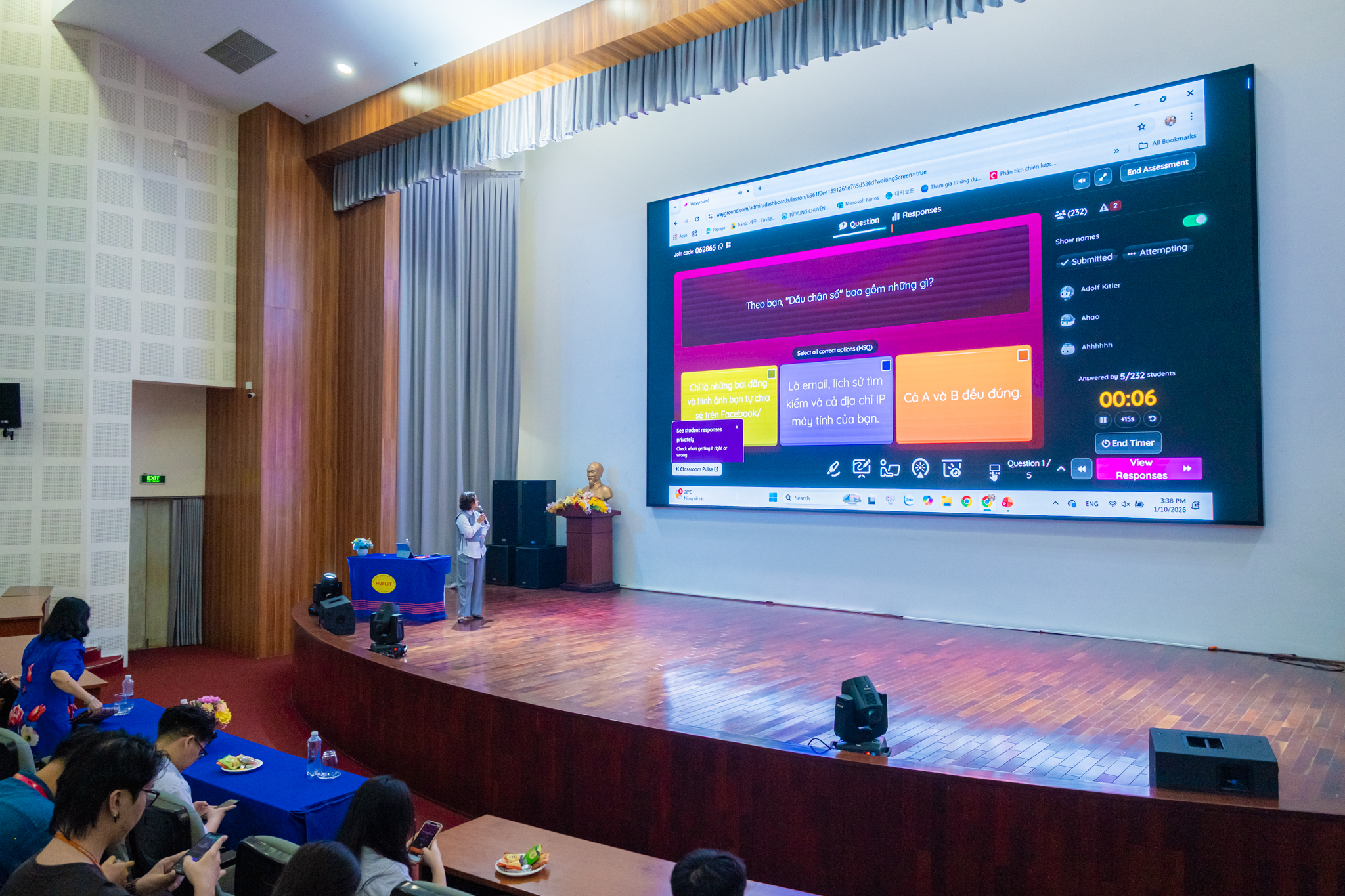
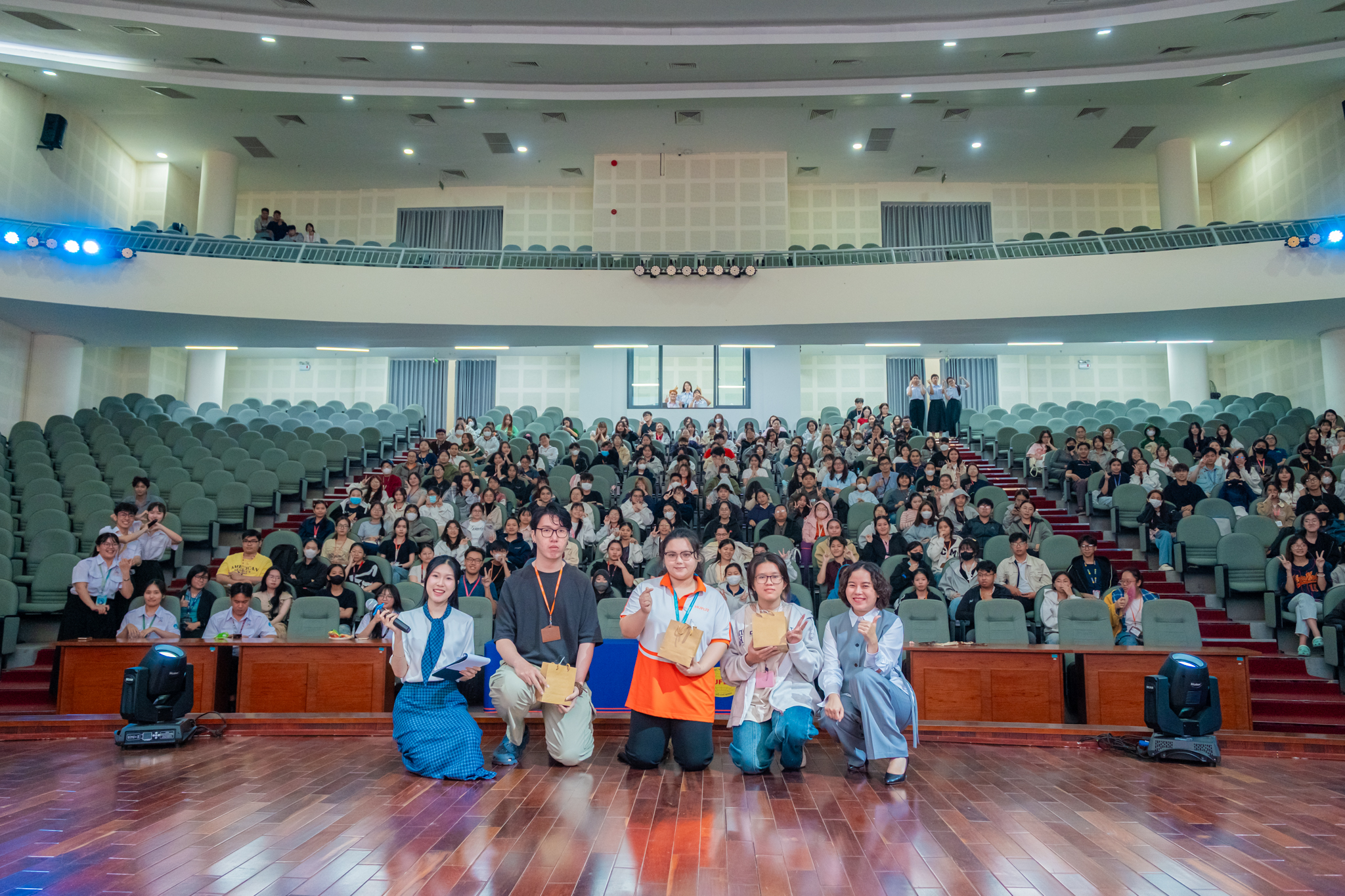
Images from the mini-game session.
The performance “Living Like Flowers,” presented by student My Duy, created a reflective emotional moment while spreading positive energy to all participants. The performance also served as a meaningful and heartfelt conclusion to a comprehensive and impactful workshop.

The performance “Living Like Flowers” by My Duy.
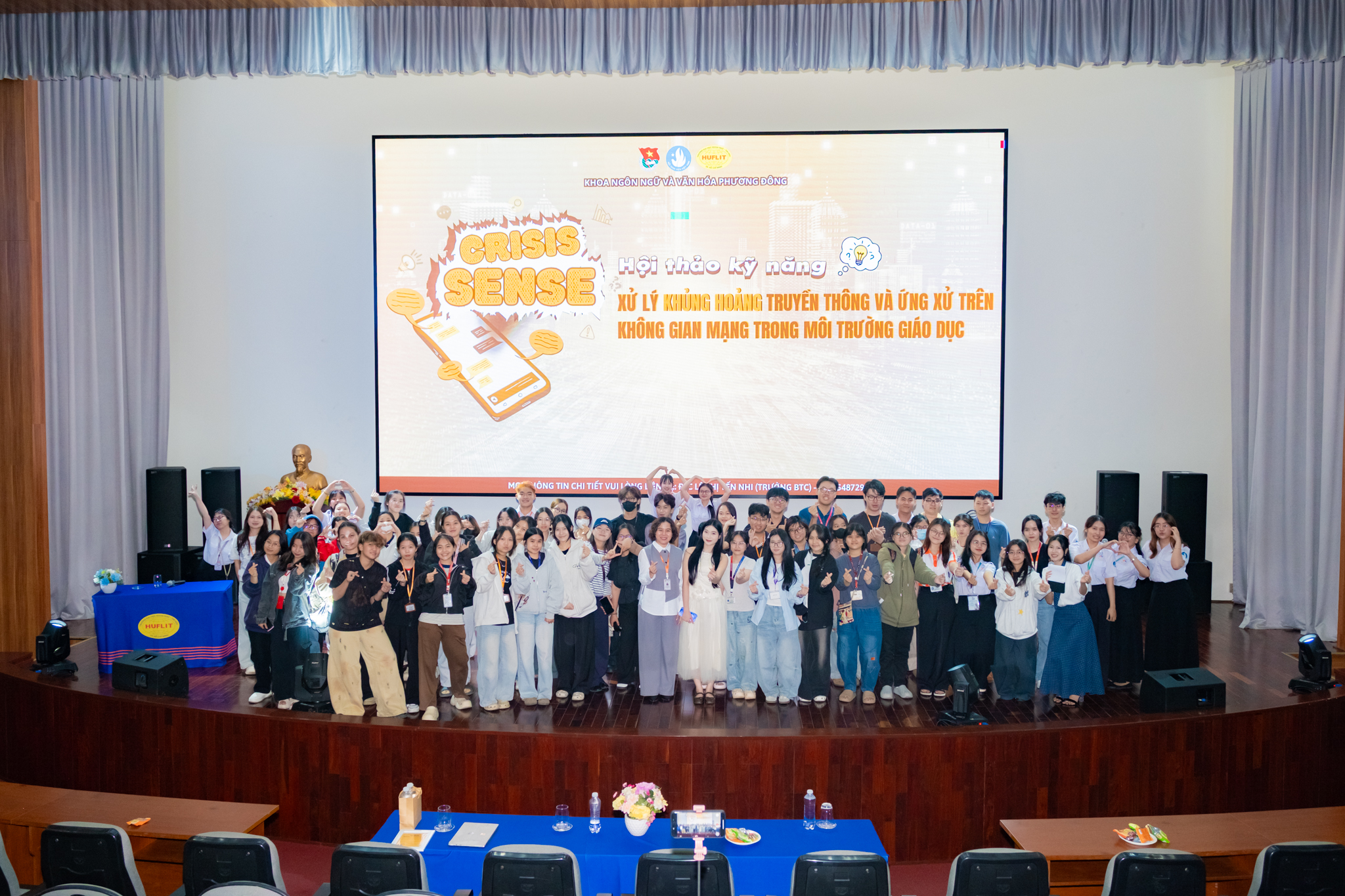
Students took commemorative photos with the speaker and the Organizing Committee at the workshop.
The skills workshop “Managing Communication Crises and Online Conduct in the Educational Environment” – CRISIS SENSE concluded successfully, delivering a wide range of practical values for HUFLIT students. The program not only provided essential knowledge on handling communication crises but also helped students develop a proactive mindset, recognize risks at an early stage, manage their digital footprints, and practice responsible and respectful behavior in the online space.
Through this experience, students were equipped with the necessary foundations to feel more confident in both academic settings and today’s digital society, contributing to the development of a dynamic, responsible, and resilient HUFLIT student community in the face of any communication “storm”.
CONTACT INFO
Apply for admission at
tuyensinh.huflit.edu.vn
Find out information
huflit.edu.vn
Advising education enrollment