


-
Proud to be HUFLITers #07 | M.A. Tran My Uyen – A lectern where a teacher wishes only to “watch her children grow up”At the HUFLIT Faculty of Foreign Languages, M.A. Tran My Uyen (Vice Dean) goes by many names. Some call her “Ms My”; her students call her “mother”. Colleagues often compare her to Mother Au Co with a hundred children. Yet to become the “mother” of the lecture hall she is today, she went through a profound shift in thinking that completely changed a teaching philosophy built over more than 30 years.
-
New Cybersecurity Regulations: Opportunities for the Cybersecurity Field in the Digital EraThe new cybersecurity regulations taking effect on 1 July 2026 not only help complete the legal framework but also drive demand for talent in cybersecurity. This is also the moment when the discipline becomes a promising choice for young people who love technology and information security.
-
“GenZ Major Insights 2026” – Episode 9: Boundless Journeys with HUFLIT’s Tourism and Hospitality ProgramsMany students choose the Tourism and Hospitality field simply because they love to travel. But passion alone is not enough to pursue this field in the long run. What matters more is understanding the nature of the discipline, its professional requirements, and the qualities needed to grow in a professional service environment.
Decoding the Survival “Weapon” of the Translation – Interpreting Profession Amid Artificial Intelligence
NGÀY: 02/06/2026
Chia Sẻ Qua
The speaker of the programme is Dr Andy Khôi – Co-founder and Head of Interpreting of MMS Vietnam. He has 43 years of hands-on experience in the field of legal, diplomatic and training interpreting in the United States, Europe and Vietnam.
The skills that help translation – interpreting students adapt to the AI era
With his wealth of experience working with government agencies and large technology corporations, Dr Andy Khôi brought a practical perspective on the impact of AI on the language field.
Andy Khôi helped students ‘redefine’ the nature of the profession. In his view, interpreting is not simply converting each word but the process of conveying the “concept”, emotion and spirit of the content between different languages. Through many real examples, students had the chance to see more clearly the difference between translating language and conveying cultural meaning in international communication, thereby understanding the role of thinking and professional skills in their future career.
The power of technology cannot be denied. Current AI tools can support effectively through features such as speech-to-text, transcribe or content synthesis. However, deeper factors such as emotion, cultural nuance, intonation and communication context still require the role of humans to convey accurately and naturally
Andy Khôi emphasised that students cannot stop at just being good at foreign languages. They need to proactively equip a diverse set of soft and hard skills such as: language thinking, communication reflexes, note-taking, sight translation, and public speaking. In particular, the capacity to understand culture and the ability to use AI as a capable “assistant” are the key to creating the unique value of a global interpreter.
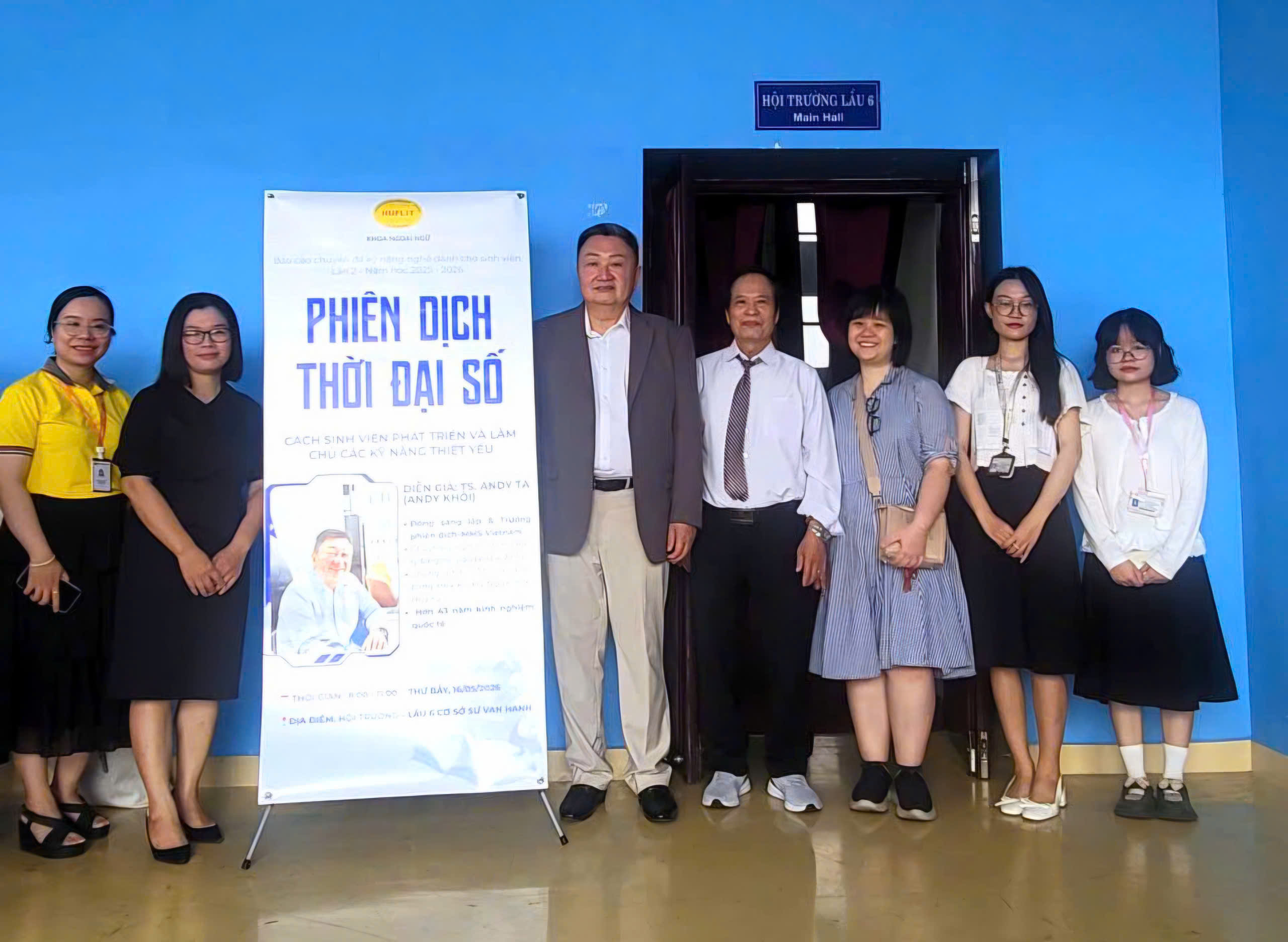
On behalf of the Organising Committee, Dr Nguyễn Đức Châu – Head of the Translation – Interpreting Division – together with lecturers and students of the Faculty of Foreign Languages take a commemorative photo with the speaker
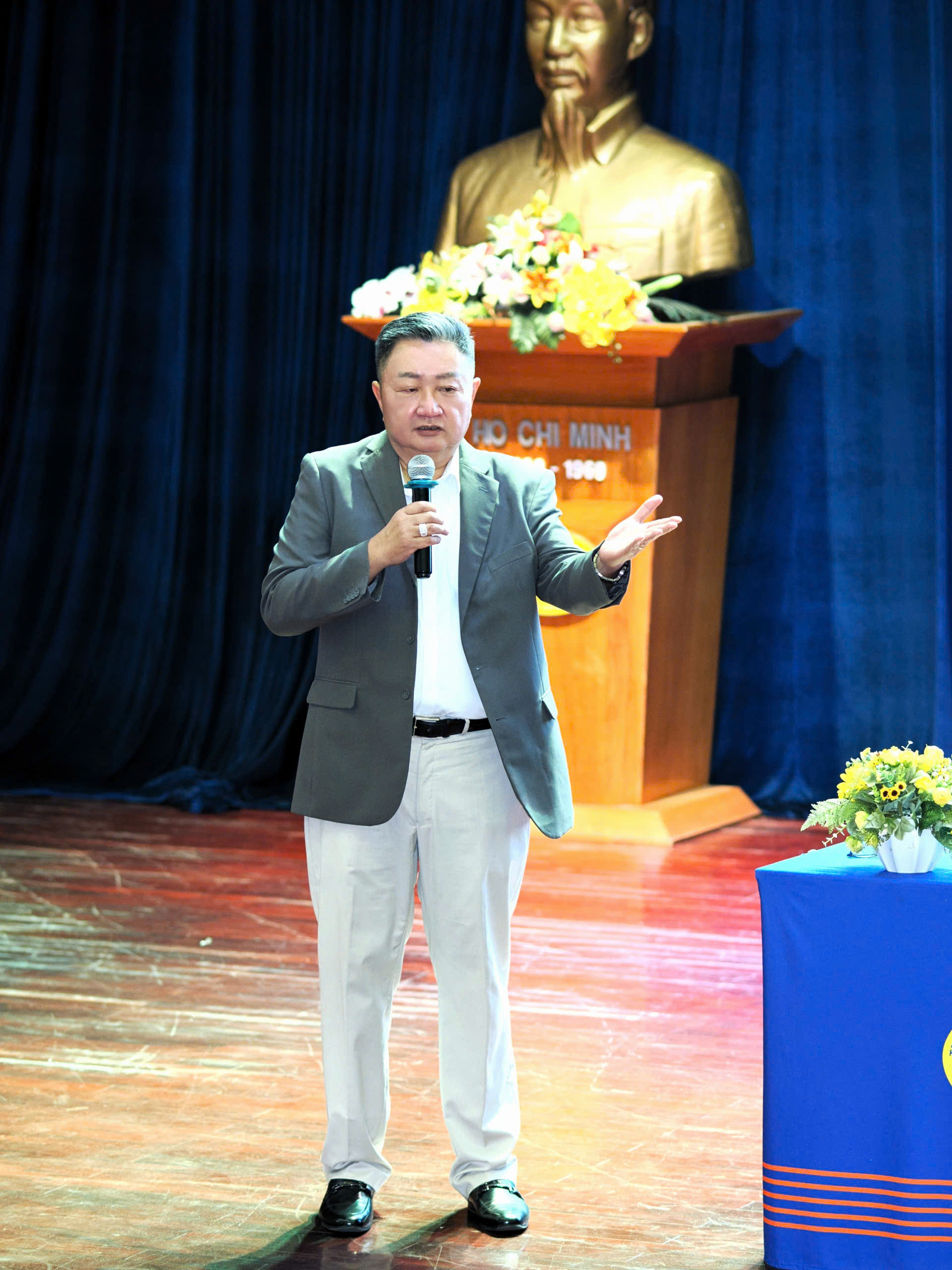
Speaker – Dr Andy Khôi – shares about the aspects and nature of the interpreting profession
The career-development roadmap in the translation – interpreting field in the digital age
Not stopping at equipping skills, the programme also mapped out the full picture of the promotion roadmap in the translation – interpreting field for students. Through real stories in the profession, Dr Andy Khôi helped students better visualise the career directions, from general translation and specialised translation to corporate, legal or international-conference interpreting. Each field requires specific professional competencies and skills, especially language reflexes, fast information processing and accurate content delivery in a high-pressure environment.
Alongside professional skills, professional ethics was also content that Dr Andy Khôi especially emphasised in the seminar. “Expertise can help a learner enter the profession, but reputation, sense of responsibility and honesty are the factors that determine the ability of a translator – interpreter to develop sustainably in an international professional environment,” he emphasised.
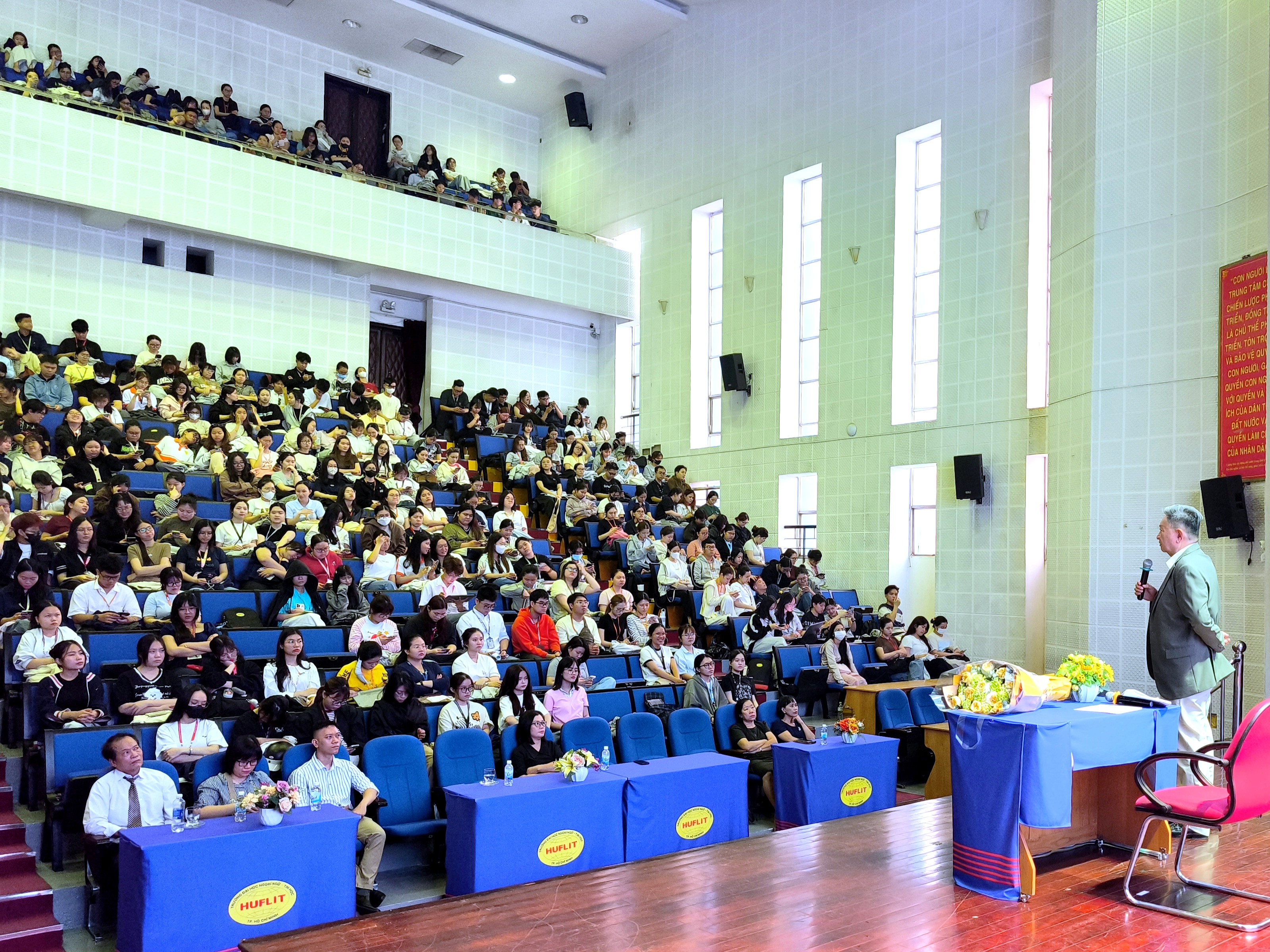
A serious, highly focused atmosphere in the inspiring sharing session
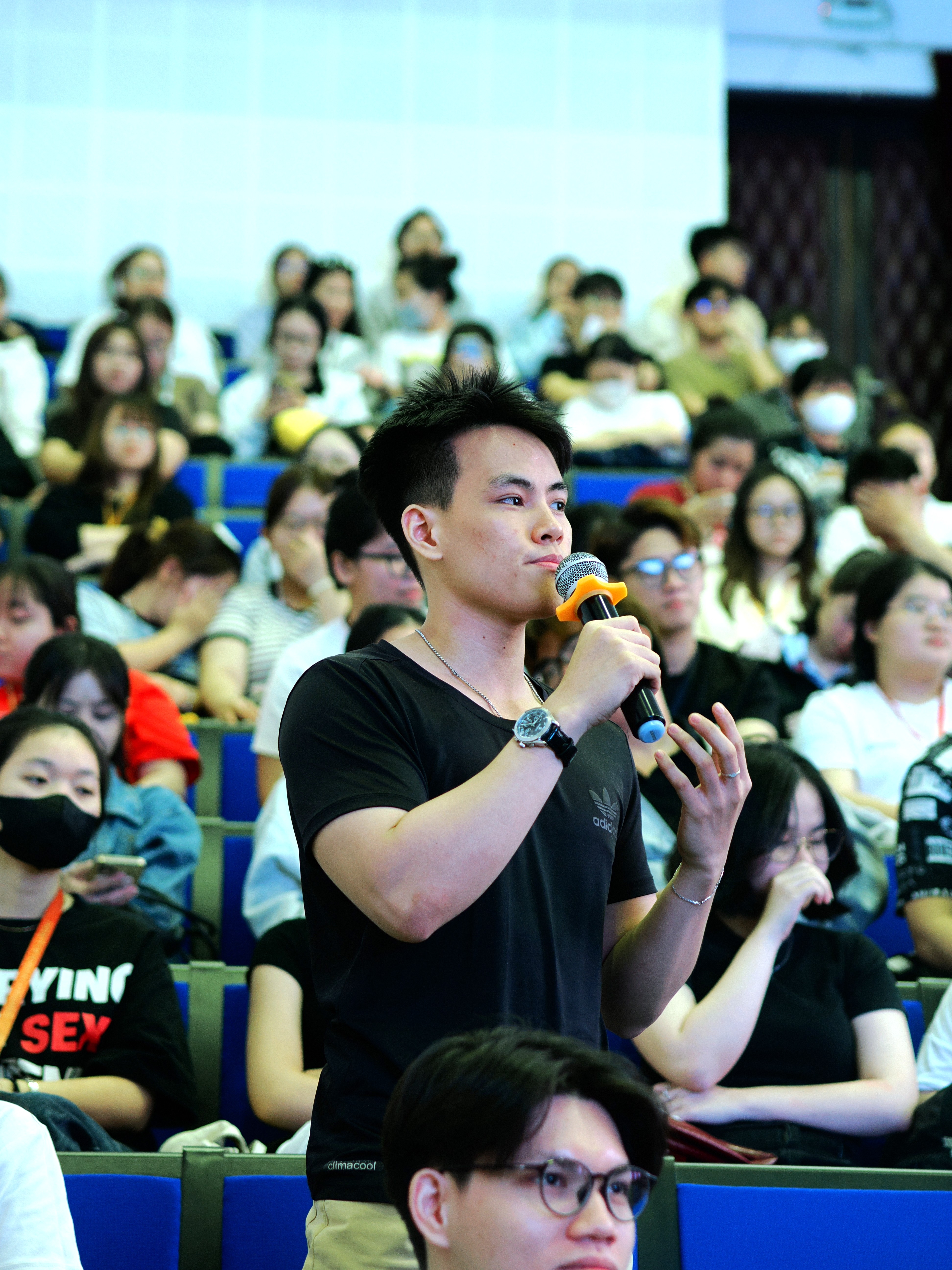
The heat of the seminar was pushed higher at the end of the programme, when the HUFLITers continuously asked the speaker questions about how to build a portfolio / CV, orient specialisation, use AI effectively as well as real career opportunities.
The practical sharing from Dr Andy Khôi together with the training perspective from Dr Nguyễn Đức Châu helped students gain a clearer orientation about the career-development roadmap, while also understanding the skills needed to adapt and create an advantage in the digital age.
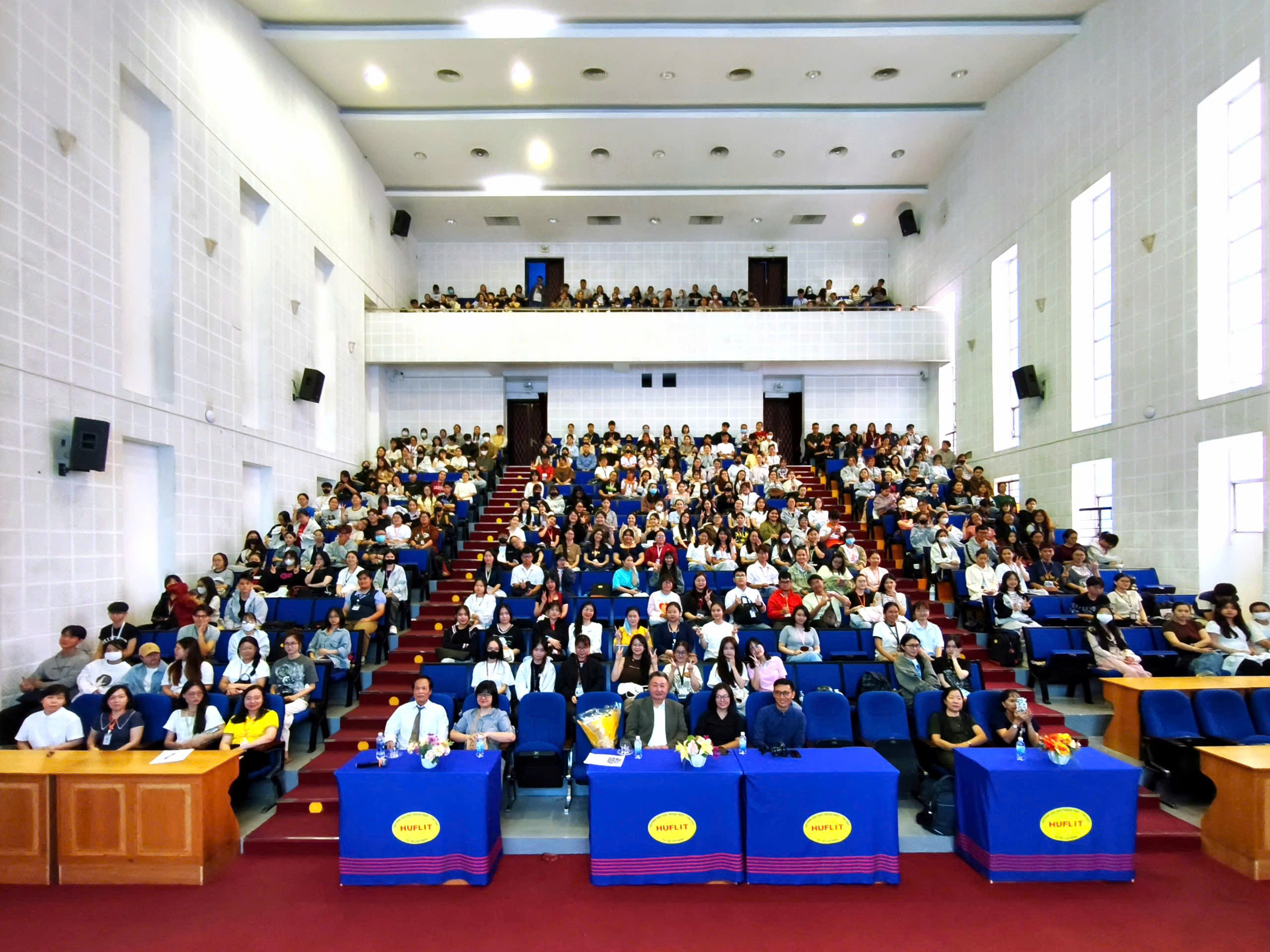
Students enthusiastically take a commemorative photo with the Speaker and the Organising Committee
Dr Andy Khôi is a member of many international professional associations in the field of interpreting and law. Alongside his in-depth interpreting work, he has also been a lecturer training court interpreters since 2009 and is recognised as an expert in interpreting methodology at United States courts.
Throughout his professional career, he has participated in thousands of court hearings, high-level conferences and international bilateral negotiations. He has taken on the role of interpreter for many high-ranking officials in working sessions between the United States and Vietnam, while also collaborating with government agencies, international organisations, technology corporations and leading law firms.
CONTACT INFO
Apply for admission at
tuyensinh.huflit.edu.vn
Find out information
huflit.edu.vn
Advising education enrollment