


-
Proud to be HUFLITers #07 | M.A. Tran My Uyen – A lectern where a teacher wishes only to “watch her children grow up”At the HUFLIT Faculty of Foreign Languages, M.A. Tran My Uyen (Vice Dean) goes by many names. Some call her “Ms My”; her students call her “mother”. Colleagues often compare her to Mother Au Co with a hundred children. Yet to become the “mother” of the lecture hall she is today, she went through a profound shift in thinking that completely changed a teaching philosophy built over more than 30 years.
-
New Cybersecurity Regulations: Opportunities for the Cybersecurity Field in the Digital EraThe new cybersecurity regulations taking effect on 1 July 2026 not only help complete the legal framework but also drive demand for talent in cybersecurity. This is also the moment when the discipline becomes a promising choice for young people who love technology and information security.
-
“GenZ Major Insights 2026” – Episode 9: Boundless Journeys with HUFLIT’s Tourism and Hospitality ProgramsMany students choose the Tourism and Hospitality field simply because they love to travel. But passion alone is not enough to pursue this field in the long run. What matters more is understanding the nature of the discipline, its professional requirements, and the qualities needed to grow in a professional service environment.
The Chinese Language Discipline: 5 “Golden” Skill Groups 2026
NGÀY: 18/03/2026
Chia Sẻ Qua
Overview of the skill framework of the Chinese Language discipline
The Chinese Language discipline is not simply learning the language, but learning how to use the language as a career tool. This is the foundation helping the learner quickly adapt to the real working environment and the recruitment demand of 2026. Below are two important skill orientations to pay special attention to.
Why are practical skills more important than theory?
According to skills-based recruitment statistics by Market.biz 2025, over 80% of employers prioritise candidates with the ability to react and handle real situations. Therefore, Chinese Language students, if only good at grammar but lacking real work skills, will find it hard to compete with those who have practical experience in communication and translation.
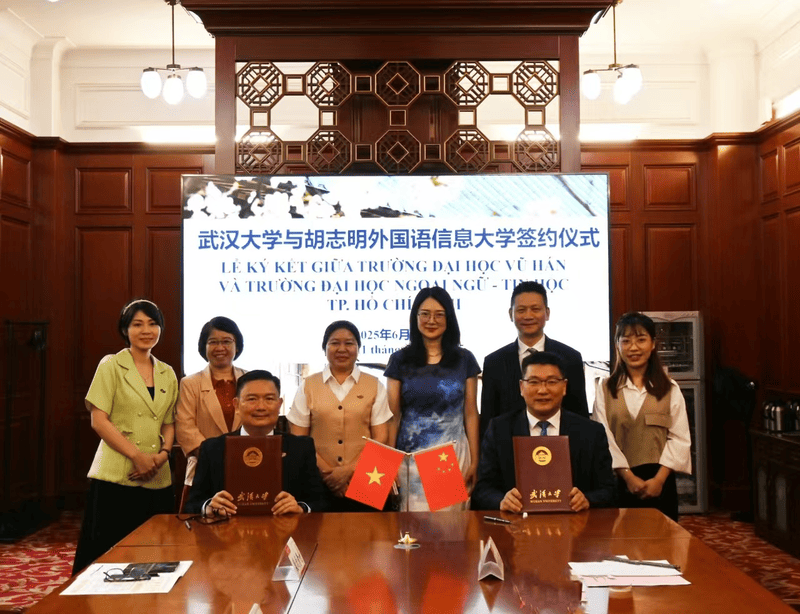
Chinese Language students need to firmly grasp both grammar and real work skills
The “Chinese + Digital Skills” personnel trend in 2026
By 2026, the global and Vietnamese labour market is putting digital skills first. According to the Future of Jobs report, more than 50% of employers consider the ability to use technology and digital competence a core skill in the organisation, and this rate will increase further next year.
At HUFLIT, the programme not only enhances Chinese-language competence but also focuses on developing informatics, technology and digital-application skills in parallel. Thanks to this, HUFLIT students are both proficient in a foreign language and well meet the requirements of employers from multinational enterprises to technology and creative companies.
>>>> SEE NOW: The Public Relations (PR) discipline: What to study, what to do & salary
Group 1: Language skills and international-standard certificates
Being proficient in Chinese and possessing an international certificate is an important first step to build a career. Students are guided to train the 4 skills of Listening – Speaking – Reading – Writing along with a study roadmap from HSK1 to HSK6, helping enhance communication ability and real-situation handling. Below is the roadmap and the skills to focus on.
Mastering the 4 skills of Listening – Speaking – Reading – Writing
Training the 4 skills synchronously helps students comprehensively develop their language ability. At HUFLIT, the school builds a Chinese-language programme helping students master the Listening – Speaking – Reading – Writing skills right from the first year with a clear roadmap.
The school focuses on phonetics and practical-communication course modules, helping students pronounce correctly right from the start, combining updated materials and real-situation exercises to increase reflexes. In addition, the programme is also tied to career skills, helping the learner confidently use Chinese in a multicultural and professional environment after graduation.

Comprehensively mastering the 4 skills of Listening - Speaking - Reading - Writing with a clear roadmap
Conquering the HSK 5, HSKK and TOCFL certificates
For students of this discipline, possessing international-standard certificates is clear proof of Chinese-language competence on a job-application CV. Below is a comparison table of the currently popular Chinese-language certificates:
| Certificate | Purpose | Application value |
| HSK (1-6) | Assessing standardised Chinese-language proficiency in China |
|
| HSKK | Assessing Chinese speaking ability |
|
| TOCFL | Assessing Chinese-language proficiency by the Taiwan standard |
|
>>>> SEE NOW: What disciplines does the HUFLIT Faculty of Foreign Languages include?
Group 2: Professional Translation and Interpreting skills
Translation and interpreting are the two core skills in the Chinese Language discipline. Clearly understanding this difference helps students orient their study roadmap and train suitable skills.
Skills in translating commercial and legal documents
According to the International Translators Association (ITA), more than 67% of cross-border commercial transactions require professional translation, in which economic documents account for a large proportion and require very high accuracy. Therefore, being a translator requires students to firmly grasp the specialised language, legal and commercial terminology, while having the ability to express accurately and logically.
At HUFLIT, students train the skill of looking up specialised terminology, handling complex structures and ensuring the legality of the translation through practical exercises, final projects and in-depth critique. These skills also strongly score in the application dossier, especially for positions related to international trade, enterprise legal affairs, professional translation.
Escort-interpreting and cabin-interpreting skills
Interpreting requires the ability to react quickly, listen and understand well and speak accurately in direct situations. At HUFLIT, students practise simulating seminars and commercial negotiations right in class, simulating both escort interpreting and cabin interpreting. Thanks to this, you will train language reflexes, clearly understand how to handle direct speech and develop parallel communication skills.
Translation and interpreting are the two core skills in the Chinese Language discipline
Group 3: Informatics and Language-Technology skills
In the digital era, informatics and language-technology skills become an essential requirement to work effectively with Chinese, from document drafting to in-depth document processing. Below are the specific skills the discipline’s training aims for.
Being proficient in the Office suite and Chinese-typing software
Being proficient in the office suite (Word, Excel, PowerPoint) helps students draft documents, present reports and process data professionally, to the Chinese standard. Microsoft Office also integrates learning tools and reading – writing support, enhancing data-processing ability and improving language skills.
Applying AI and translation-support tools (CAT Tools)
Today, computer-assisted translation tools (CAT Tools) such as Smartcat, Trados, etc., are widely used in the professional translation process. They help increase speed, ensure terminology consistency and enhance translation quality. At the same time, artificial intelligence (AI) such as ChatGPT, DeepL also supports drafting, suggesting vocabulary and checking grammar, becoming a powerful assistant before the translator edits the final translation.

Applying informatics and language-technology skills to work effectively with Chinese
>>>> SEE NOW: Everything about the Chinese Language discipline at HUFLIT
Group 4: Office and Commerce professional skills
To be ready to work in HR, administrative departments or the import-export block, Chinese Language students need to additionally equip professional expertise skills. These skills help you not only communicate in Chinese but also perform work effectively in an international enterprise environment.
Administrative, HR and office-management skills
This skill is the foundation for you to handle daily work in an office environment. Students are guided on how to manage personnel records, company documents in Chinese, while organising meetings and taking minutes in Chinese accurately. Using the correct industry terminology and standard structure helps administrative work go well.
Basic Import-Export and Logistics skills
Currently, as international trade develops, enterprises always look for personnel who know Chinese and clearly understand commercial terminology and basic logistics processes. Students learn to firmly grasp concepts such as Incoterms (International Commercial Terms) and practise the customs-declaration process in Chinese.

Students need to firmly grasp concepts such as Incoterms and practise the customs-declaration process in Chinese
Group 5: Soft skills and Multicultural-communication thinking
In the context of globalisation, working in a multilingual environment also requires you to have skills such as negotiation, persuasion and effective situation handling. Below are the skills you need to develop to confidently work in a Chinese-speaking environment.
Negotiation and persuasion skills in business
Successful negotiation does not only rely on speaking skills, but also needs to understand the culture and business style of the Chinese partner. The “relationship” culture plays a key role in establishing trust and sustainable cooperation. Therefore, students are guided on how to build relationships, choose the timing and expression style, helping increase the success rate in negotiations.
Problem-solving and international-environment adaptation skills
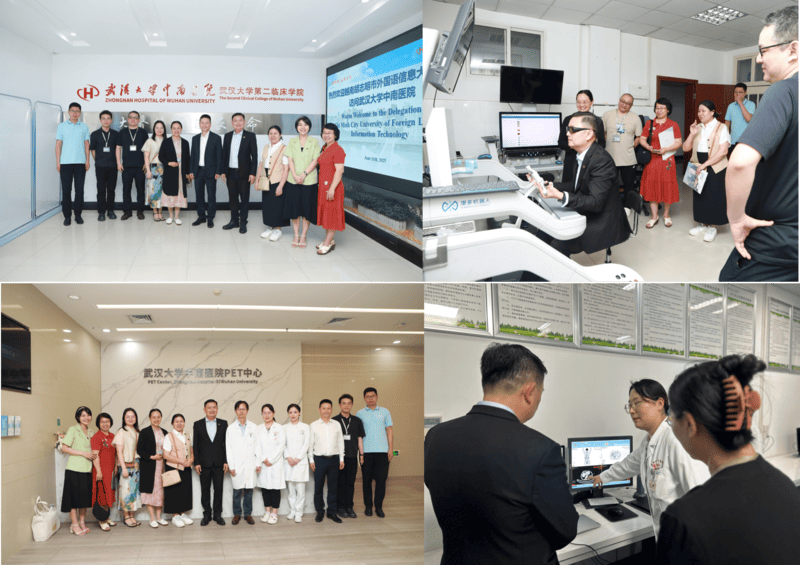
The ability to solve problems flexibly and adapt quickly to a multicultural environment is a big advantage when working with international colleagues and partners. At HUFLIT, students have many opportunities to develop this skill through the Chinese Club, extracurricular activities and student-exchange programmes. Some programmes such as the international summer camp at Wuhan University (China) help HUFLIT students directly experience the study and living environment of local students.
Questions related to the skills of the Chinese Language discipline
Does studying the Chinese Language require good communication?
Yes, because communication is the core skill helping students not only understand and use the language but also interact effectively with Chinese partners, customers and enterprises.
How to train skills when learning Chinese?
Students can effectively train Chinese skills through extracurricular activities and clubs to practise communication and reflexes. HUFLIT has a Chinese Club helping students practise the language in a real environment and interact with the Chinese-learning community.
HUFLIT also organises talkshows, communication and language-reflex workshops helping students train the skill of using Chinese in real situations. Besides, the club also organises activities such as making sky lanterns during the Mid-Autumn Festival, helping students directly experience the culture.
Which skill helps you progress quickly when learning Chinese?
To progress quickly, students need to focus on regular listening and speaking, train correct pronunciation right from the start and develop self-study ability and regular practice. Thanks to this, students remember vocabulary, firmly grasp grammar, improve language reflexes and enhance confident communication ability.
The Chinese Language discipline opens up many career opportunities in translation – interpreting and international trade. Combining language learning with digital and professional skills helps students confidently apply them in work. If you want to study Chinese, HUFLIT is the ideal choice for you to study with a practical training programme and a comprehensive training environment.
>>>> LEARN MORE IN-DEPTH INFORMATION:
What do you do after studying the Chinese Language discipline? 10 “money-making” positions
The Chinese Language discipline: 5 “Golden” Skill Groups 2026
CONTACT INFO
Apply for admission at
tuyensinh.huflit.edu.vn
Find out information
huflit.edu.vn
Advising education enrollment