



-
Proud to be HUFLITers #07 | M.A. Tran My Uyen – A lectern where a teacher wishes only to “watch her children grow up”At the HUFLIT Faculty of Foreign Languages, M.A. Tran My Uyen (Vice Dean) goes by many names. Some call her “Ms My”; her students call her “mother”. Colleagues often compare her to Mother Au Co with a hundred children. Yet to become the “mother” of the lecture hall she is today, she went through a profound shift in thinking that completely changed a teaching philosophy built over more than 30 years.
-
New Cybersecurity Regulations: Opportunities for the Cybersecurity Field in the Digital EraThe new cybersecurity regulations taking effect on 1 July 2026 not only help complete the legal framework but also drive demand for talent in cybersecurity. This is also the moment when the discipline becomes a promising choice for young people who love technology and information security.
-
“GenZ Major Insights 2026” – Episode 9: Boundless Journeys with HUFLIT’s Tourism and Hospitality ProgramsMany students choose the Tourism and Hospitality field simply because they love to travel. But passion alone is not enough to pursue this field in the long run. What matters more is understanding the nature of the discipline, its professional requirements, and the qualities needed to grow in a professional service environment.
“Budget Boss 2026”: Helping HUFLIT Students Master Finance, Master the Future
NGÀY: 16/04/2026
Chia Sẻ Qua
Not only stopping at a sharing session, the programme aims at equipping correct financial thinking, helping students understand that money is not only to “earn and spend”, but is also a tool to create freedom if used effectively.
Accompanying the programme was the whole-university graduation valedictorian (HUFLIT) of the 2018 – 2022 course – MA. Lương Thế Trinh, currently working at the International Payment Department, Asia Commercial Joint Stock Bank (ACB). From his real-world experiences in the finance – banking field, he brought a clearer and more practical perspective on money, helping students distinguish between “assets” – the factors that create long-term value, and “liabilities” – the expenses that have not yet brought sustainable benefits. Thereby, students step by step form a more selective, proactive and responsible spending mindset in the journey of managing personal finance.
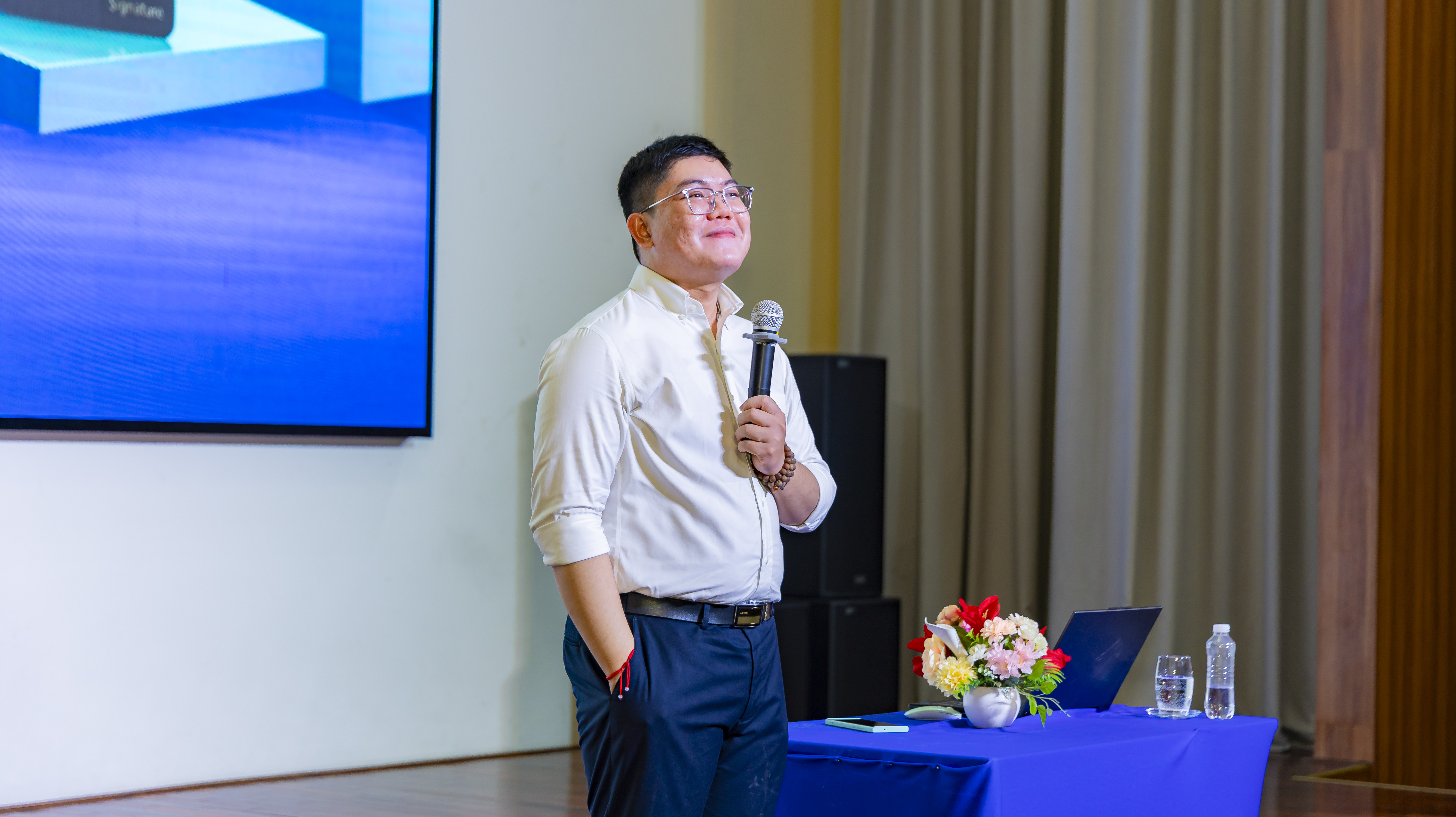
MA. Lương Thế Trinh - The whole-university graduation valedictorian (HUFLIT) of the 2018 - 2022 course
With the goal of equipping students with a foundation of knowledge and personal-financial-management skills, the workshop within the framework of “Budget Boss 2026” focuses on practical, easy-to-apply content. Through close sharing and real-world situations, students step by step understand how to control cash flow, build healthy financial habits and be more proactive in shaping their own future.
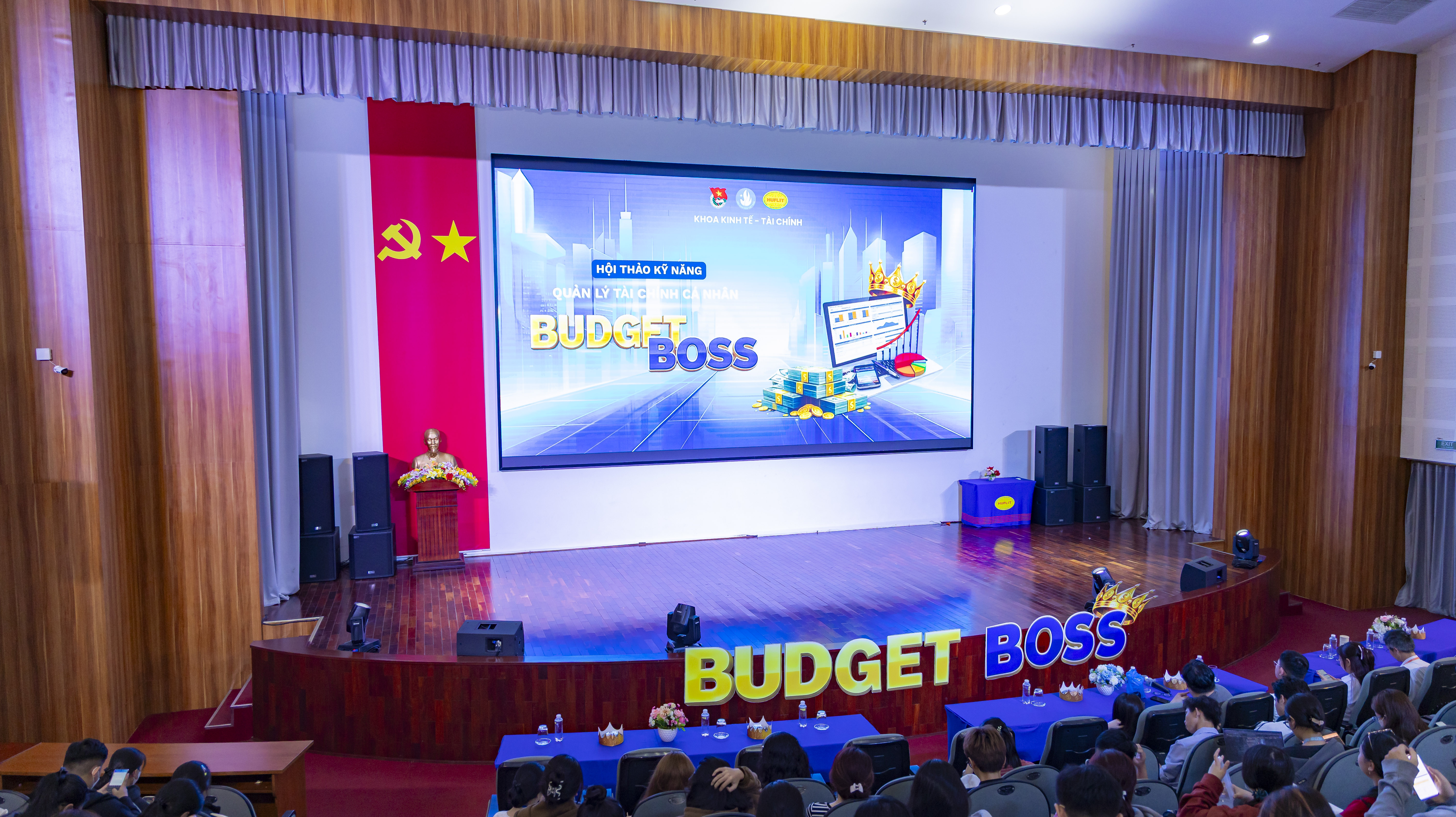
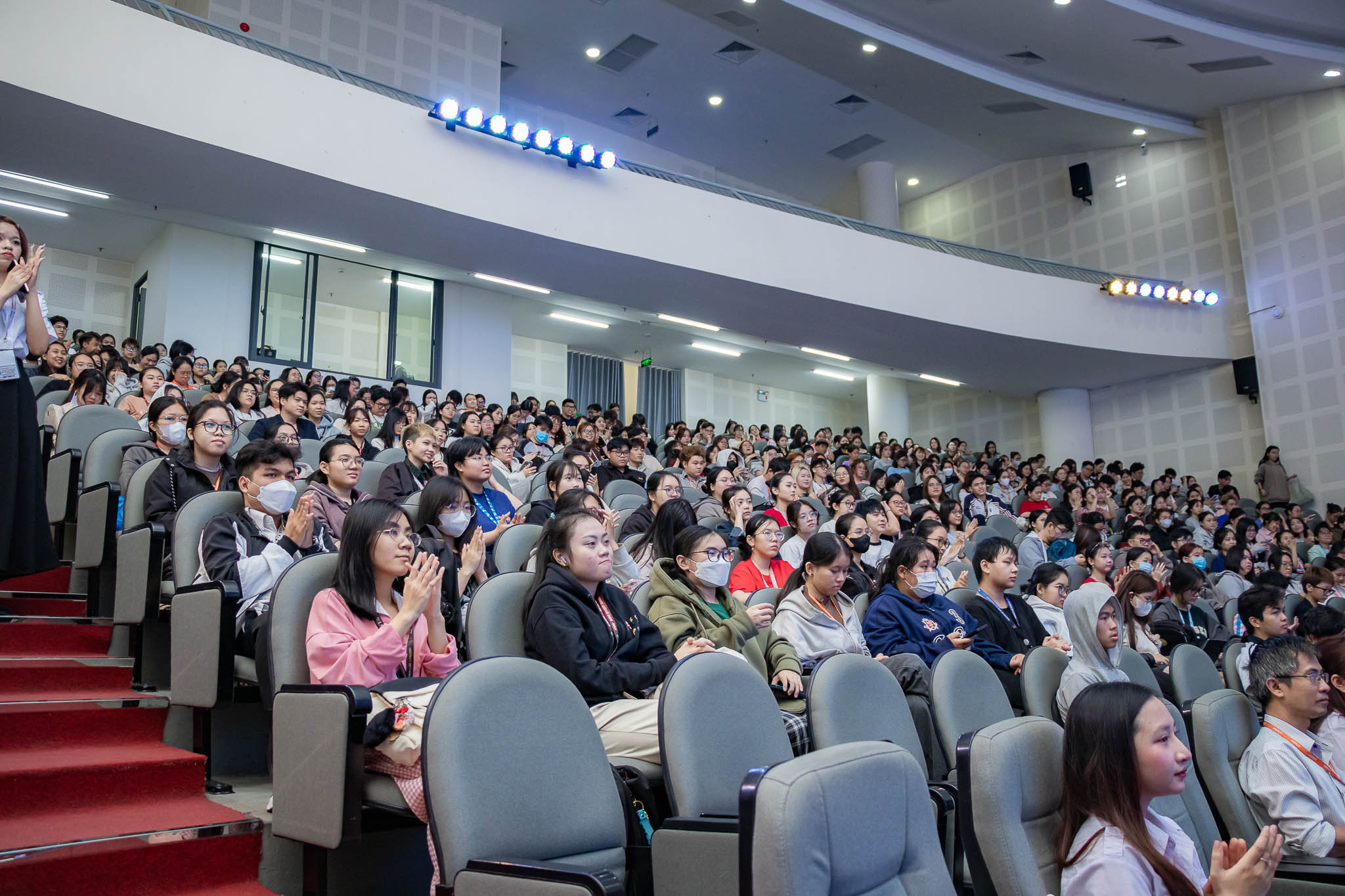
The overall scene of the Personal Financial Management skills Workshop
One of the central contents of the programme is building healthy financial thinking through 02 core principles: compound interest and “pay yourself first”. Compound interest shows the power of starting to save early, when small amounts of money can accumulate into large value over time.
Meanwhile, the “pay yourself first” principle encourages students to set aside 10 – 20% of income to save before spending, thereby forming a reserve fund and reducing financial pressure. This is seen as the foundation that helps students build stability and proactiveness in personal finance.
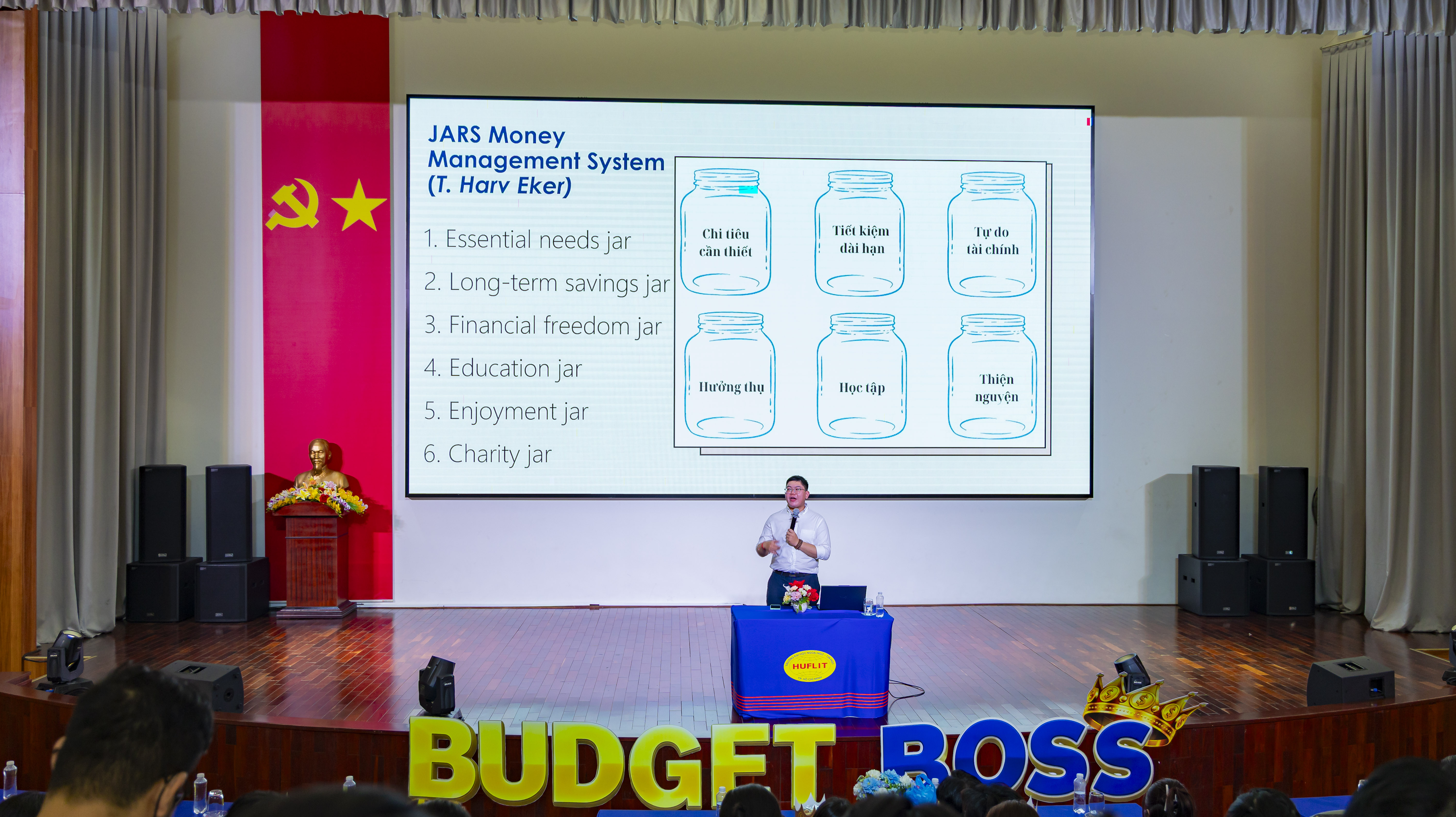
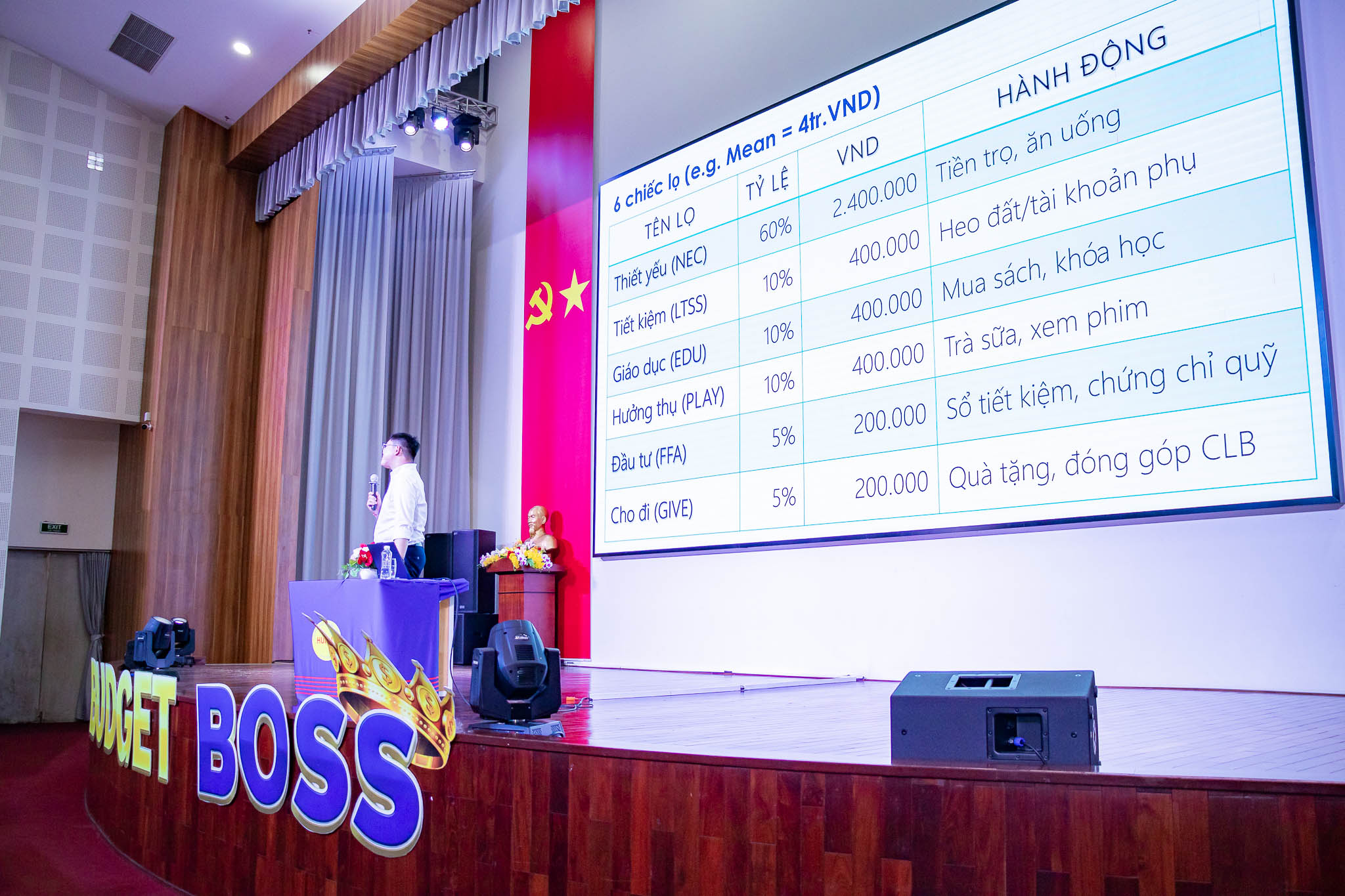
MA. Lương Thế Trinh shares about the 06-jars method
He also went deep into the practical issues that GEN Z usually encounters. That is pressure from the surrounding environment such as FOMO (fear of missing out) or “peer pressure” that makes many people spend beyond their means. Besides is the difficulty in budgeting when income is unstable, the feeling of “overthinking” when starting to manage finance, or having to balance between spending on study, living and entertainment. In addition, students also face bigger concerns such as whether to prioritise saving or investing in themselves, how to increase income, or how to build a financial strategy when there is not much support from the family.
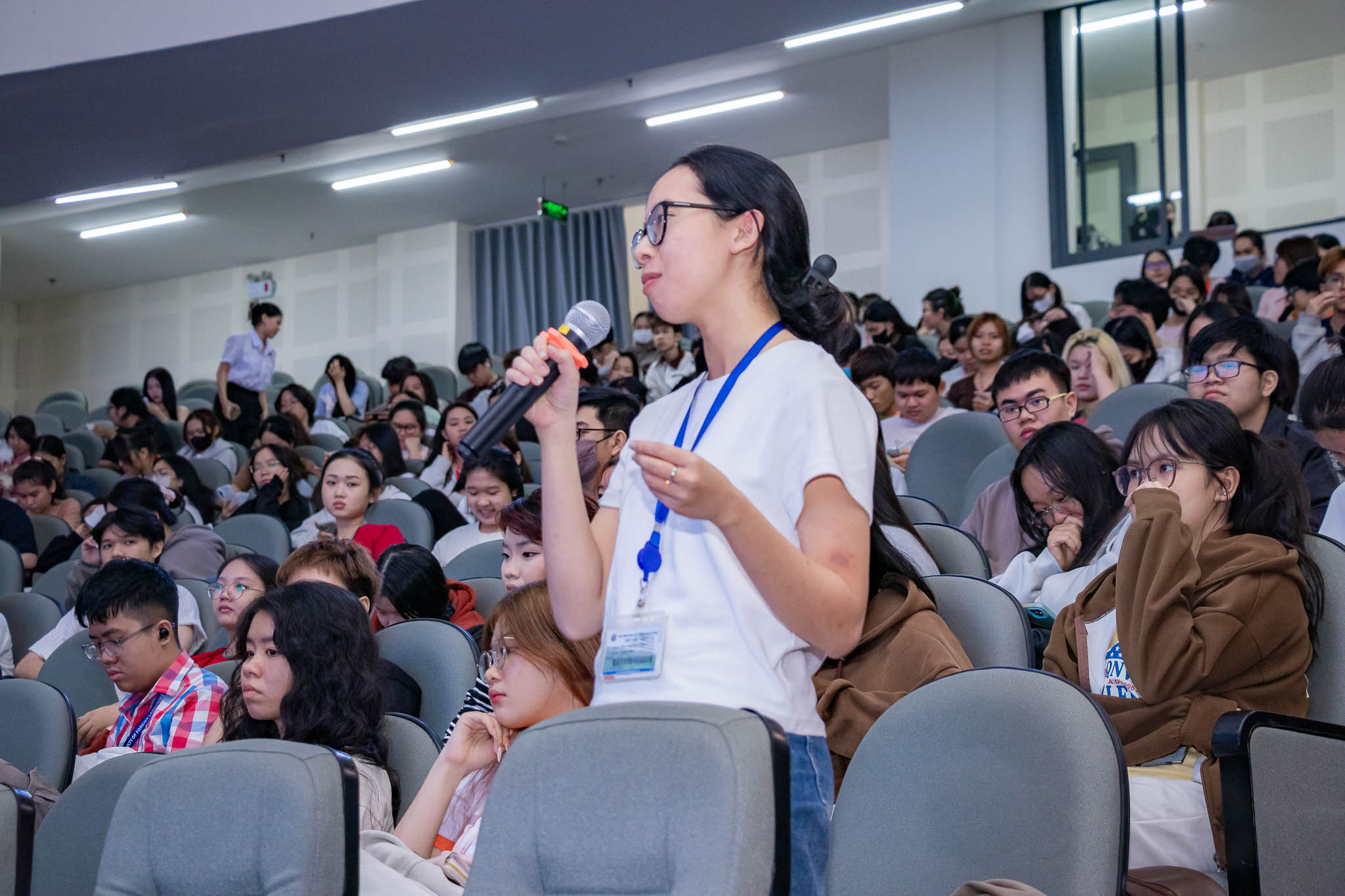
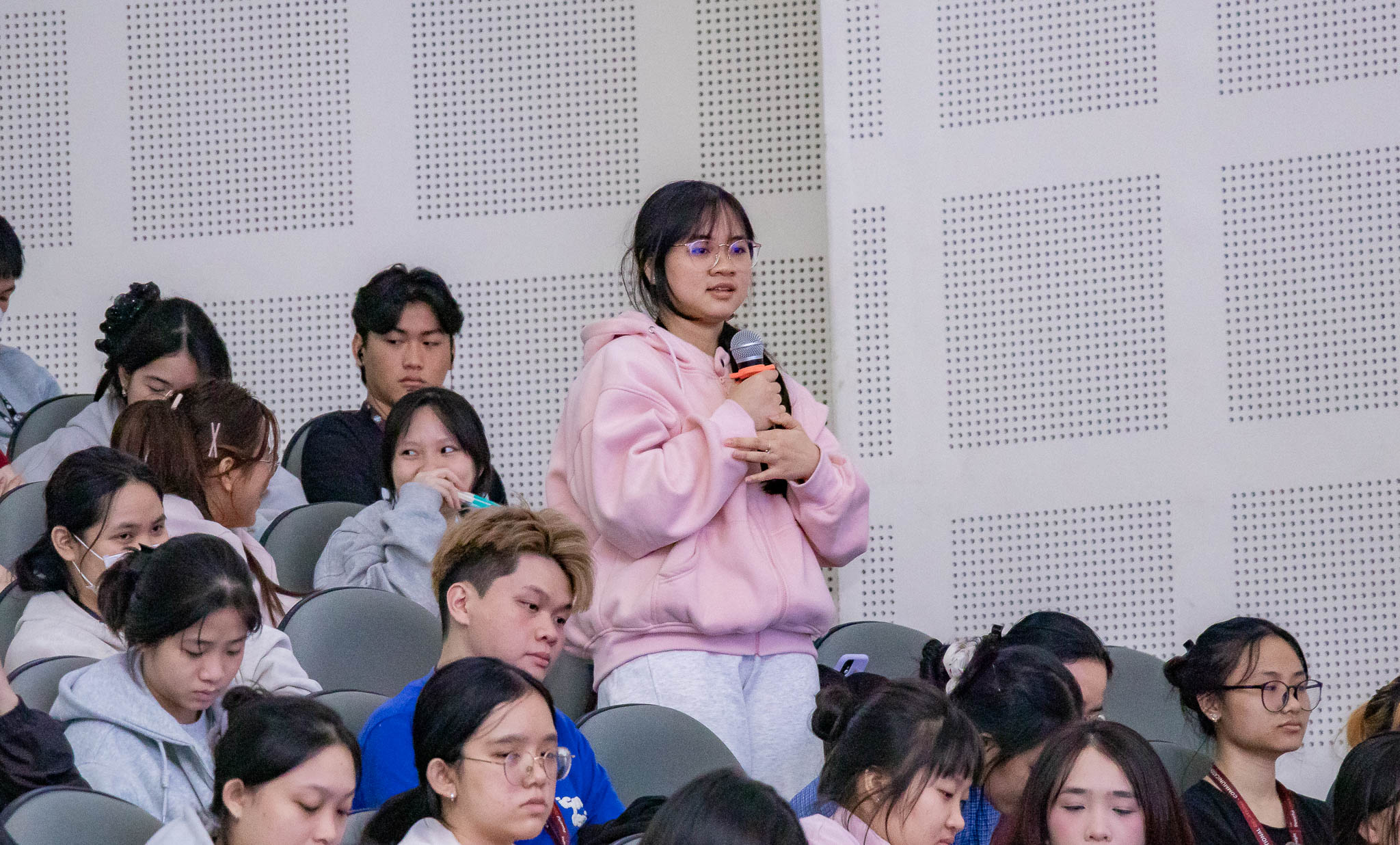
Students ask questions to the Speaker
Another important content the speaker shared is identifying and avoiding the common “financial traps” today. Students were warned about the risks from credit cards, the “buy now, pay later” form or easily accessible consumer loans. MA. Lương Thế Trinh clarified common misunderstandings, such as that only paying the minimum amount on a credit card still incurs a very high interest rate, or the hidden costs when withdrawing cash from a card. Thereby, participating students understand that a credit card should be used as a payment tool instead of a borrowing tool, while also needing to build awareness of credit reputation (CIC) – an important factor affecting future financial capacity.
In terms of method, the speaker presented many easy-to-apply financial-management tools and models. Typical is the 50/30/20 rule that helps reasonably allocate income between essential needs, personal wants and savings. Besides is the 06-jars (JARS) system with specific purposes such as essential spending, long-term saving, financial freedom, education, enjoyment and giving. These methods help students have a clearer view of their cash flow, thereby controlling and optimising spending more effectively.
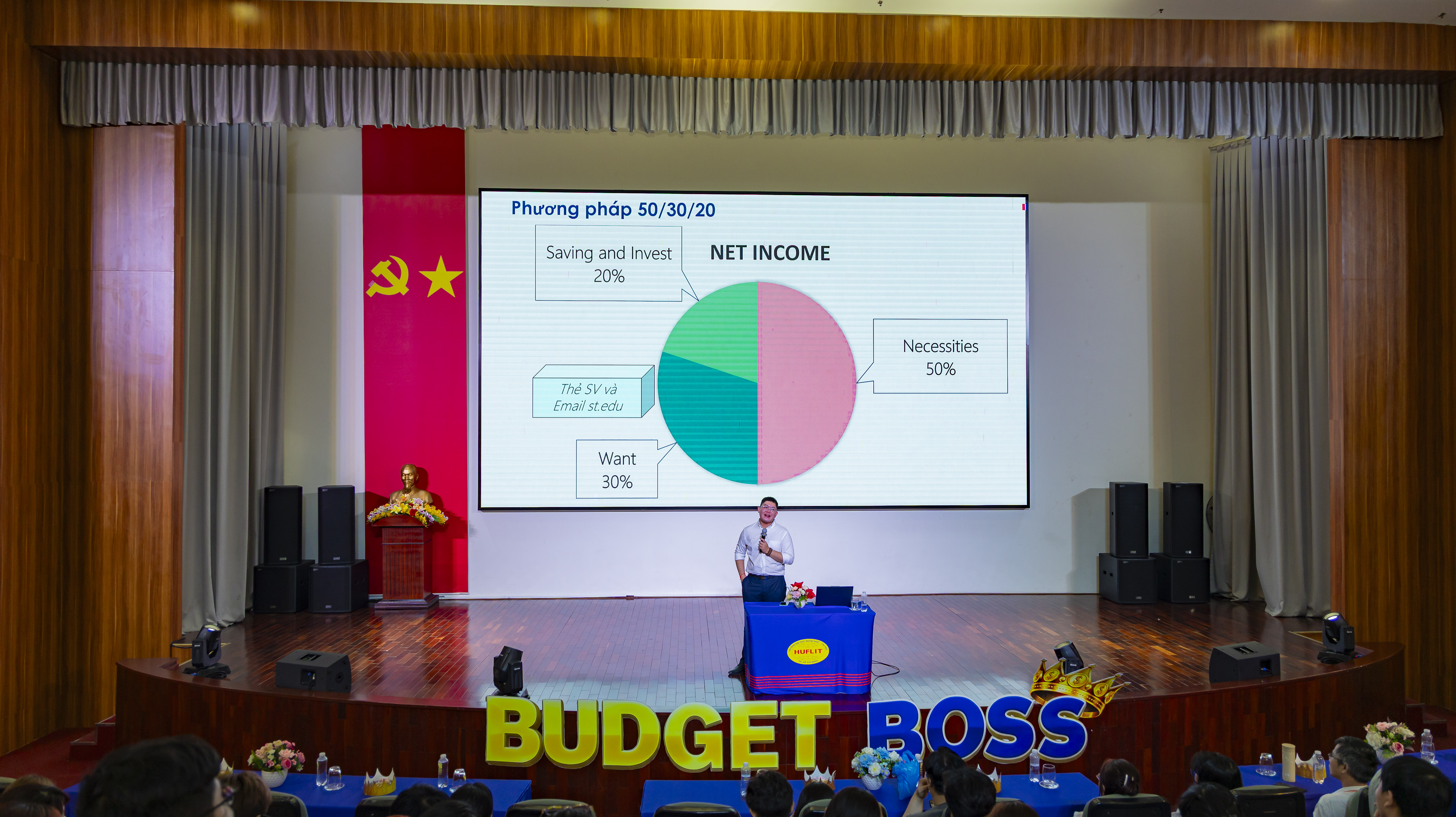
MA. Lương Thế Trinh shares about the 50/30/20 method
Not only stopping at theory, he also gave many practical tips for students to apply right in life. Suggestions such as taking advantage of offers from the student card, preparing meals at home to save costs, or using tools such as Money Lover, Spendee, Excel to track spending are all highly applicable. In particular, the 72-hour rule before deciding to shop was emphasised as an effective way to limit emotional spending and avoid impulsive decisions.
In addition, the programme also received practical sharing from the special guest – MA. Văn Cập Huy – lecturer of the Faculty of Economics – Finance HUFLIT. From the teacher’s personal experience, such as the phenomenon of “lifestyle inflation” – when income increases but spending also increases accordingly, the teacher emphasised that personal finance is not a story of large numbers but starts from small decisions every day.
According to the teacher, the most important thing is not how much money you earn, but how you understand and manage that money. The sincere and close sharing helped students gain a more practical perspective, while also creating motivation for each person to proactively build a more suitable and sustainable financial roadmap for the future.
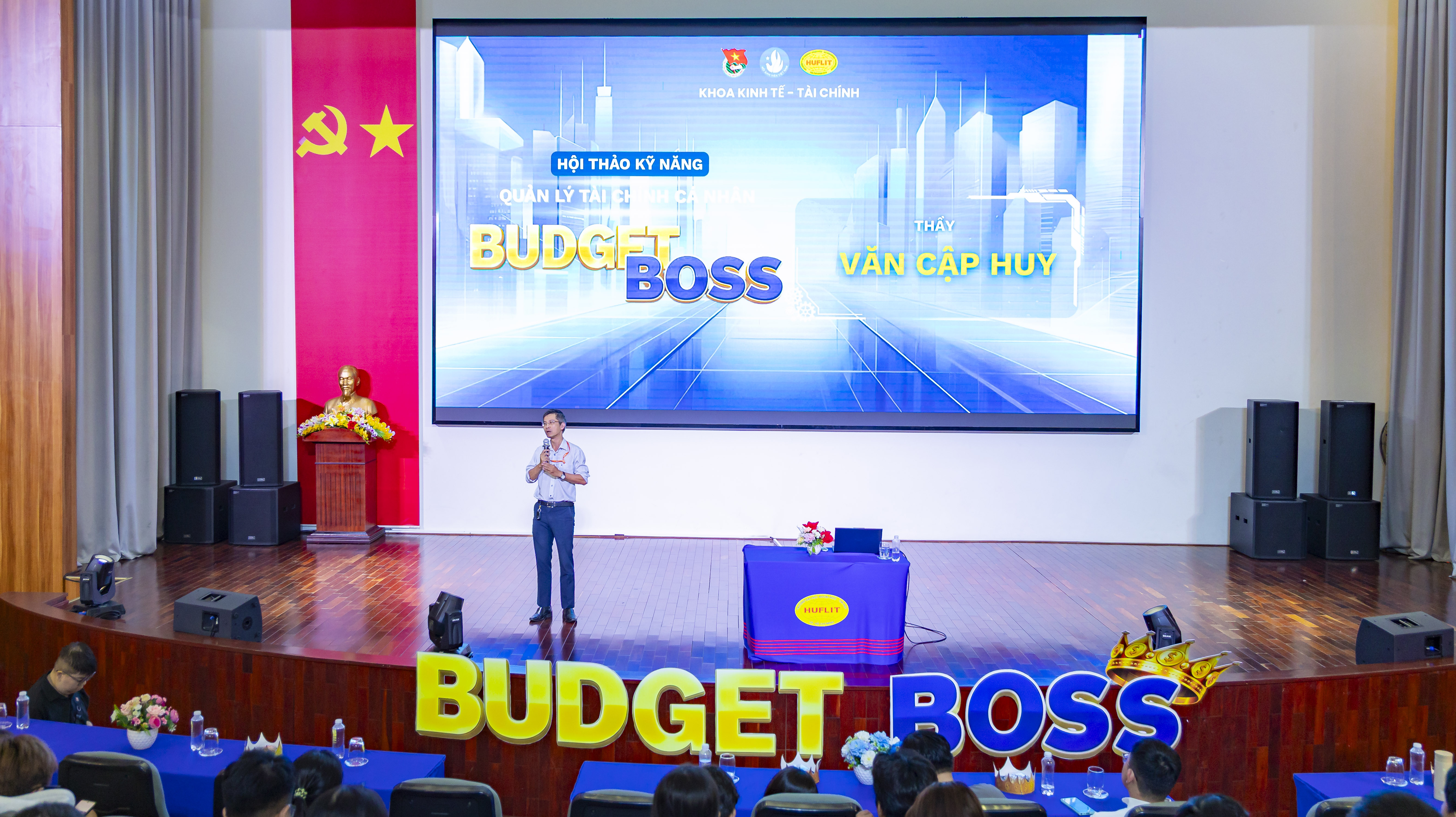
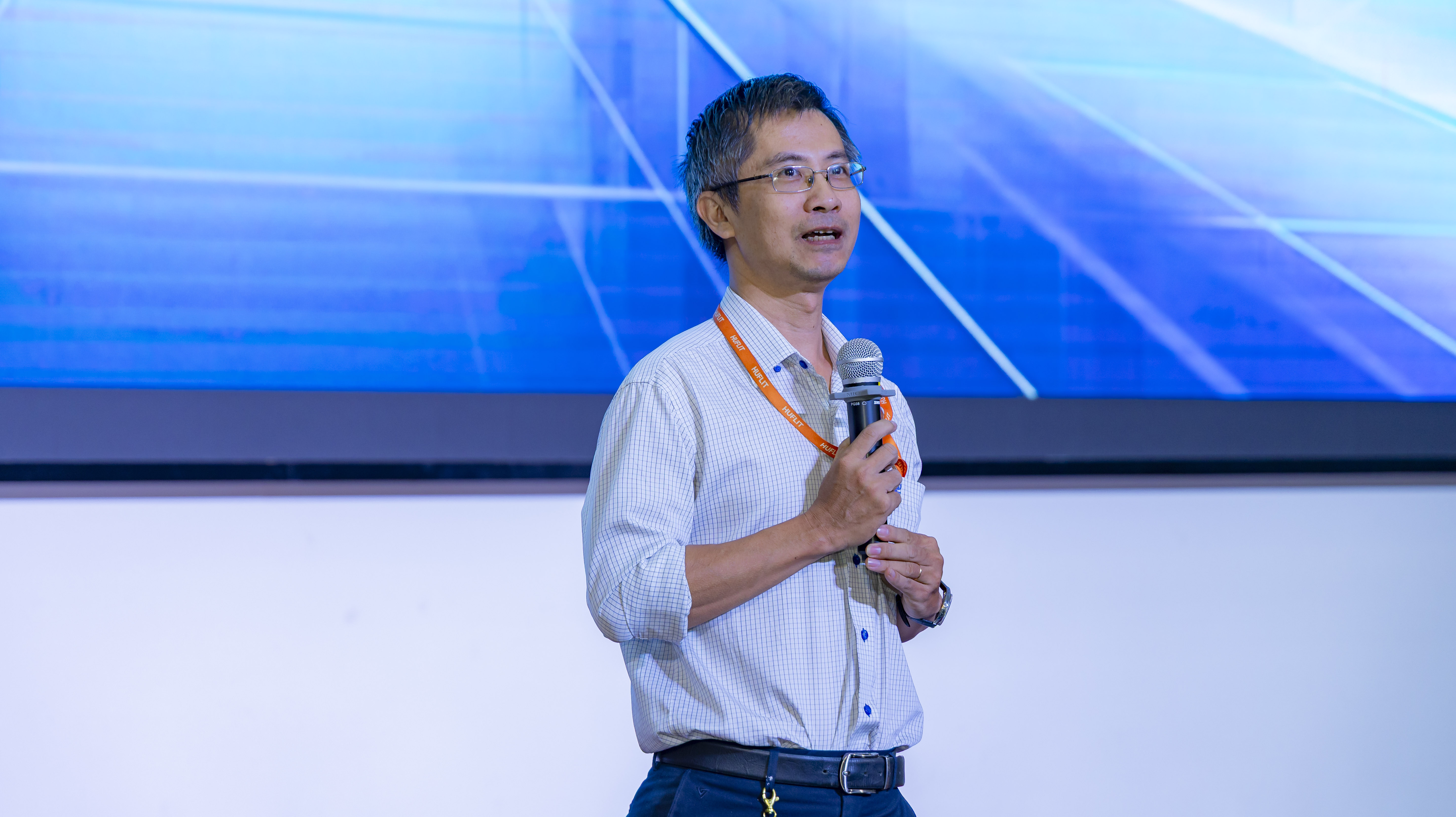
MA. Văn Cập Huy shares his own perspective

Student Lâm Mỹ Duy performs the song “Có em chờ”

The performance of HMC - HUFLIT Music Club
The Personal Financial Management skills Workshop with the theme “Budget Boss 2026” conveyed a strong message about sustainable financial development: Small but consistent changes today will create big results in the future. Students are encouraged to choose assets instead of liabilities, maintain discipline instead of depending on inspiration, and equip knowledge instead of falling into debt traps. Most importantly, managing small amounts of money well is the starting step to building a solid financial foundation and opening up many opportunities in the future.
CONTACT INFO
Apply for admission at
tuyensinh.huflit.edu.vn
Find out information
huflit.edu.vn
Advising education enrollment