



-
Proud to be HUFLITers #07 | M.A. Tran My Uyen – A lectern where a teacher wishes only to “watch her children grow up”At the HUFLIT Faculty of Foreign Languages, M.A. Tran My Uyen (Vice Dean) goes by many names. Some call her “Ms My”; her students call her “mother”. Colleagues often compare her to Mother Au Co with a hundred children. Yet to become the “mother” of the lecture hall she is today, she went through a profound shift in thinking that completely changed a teaching philosophy built over more than 30 years.
-
New Cybersecurity Regulations: Opportunities for the Cybersecurity Field in the Digital EraThe new cybersecurity regulations taking effect on 1 July 2026 not only help complete the legal framework but also drive demand for talent in cybersecurity. This is also the moment when the discipline becomes a promising choice for young people who love technology and information security.
-
“GenZ Major Insights 2026” – Episode 9: Boundless Journeys with HUFLIT’s Tourism and Hospitality ProgramsMany students choose the Tourism and Hospitality field simply because they love to travel. But passion alone is not enough to pursue this field in the long run. What matters more is understanding the nature of the discipline, its professional requirements, and the qualities needed to grow in a professional service environment.
8 Benefits of Scientific Research: The Secret to Success 2026
NGÀY: 05/03/2026
Chia Sẻ Qua
8 benefits of scientific research today
Scientific research not only helps you expand your knowledge but also trains many important skills for the future. Below are the 8 benefits of scientific research today that you should not miss:
Training critical thinking and problem-solving skills
Scientific research is an effective tool for training logical thinking and problem-analysis ability. Specifically, this process includes asking questions, collecting data, analysing and evaluating.
Asking questions right from the start helps you clearly identify the problem, stimulate critical thinking and view the problem from many angles. Next, the process of collecting and analysing data forces students to search for and evaluate reliable information and identify the relationships between factors. Thanks to this, it helps students train logical thinking and verify hypotheses systematically.
Finally, the results-evaluation step helpscompare with the initial hypothesis, draw lessons and improve problem-solving skills. Thanks to regularly practising this process, it helps students both think logically and confidently find solutions for complex situations.

Scientific research helps students train critical thinking and improve problem-solving skills
Consolidating and deepening specialised knowledge
Scientific research helps students access in depth the latest materials and knowledge in their discipline. This process forces them to analyse, synthesise and critique information, thereby understanding theory deeply rather than just stopping at the surface. At the same time, applying knowledge to practice trains the ability to apply knowledge, helping to firmly grasp the essence of the theories learned in the lecture hall.
>>>> DON’T MISS: 7 effective ways to overcome exam pressure for candidates 2026
Comprehensively developing “golden” soft skills
Students are trained in important soft skills when participating in scientific research, especially the ability to coordinate effectively in a team. Some types of skills such as:
- Teamwork skills: Coordinating, dividing tasks and handling conflicts effectively.
- Time-management skills: Planning, prioritising and ensuring research progress
- Presentation skills: Exchanging data, group discussion and working with the supervising lecturer.
- Office informatics and data-analysis tools: Excel, Google Sheets, statistical software, etc.
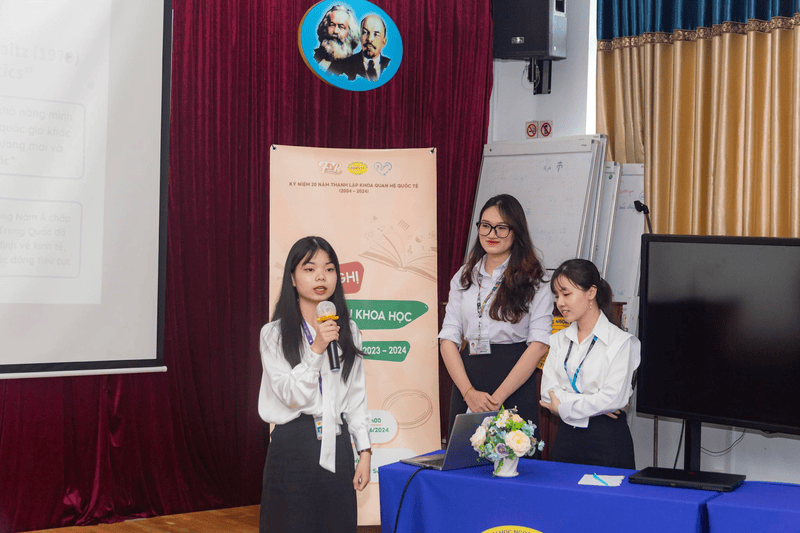
Participating in scientific research is an opportunity to train important soft skills
Improving foreign-language and informatics ability
Scientific research requires students to regularly read English materials, get exposed to specialised terminology and learn about international academic works. Thanks to this, students form the habit of quick reading comprehension and use English more accurately in a specialised context.
In addition, the research process requires the use of many statistical software programs (SPSS, R) and citation software (Mendeley, Zotero), helping students train methodical informatics skills. This is also a special advantage at HUFLIT – an environment strong in foreign languages and informatics, where students practise to meet real-world work standards.
Beautifying the CV, creating a “highlight” in the eyes of employers
A scientific-research topic in a CV shows that the candidate has systematic thinking, knows how to proactively learn and has the ability to work independently. It is this real-world evidence that helps you impress employers right from the profile-screening round.
In addition, a report from TopCV also points out that employers highly value candidates with analytical thinking and data-handling experience. These are skills usually trained from the research process. Therefore, participating in scientific research becomes a “highlight” that helps supplement work experience and elevate the value of your CV.
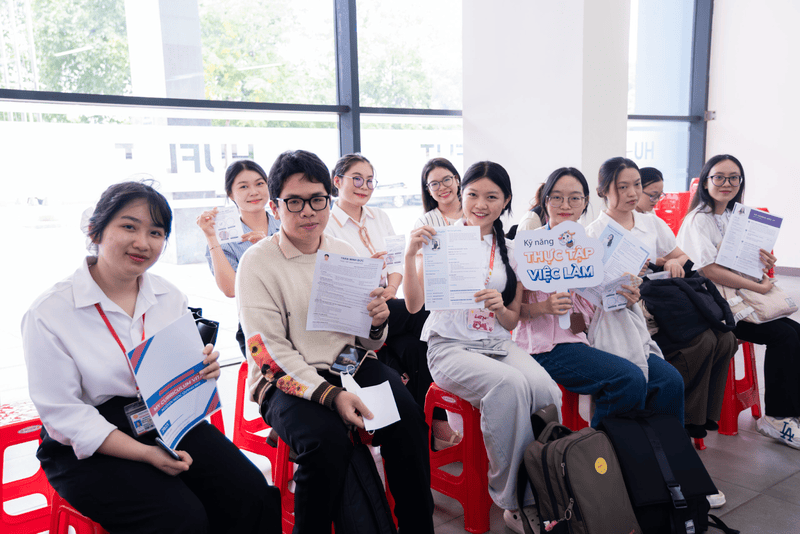
Scientific research helps students beautify their CV and impress employers
Expanding a quality relationship network (networking)
The scientific-research process creates opportunities for students to expand relationships through working deeply with supervising lecturers and seniors. Not stopping at the academic environment, you also have the opportunity to connect with experts in the industry when participating in seminars, surveys or professional interviews. Thanks to this, these relationships will become an important foundation supporting both the study path and later career.
>>>> POCKET IT NOW: International student exchange programmes: study abroad opportunities
Opportunity to receive scholarships and study abroad
Published scientific-research works are always an advantage when students submit study-abroad scholarship applications, especially when students want to apply for Master’s or Doctoral scholarships abroad. International schools always prioritise students with research experience, because they prove the ability to think independently and solve problems. Thanks to this, some profiles with scientific-research achievements will make a strong impression on the selection council.
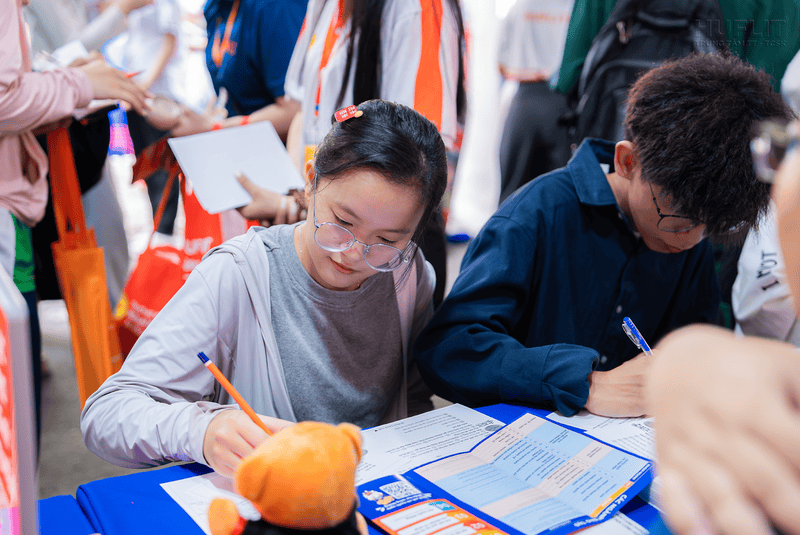
Research works are a plus when applying for study-abroad scholarships
Clearer career orientation
Focusing on researching a field in depth helps students discover themselves and recognise hidden strengths. Through this process, they gradually identify their real work passion, thereby gaining a realistic view of their later career path. Thanks to this, students can build a clearer self-development plan and prepare well for the future.
HUFLIT – A solid launchpad for students’ passion for scientific research
HUFLIT always creates optimal conditions for students to freely explore knowledge through scientific research at HUFLIT. Below are the outstanding strengths that help the school become a solid launchpad for students’ research passion:
Policies encouraging and funds supporting scientific research
HUFLIT implements many policies encouraging and funds supporting scientific research to motivate students to carry out quality topics. First of all, the school adds training points for students participating in scientific research, helping to properly recognise their academic efforts. In addition, HUFLIT also rewards outstanding topics with high scientific value.
In particular, the school also supports funding for carrying out topics, from buying experimental materials to seminar-participation costs. So that students can carry out topics with peace of mind, the school also arranges supervising lecturers and professional consulting when implementing projects. Thanks to this, students have favourable conditions to develop ideas, improve research capacity and create quality topics with practical value.

HUFLIT implements policies encouraging and funds supporting scientific research for students
A dedicated team of lecturers, rich in supervising experience
The team of supervising lecturers at HUFLIT is not only experienced but also always dedicated to accompanying students in every stage of scientific research. They give detailed guidance from building the topic to analysing data, ensuring students firmly grasp the method and achieve quality results.
In addition, many leading experts directly participate in advising, bringing updated knowledge and a practical perspective. Thanks to this, students not only learn theory but also develop critical thinking and problem-solving skills in research.
>>>> FOLLOW MORE: How to use ChatGPT to learn English effectively and quickly
Annual competitions and academic playgrounds
HUFLIT organises many annual competitions and academic playgrounds, creating opportunities for students to test themselves, compete and present research results. Typically there is the student scientific-research seminar of the Faculty of International Relations: “Typical events in international relations in the first 20 years of the 21st century”, creating opportunities for students to make presentations, learn about scientific research, etc.
In addition, the school also organises many playgrounds such as the competition “Applying Digital Transformation in Association Work”, encouraging students to propose practical solutions based on research thinking and technology. Some other typical seminars such as: the scientific seminar “Improving the competitiveness of enterprises in an integrated economy”, the 3rd National seminar on Computational Linguistics (27/11/2025), etc.
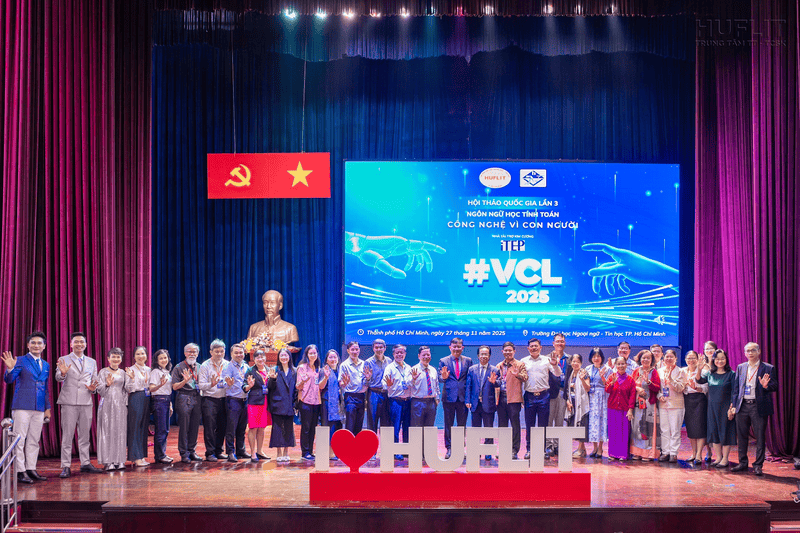
HUFLIT creates opportunities for students to practise and present research through many seminars and workshops.
Frequently asked questions about the benefits of scientific research (FAQ)
Should first-year students do scientific research?
Very much so. Because starting early helps them get familiar with the process and train skills early. You can start by participating as a group member or finding topics at a moderate level under the accompaniment of a lecturer.
If you have no idea, how do you start researching?
If you don’t have an idea yet, students can search from specialised subjects or practical problems in life. In addition, discussing with the supervising lecturer, referring to works from previous cohorts or scientific articles is also an effective way to form research ideas.
Does scientific research affect study time?
Scientific research can affect study time, but if managed well, it will support studying. Students need to make a specific plan, balance between research and in-class study, while training effective time-management skills.
Above is an overview of the 8 benefits of scientific research that students can achieve. From training thinking and improving soft skills to expanding scholarship and career opportunities, scientific research is truly an important stepping stone to success. If you are passionate about exploration and research, choose HUFLIT to realise these opportunities.
>>>> SAVE THE RELATED ARTICLES NOW:
Conditions for studying a Master’s in a different field 2026: What to prepare?
Update on training programmes meeting accreditation standards 2026
CONTACT INFO
Apply for admission at
tuyensinh.huflit.edu.vn
Find out information
huflit.edu.vn
Advising education enrollment