



-
Proud to be HUFLITers #07 | M.A. Tran My Uyen – A lectern where a teacher wishes only to “watch her children grow up”At the HUFLIT Faculty of Foreign Languages, M.A. Tran My Uyen (Vice Dean) goes by many names. Some call her “Ms My”; her students call her “mother”. Colleagues often compare her to Mother Au Co with a hundred children. Yet to become the “mother” of the lecture hall she is today, she went through a profound shift in thinking that completely changed a teaching philosophy built over more than 30 years.
-
New Cybersecurity Regulations: Opportunities for the Cybersecurity Field in the Digital EraThe new cybersecurity regulations taking effect on 1 July 2026 not only help complete the legal framework but also drive demand for talent in cybersecurity. This is also the moment when the discipline becomes a promising choice for young people who love technology and information security.
-
“GenZ Major Insights 2026” – Episode 9: Boundless Journeys with HUFLIT’s Tourism and Hospitality ProgramsMany students choose the Tourism and Hospitality field simply because they love to travel. But passion alone is not enough to pursue this field in the long run. What matters more is understanding the nature of the discipline, its professional requirements, and the qualities needed to grow in a professional service environment.
HUFLIT holds a conference reviewing the Organisation – Administration Department for 2021–2025 and setting development directions to 2030
NGÀY: 15/07/2025
Chia Sẻ Qua
Towards the goal of refining its internal governance system and improving organisational operating effectiveness in the new era, HUFLIT held a Conference reviewing the activities of the Organisation – Administration Department (OA) for the 2021–2025 period and setting the direction of activities for the 2025–2030 period.
Encouraging signs
In the activity results report, MA. Nguyen Quoc Hung, Head of the Organisation – Administration Department, presented an overall picture of the notable achievements of the past 5 years. Key indicators showed many bright spots exceeding plan, such as the number of full-time and concurrently appointed lecturers exceeding targets in each of the last three years, reaching 102.7% in the 2024–2025 academic year; the rate of students satisfied with lecturer quality reaching 95.15%, nearly 12% higher than the target. In particular, the proportion of staff of working age has consistently remained above 90%, reflecting a dynamic and increasingly young personnel structure.
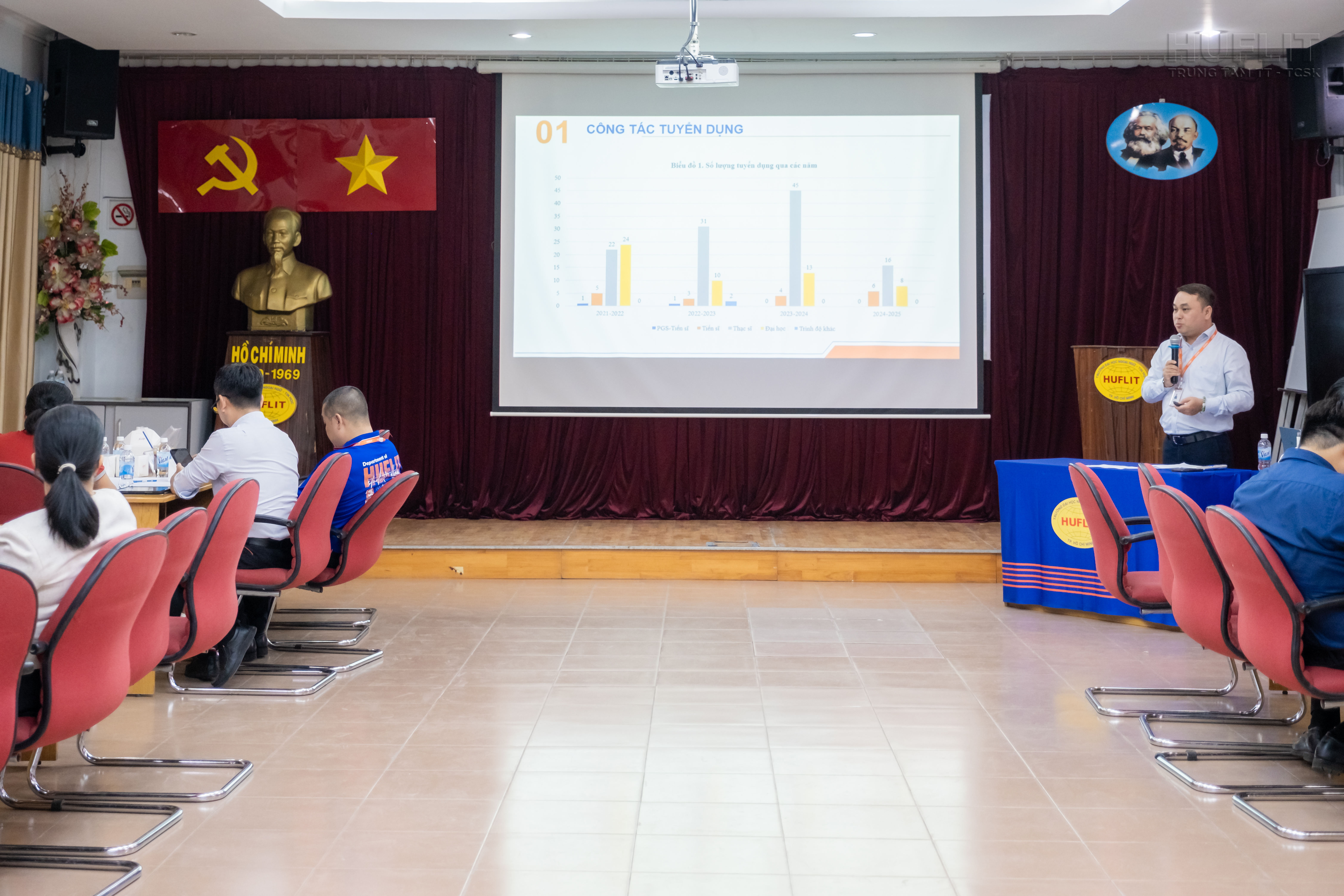
MA. Nguyen Quoc Hung, Head of the Organisation - Administration Department, presenting the review report on activities over the past 5 years
In addition, many efforts to improve the Department’s personnel performance were also recognised, such as an annual turnover rate consistently below 3%; a sharp rise in the number of training courses in 2024–2025 (double the target); and a document digitisation level reaching 85% in 2025, approaching the 90% target.
However, the conference did not shy away from indicators that fell short of expectations, such as the proportion of lecturers holding a doctoral degree not yet reaching the required level (only 44% of the target), or the proportion of staff receiving training and further study remaining lower than planned. These shortcomings were analysed in depth to draw lessons and to serve as the basis for the subsequent groups of solutions.
In the survey report, results collected from nearly 70% valid responses showed overall satisfaction with the Organisation – Administration Department’s activities at 78.7%, of which up to 86.35% of respondents rated “service attitude and work coordination” highly. Sixty comments were compiled, closely reflecting the improvement needs of the affiliated units and providing important material for shaping improvements.
“Removing bottlenecks“ together with shared objectives
The in-depth discussion session, with the participation of representatives from the Educational Testing, External Relations and Admissions departments and others, focused on clarifying the remaining obstacles and agreed on 5 key groups of solutions for the 2025 – 2030 period.
Specifically, the first group of solutions focuses on the digital transformation of administrative procedures, promoting the application of technology in document processing, automating forms and exploiting personnel data. The second group proposes attracting and retaining talent through flexible remuneration mechanisms together with a clear career development path.
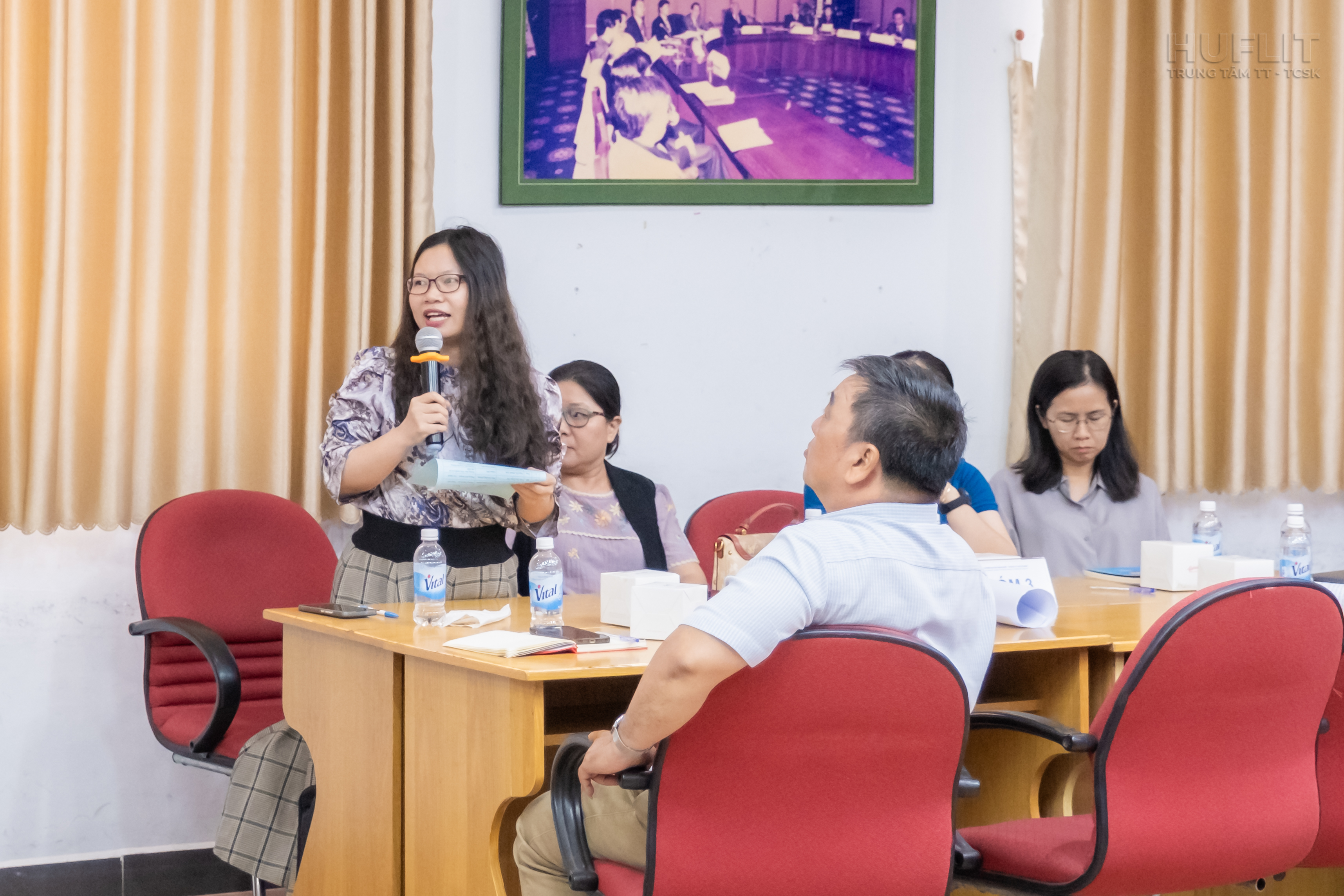
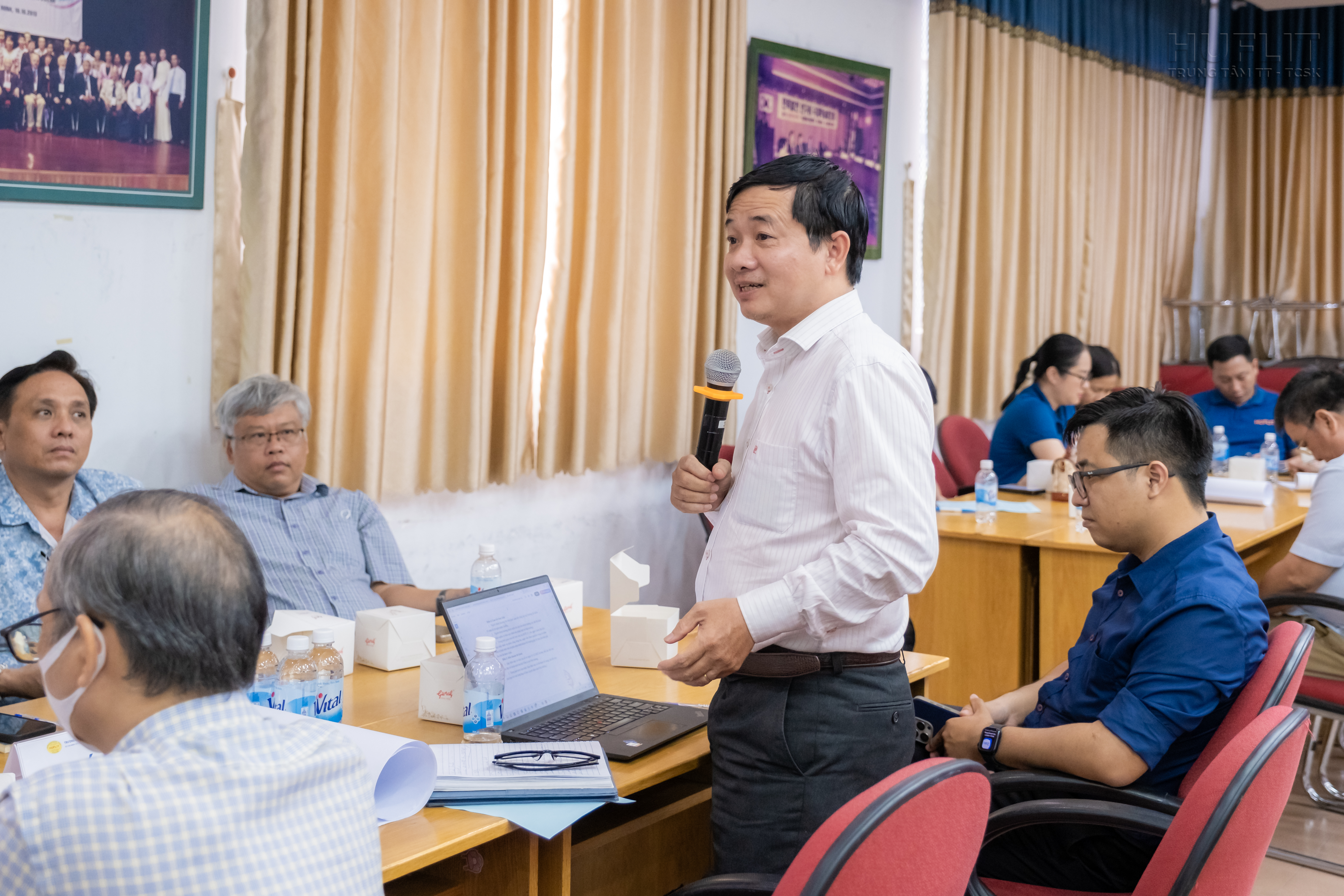
The in-depth discussion session with representatives of departments and faculties
The third group aims to build a positive working environment that promotes an open, collaborative and transparent culture. The fourth group emphasises standardising professional procedures to ensure consistency and effectiveness across the whole system. Finally, the fifth group recommends applying KPIs and clear assessment criteria, creating a performance measurement system for each unit and each position.
The conference closed in a spirit of high consensus and a commitment to strong innovation. The results achieved in the 2021–2025 period are an important foundation for the Organisation – Administration Department to continue affirming its core role in governance, contributing to the University’s steady progress in its comprehensive development strategy for the 2025–2030 period.
CONTACT INFO
Apply for admission at
tuyensinh.huflit.edu.vn
Find out information
huflit.edu.vn
Advising education enrollment