



-
Proud to be HUFLITers #07 | M.A. Tran My Uyen – A lectern where a teacher wishes only to “watch her children grow up”At the HUFLIT Faculty of Foreign Languages, M.A. Tran My Uyen (Vice Dean) goes by many names. Some call her “Ms My”; her students call her “mother”. Colleagues often compare her to Mother Au Co with a hundred children. Yet to become the “mother” of the lecture hall she is today, she went through a profound shift in thinking that completely changed a teaching philosophy built over more than 30 years.
-
New Cybersecurity Regulations: Opportunities for the Cybersecurity Field in the Digital EraThe new cybersecurity regulations taking effect on 1 July 2026 not only help complete the legal framework but also drive demand for talent in cybersecurity. This is also the moment when the discipline becomes a promising choice for young people who love technology and information security.
-
“GenZ Major Insights 2026” – Episode 9: Boundless Journeys with HUFLIT’s Tourism and Hospitality ProgramsMany students choose the Tourism and Hospitality field simply because they love to travel. But passion alone is not enough to pursue this field in the long run. What matters more is understanding the nature of the discipline, its professional requirements, and the qualities needed to grow in a professional service environment.
HUFLIT reviews undergraduate training work for 2023-2024 and sets directions for the new academic year
NGÀY: 27/07/2024
Chia Sẻ Qua
Delivering the guiding remarks at the Conference, Assoc. Prof. Dr. Nguyen Ngoc Vu, Vice Rector of HUFLIT, expressed his delight at the positive changes in undergraduate training work over the past academic year. He hoped the conference would be a forum for frank exchange among representatives of the units, departments and faculty lecturers, in order to find breakthrough solutions, resolve difficulties and improve the quality of the training programmes.
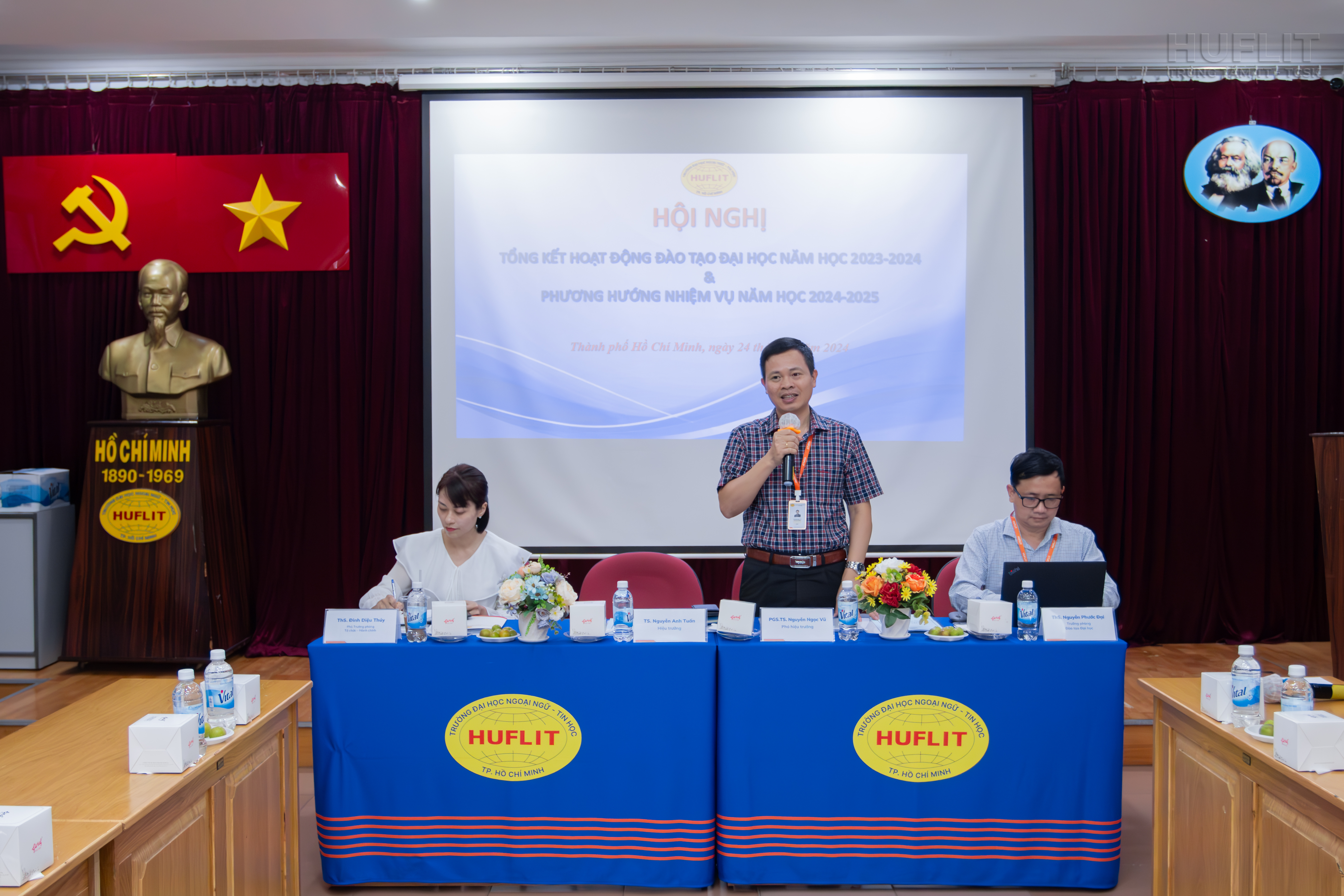
Assoc. Prof. Dr. Nguyen Ngoc Vu, Vice Rector of the University, delivering the guiding remarks at the Conference
The report reviewing the performance of the 2023-2024 academic year provided an overall view of the year’s activities. The main areas covered admissions, opening new programmes, updating and adjusting training programmes, through to assigning teaching duties and assessing students’ learning outcomes.
In particular, amid growing competition among universities and demand for programmes aligned with the labour market and society, HUFLIT proactively opened two new programmes — Artificial Intelligence and Japanese Language — raising the total number of programmes to 20. The attention of the Board of Rectors and of the departments and faculties helped the organisation and delivery of training work during the year proceed smoothly.
However, the report also pointed to a number of outstanding issues and challenges common to universities today regarding student dropout rates and on-time graduation rates. These challenges and outstanding issues have prompted the faculties and departments to work proactively and closely with the University to find more effective solutions for the new academic year.
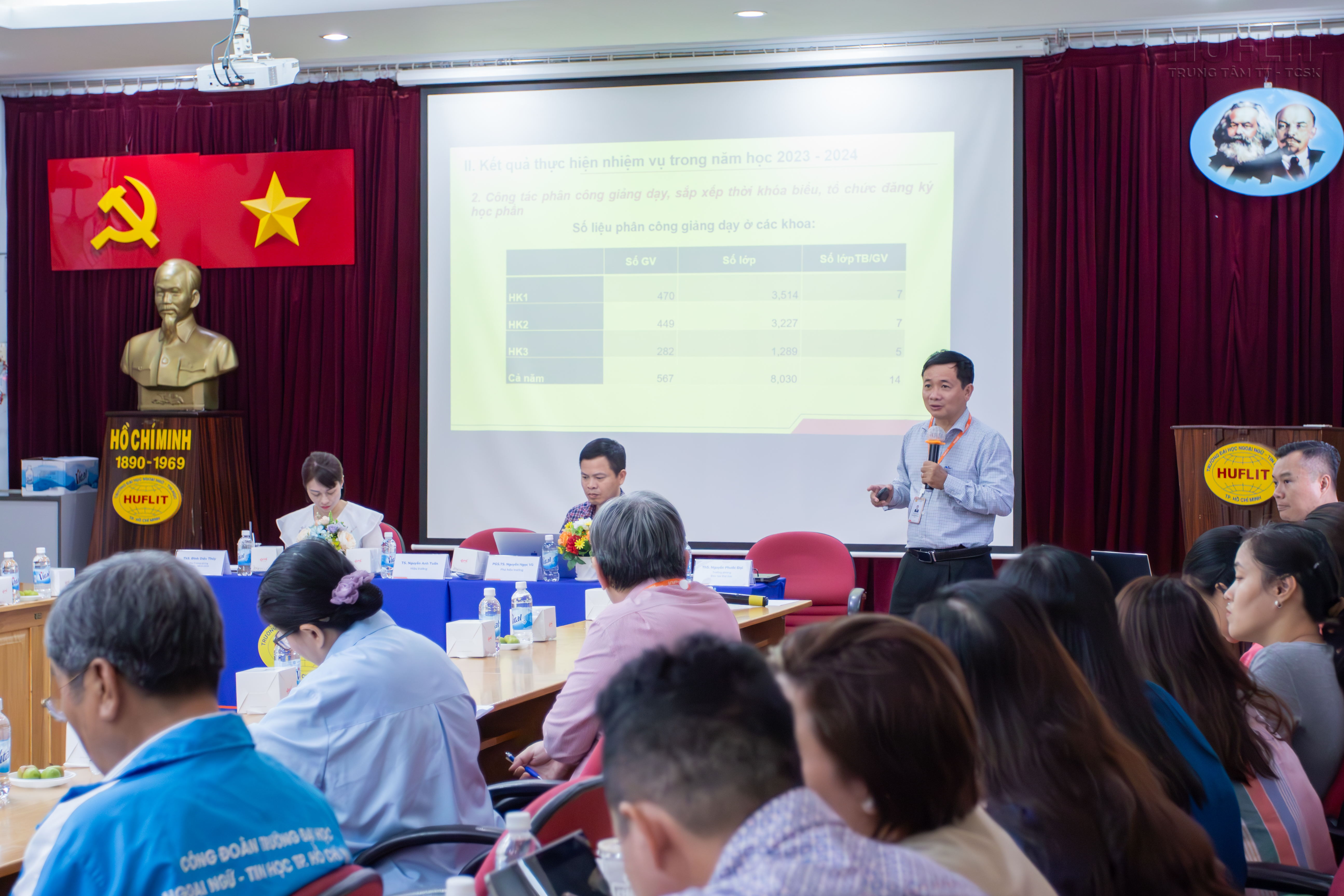
MA. Nguyen Phuoc Dai, Head of the Department of Undergraduate Training, presenting a summary of the report reviewing training work and directions for the new academic year.
In the directions for the new academic year, the University will focus on renewing the testing and assessment of students’ learning outcomes. This includes updating and adjusting assessment methods to better suit each programme and practical needs. In addition, the University will strengthen student care and support, particularly in academic affairs, in order to reduce dropout rates and improve on-time graduation rates.
Alongside this, HUFLIT will continue to implement its plan to open new programmes to meet the needs of the labour market and society’s development trends. Expanding the range of programmes will not only give students more suitable career choices but also contribute to enhancing the University’s reputation and training quality.
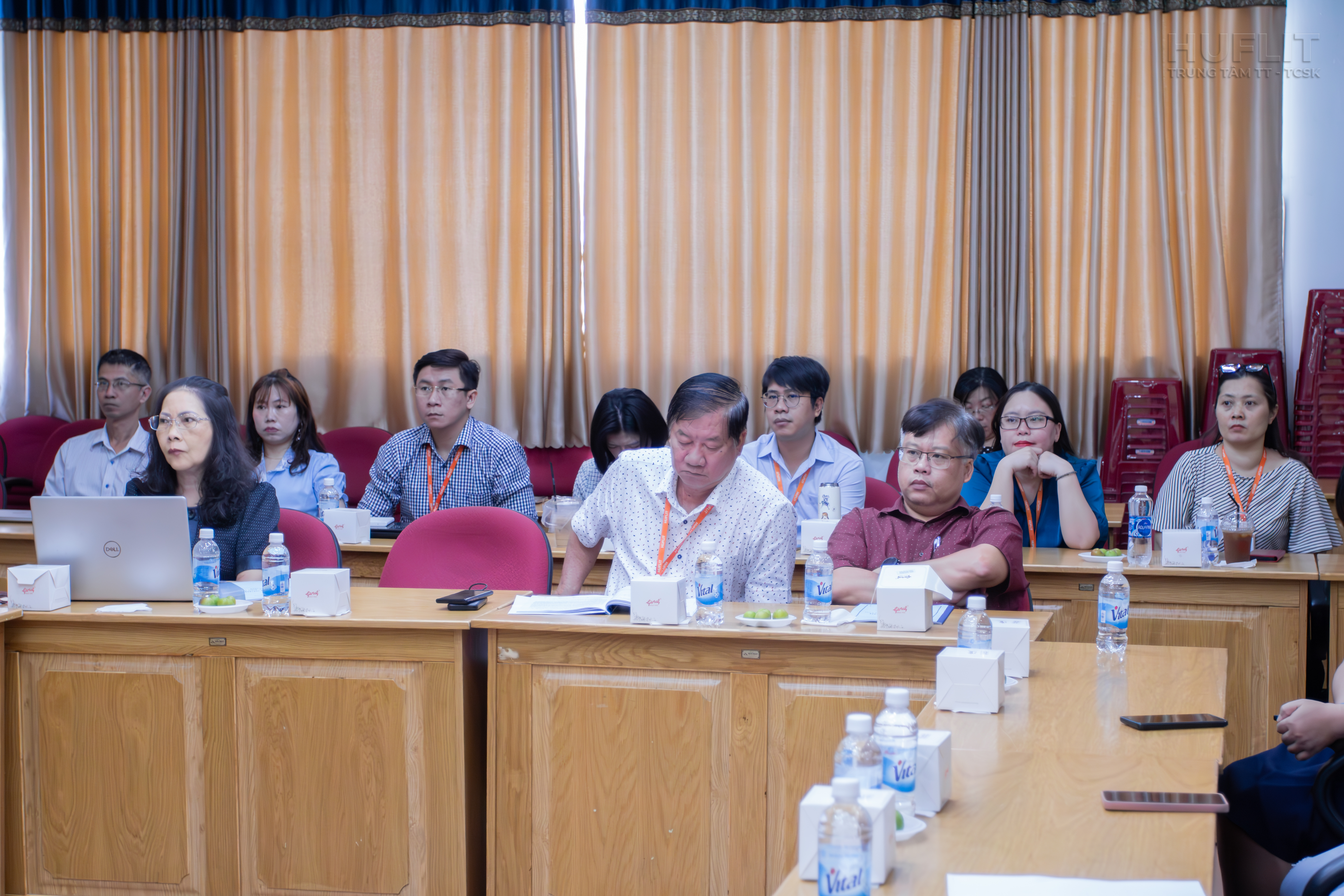
The programme was attended by leaders of the units and faculties of the University.
The presentations delivered by faculty lecturers at this year’s conference were highly appreciated for their topicality and their sharp awareness of new trends in education. The topics chosen not only accurately reflected the reality of teaching and student support but also offered creative and effective solutions.
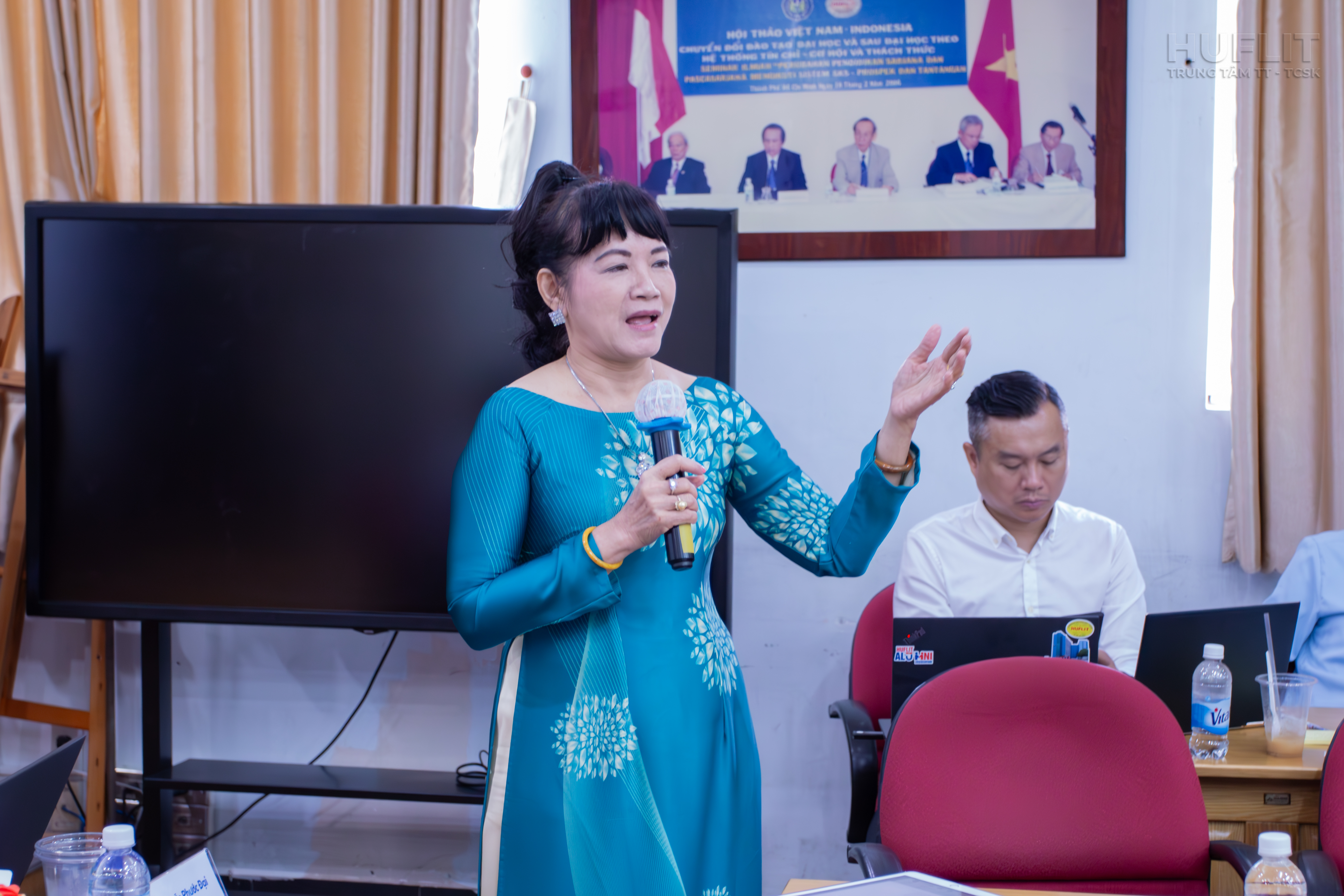
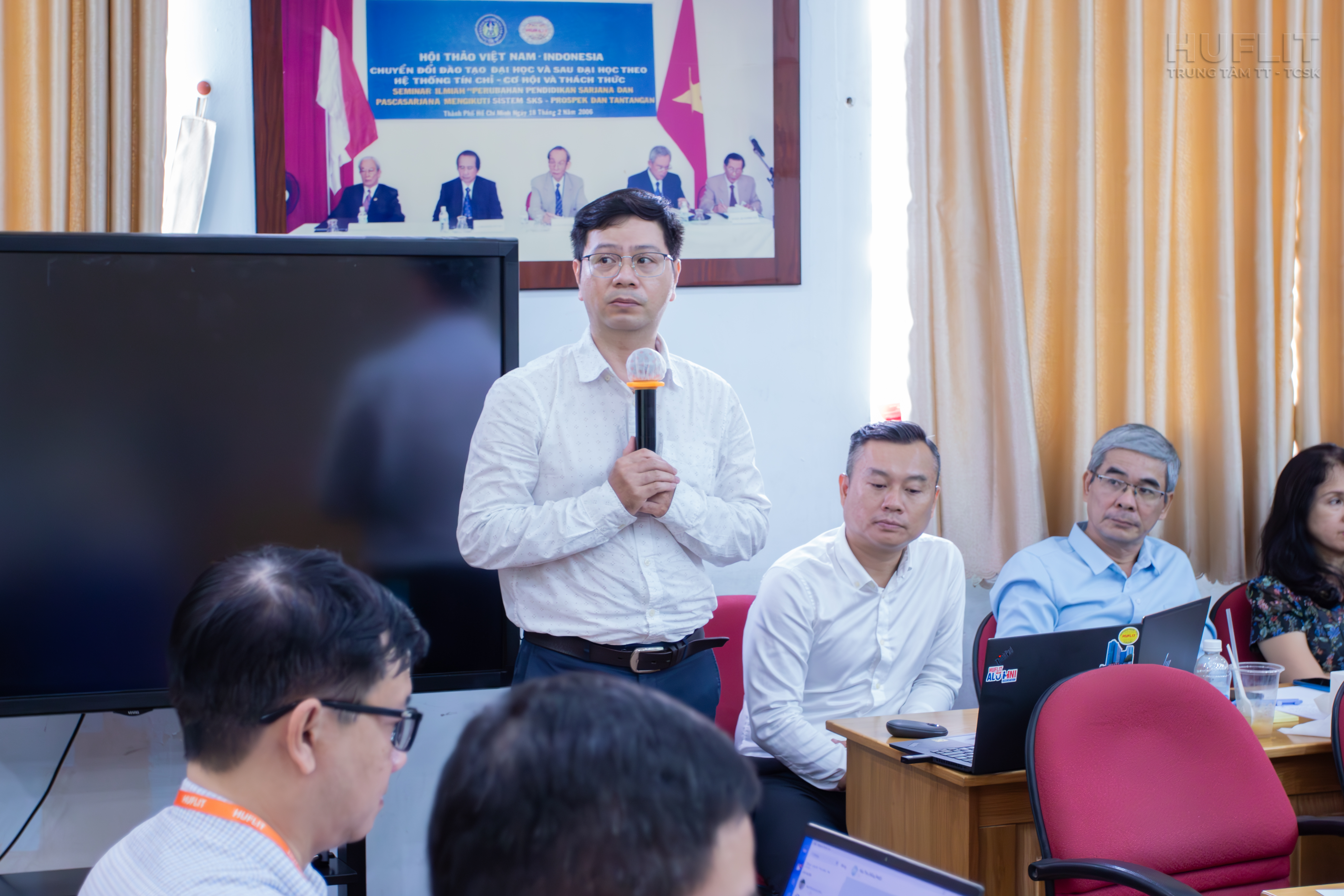
Lecturers presenting papers aimed at improving teaching effectiveness
At the close of the conference, the directions and solutions set out affirmed the University’s strong commitment to continuously improving educational quality and creating the best conditions for learners’ comprehensive development. With its proactive approach to resolving existing issues and developing new training programmes, HUFLIT continues to strive to be an ideal learning environment that meets the ever-higher demands of society and the labour market.
CONTACT INFO
Apply for admission at
tuyensinh.huflit.edu.vn
Find out information
huflit.edu.vn
Advising education enrollment