



-
Proud to be HUFLITers #07 | M.A. Tran My Uyen – A lectern where a teacher wishes only to “watch her children grow up”At the HUFLIT Faculty of Foreign Languages, M.A. Tran My Uyen (Vice Dean) goes by many names. Some call her “Ms My”; her students call her “mother”. Colleagues often compare her to Mother Au Co with a hundred children. Yet to become the “mother” of the lecture hall she is today, she went through a profound shift in thinking that completely changed a teaching philosophy built over more than 30 years.
-
New Cybersecurity Regulations: Opportunities for the Cybersecurity Field in the Digital EraThe new cybersecurity regulations taking effect on 1 July 2026 not only help complete the legal framework but also drive demand for talent in cybersecurity. This is also the moment when the discipline becomes a promising choice for young people who love technology and information security.
-
“GenZ Major Insights 2026” – Episode 9: Boundless Journeys with HUFLIT’s Tourism and Hospitality ProgramsMany students choose the Tourism and Hospitality field simply because they love to travel. But passion alone is not enough to pursue this field in the long run. What matters more is understanding the nature of the discipline, its professional requirements, and the qualities needed to grow in a professional service environment.
What Is Military Study? 8 Important Notes Students Need to Know
NGÀY: 13/04/2026
Chia Sẻ Qua
What is military study?
Military is the National Defence and Security Education subject organised for students of universities to equip basic knowledge about national defence, security, military discipline and civic responsibility in protecting the Fatherland. At HUFLIT, students will participate in the military-study programme with both a theoretical and a practical part, experiencing the military environment to train skills and a disciplined manner.
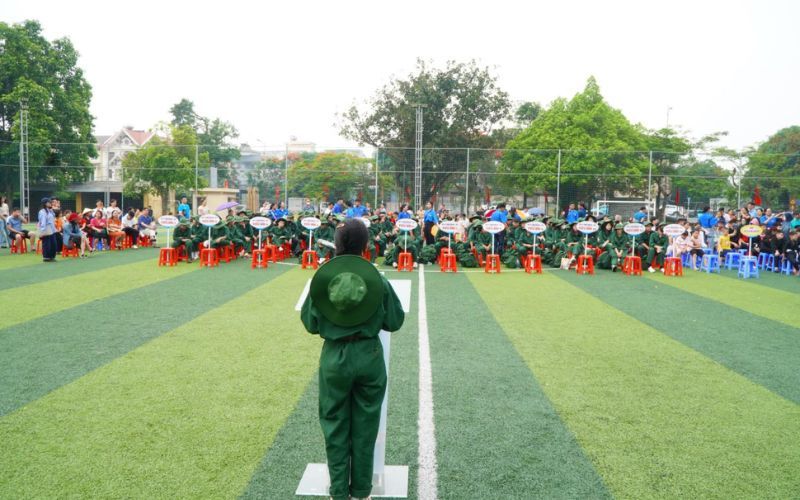
Military is the National Defence and Security Education subject organised for students
What does military study study?
Many newly enrolled students usually wonder what military study will study and what activities it includes. Let’s find out right away.
The theoretical part:
- National defence – security knowledge: Students learn about the role of the army, security threats, the strategy of protecting the Fatherland, and civic responsibility in protecting the country.
- Army drill orders: Learning about the ceremonies, manner, schedule, attire and mandatory regulations in the military environment, helping to form the habit of discipline and collective awareness.
- Knowledge of basic weapons and equipment: Introducing some types of basic weapons and military tools, their uses, principles of safe use and equipment preservation.
The practical part:
- Physical training: Including running, jumping, push-ups, sit-ups, slope-climbing exercises and exercises to enhance endurance, health and the ability to withstand pressure.
- Drill order and collective-living training: Students practise formation movement, field exercises, survival skills, group-coordination skills and basic situation handling.
- Real-world military practice: Participating in tactical simulation, practising basic operations with military tools, participating in games that apply theoretical knowledge to real situations, helping to enhance life skills and team spirit.
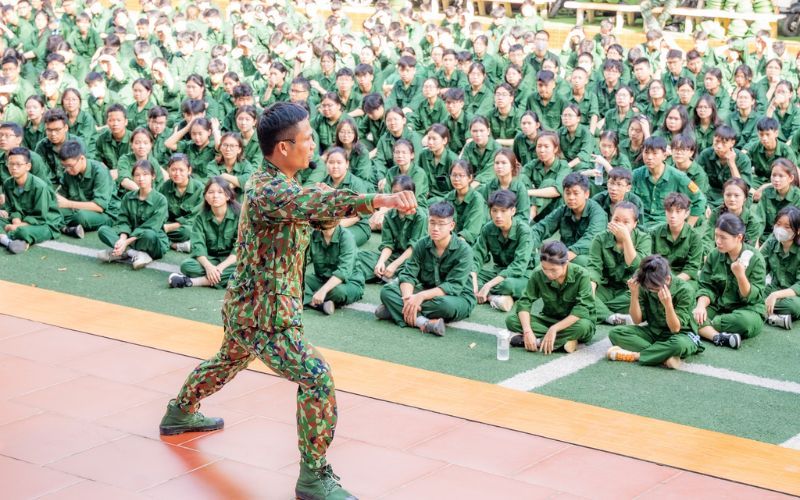
Students participate in tactical simulation and practise basic operations
>>>> POCKET NOW: Business planning staff: Detailed work, salary
8 notes when studying military study students need to know
Before participating in the national-defence education course, students need to prepare carefully to quickly adapt to the training and intensive-living environment. Below are the 8 notes when studying military study that students need to know to help ensure safety, comply with the rules and train effectively.
The items you should bring
Students should prepare the necessary personal items. For example, everyday clothes, indoor slippers, personal hygiene items, a towel, toothbrush – toothpaste, shower gel, shampoo, personal medicine and a little cash. In addition, you can bring a power socket, clothes hangers or a storage bag to make living in the boarding area more convenient.
The matter of eating
During military study, students usually eat according to the meal portions at the training centre’s canteen. Therefore, you should eat on time according to the common living schedule and keep hygiene when eating. If you need to eat more, students can prepare some snacks such as cakes or milk, but should use them reasonably and not affect the common living.
The matter of bathing and washing
The boarding area usually has a communal bathing-washing area, so students need to arrange their time reasonably to avoid crowding at peak hours. You should bring detergent, drying hangers and prepare spare clothes to ensure daily living is more convenient.
Arranging time
The military-study schedule is usually quite strict, from the time of waking up, studying and training to rest, all having specific regulations. Therefore, students need to proactively arrange time for rest, bathing-washing and preparing for the study sessions so as not to be late or affect the common living.
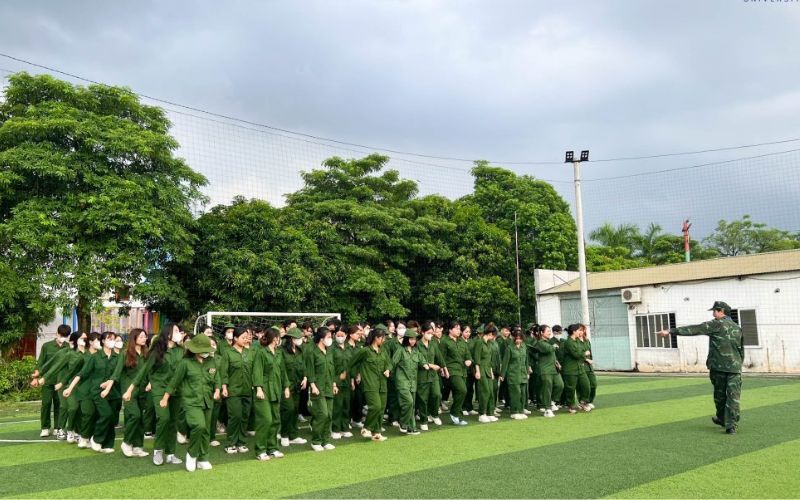
The military-study schedule is usually quite strict
>>>> CLICK NOW:Is military study mandatory? Latest information update
Know how to divide the work
When boarding, students usually live by room or by squad. Dividing the work such as cleaning the room, cleaning the living area or supporting each other in activities will help everyone work more effectively and build a spirit of solidarity in the collective.
Always be vigilant
Students should pay attention to safeguarding personal property such as phones, wallets or important papers. Do not leave valuable items in places easily lost and should lock the cabinet or store carefully to avoid unwanted incidents in the boarding area.
Do not bring cooking items into the room
Most training centres do not allow students to bring cooking equipment into the residence room to ensure fire safety and common hygiene. The items usually prohibited from being brought include:
- Electric stoves, mini gas stoves
- Rice cookers, electric hotpot cookers
- Electric kettles, induction cookers
- Mini gas cylinders or other heat-generating devices.
Using these items in the residence room can be dangerous and violates the rules of the boarding area.
Don’t violate the rules
During military study, students need to strictly comply with the regulations on schedule, attire and living and fully participate in the study sessions. Violating the rules can lead to being reminded, being disciplined or having to retake the subject if you don’t complete the programme according to regulations.
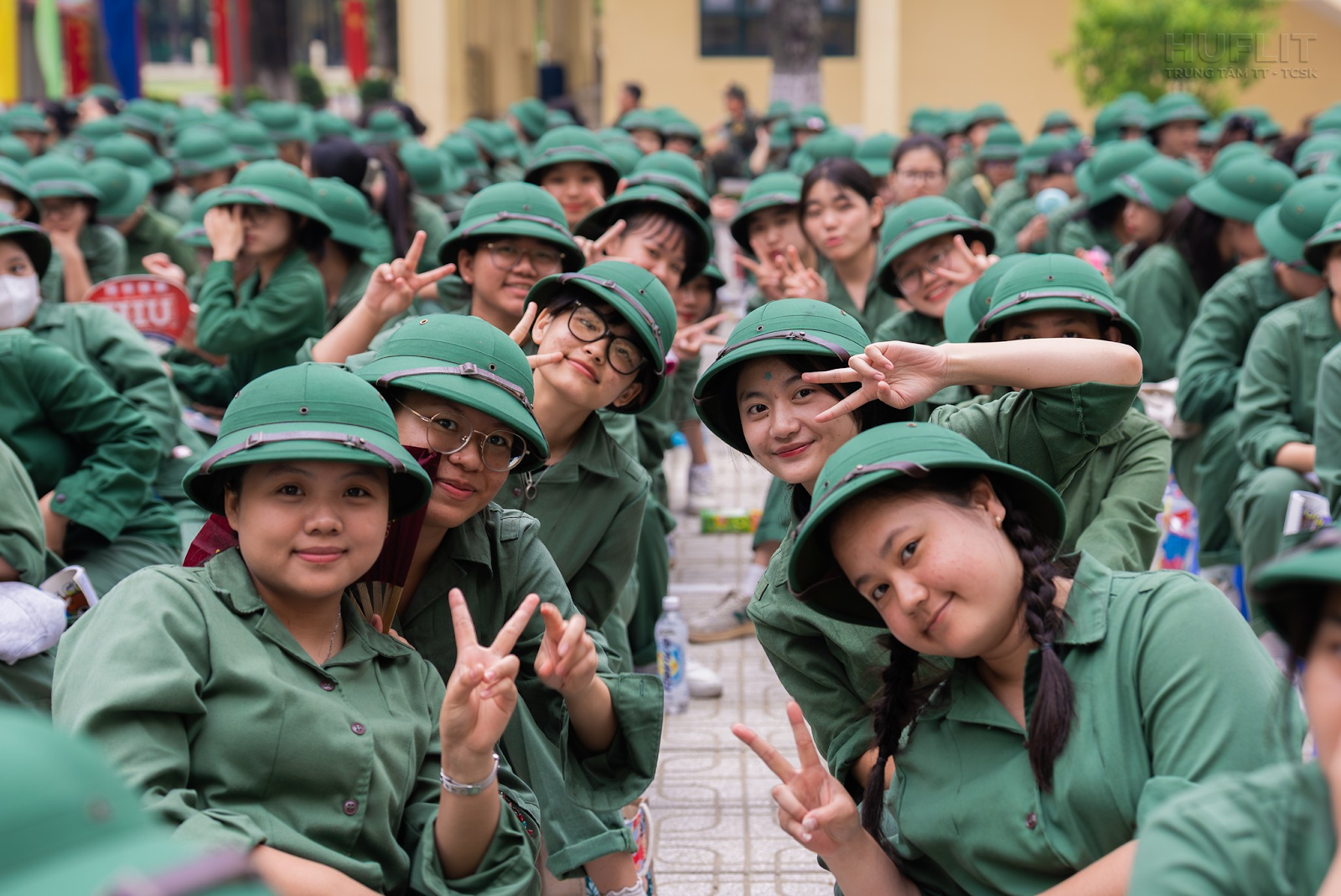
Military is a study term that gives students many memories
>>>> FOLLOW MORE:What does military study at university involve? See A-Z details now
The questions related to what military study is
Before participating in the National Defence and Security Education subject, many students usually have quite a few questions related to this subject. Let’s find out right away.
Is it fun for students to attend national-defence education?
Many students wonder whether attending national-defence education is fun when they have to live and study in a disciplined environment. In reality, most students think this is a quite interesting time because they have the opportunity for collective living, playing sports and bonding with friends. Especially when boarding, many memorable memories are usually created throughout the military-study time.
Is military study mandatory? Is it scored?
At most universities, the national-defence education subject is a mandatory course unit and students need to complete it to be eligible for graduation. During the study, students still have to do theoretical and practical tests to evaluate the results. However, the score of this subject is usually only used to determine pass or fail and is not counted in the cumulative grade point average.
In which month is military study usually, and how long does it last?
The time of military study usually depends on the training plan of each university. Some schools organise it as a subject lasting throughout the semester, with one session per week. In addition, many schools also organise an intensive course of about 2–4 weeks at the national-defence education centre and students usually have to board during this time.
The article has helped you find out in detail what military study is and the theoretical and practical content, the skills and habits that students will train during the study process. In addition, military study also helps students develop organisation, time-management and teamwork skills. HUFLIT hopes the above information will help you have a memorable military term.
>>>> EXPLORE MORE USEFUL CONTENT:
Can you go home during military study at university? Advantages and notes
How much does the MOS certificate exam cost? Updated new exam fee
CONTACT INFO
Apply for admission at
tuyensinh.huflit.edu.vn
Find out information
huflit.edu.vn
Advising education enrollment