


-
Proud to be HUFLITers #07 | M.A. Tran My Uyen – A lectern where a teacher wishes only to “watch her children grow up”At the HUFLIT Faculty of Foreign Languages, M.A. Tran My Uyen (Vice Dean) goes by many names. Some call her “Ms My”; her students call her “mother”. Colleagues often compare her to Mother Au Co with a hundred children. Yet to become the “mother” of the lecture hall she is today, she went through a profound shift in thinking that completely changed a teaching philosophy built over more than 30 years.
-
New Cybersecurity Regulations: Opportunities for the Cybersecurity Field in the Digital EraThe new cybersecurity regulations taking effect on 1 July 2026 not only help complete the legal framework but also drive demand for talent in cybersecurity. This is also the moment when the discipline becomes a promising choice for young people who love technology and information security.
-
“GenZ Major Insights 2026” – Episode 9: Boundless Journeys with HUFLIT’s Tourism and Hospitality ProgramsMany students choose the Tourism and Hospitality field simply because they love to travel. But passion alone is not enough to pursue this field in the long run. What matters more is understanding the nature of the discipline, its professional requirements, and the qualities needed to grow in a professional service environment.
Are Chinese and Han the Same? Click to See Now
NGÀY: 01/04/2026
Chia Sẻ Qua
An overview of Han
Han (汉语 – Hànyǔ) is a broad term used to refer to the language group of the Han people – the ethnic group making up the majority in China. This is not a single language but a language system including many different dialects such as Mandarin, Cantonese, Wu, Min, Hakka…
Chinese characters (汉字 – Hànzì) are an ancient ideographic writing system used to record Han. This is one of the oldest writing systems in the world, with a history of more than 3000 years. Each Chinese character represents a specific meaning, unlike the Latin alphabet which only denotes sound.
Han has the important characteristic of being a tonal language, meaning the same syllable pronounced with different tones will have a completely different meaning. For example: “mā” (妈 – mother), “má” (麻 – hemp), “mǎ” (马 – horse), “mà” (骂 – to scold).
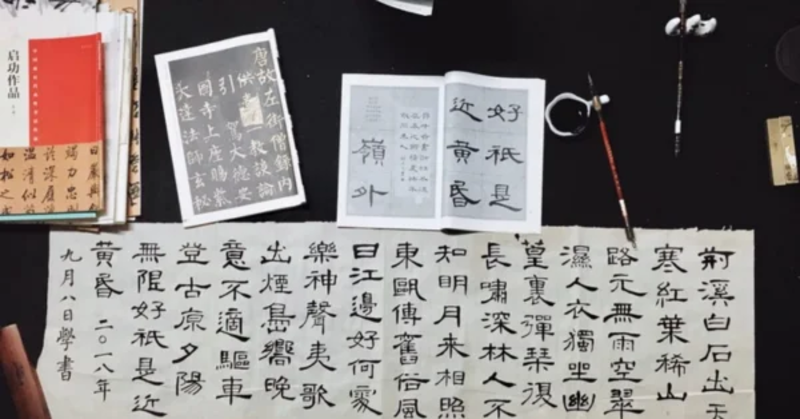
Han is the language group of the Han people
>>>> SEE MORE: How long does it take to learn Chinese to become an interpreter? Roadmap 2026
An overview of Chinese
Chinese is a common term in Vietnamese to refer to Mandarin (普通话 – Pǔtōnghuà), also called Mandarin in English. This is the official, standard language most widely used in mainland China and the language of instruction in the education system.
Mandarin is standardised based on the Beijing dialect, with the Latin phonetic system Pinyin (拼音) to support pronunciation learning. Pinyin was officially recognised by the Chinese Government in 1958 and has now become an indispensable tool for easily learning and using Chinese nationwide.
Modern Chinese has 4 main tones (level tone, low tone, asking tone, tumbling tone) plus a light tone, much simpler than Cantonese which has up to 6-9 tones depending on the region. Chinese grammar is relatively simple: no conjugating verbs by person, no grammatical gender, no complex plurals like European languages.

Chinese is the popular language of the Chinese people
Are Chinese and Han the same?
To answer this question, we need to analyse more deeply the relationship between the two concepts from many different angles.
History and development
Han has a long development history of more than 3000 years, going through many stages: Old Chinese (上古汉语), Middle Chinese (中古汉语), Early Modern Chinese (近代汉语) and Modern Chinese (现代汉语). Throughout this process, Han has developed into many different dialect branches due to geographical, historical and cultural factors.
Chinese (Mandarin) is the product of the language-standardisation process in the modern era. At the beginning of the 20th century, the Chinese Government realised the need for a unified language to communicate nationwide when there were so many dialects so different that people from one region did not understand people from another. In 1913, the government chose the Beijing dialect as the basis for the “National Language” (国语), then renamed it “Putonghua” (普通话) from 1955.
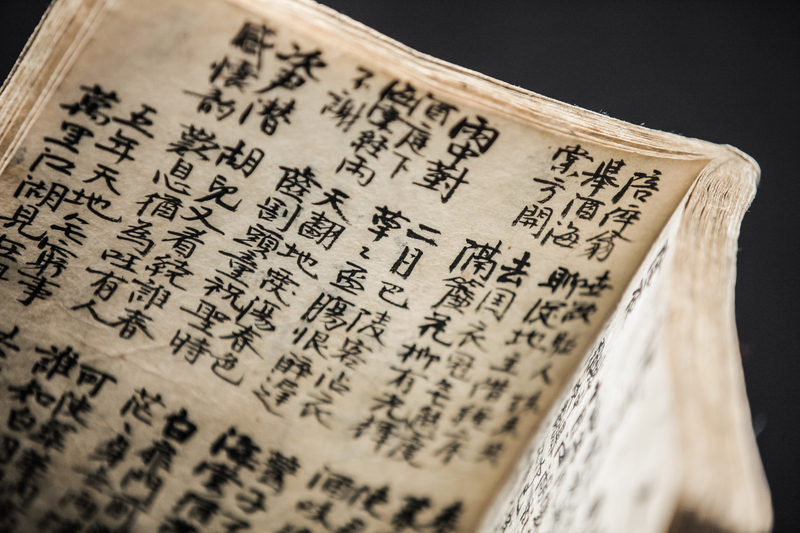
Both Chinese and Han have a long history of development
Writing and pronunciation
Regarding writing, both Han and Chinese use Chinese characters (汉字) as the main writing system. However, there is a difference between simplified characters (简体字 – Jiǎntǐzì) and traditional characters (繁体字 – Fántǐzì).
- Mainland China and Singapore use simplified characters (reformed from 1956 to be easier to learn)
- Taiwan, Hong Kong, Macau and overseas Chinese communities usually use traditional characters (keeping the traditional ancient form)
For example: “study” is written as 学习 (simplified) or 學習 (traditional).
Pronunciation is the biggest difference. Chinese (Mandarin) has a standard pronunciation system with 4 main tones. Meanwhile, other dialects of Han have completely different pronunciation:
- Cantonese has 6-9 tones, and reads Chinese characters completely differently from Mandarin
- Wu (the Shanghai region) has its own sound and tone system
- Min Nan (the Fujian region) preserves many Old Chinese features
>>>> POCKET NOW:Should you study English or Chinese? An analysis 2026
Grammar and vocabulary
The Han dialects have a similar basic grammatical structure but still have certain differences. Chinese (Mandarin) has been standardised with clear, logical grammar. Some dialects such as Cantonese have question, negation and particle structures different from Mandarin.
Vocabulary is a considerable difference. Each dialect has its own vocabulary set, especially everyday words and slang. For example:
- “eat rice” in Chinese: 吃饭 (chī fàn)
- “eat rice” in Cantonese: 食饭 (sik6 faan6)
However, literary and academic vocabulary is usually more unified due to the influence of written Chinese characters.
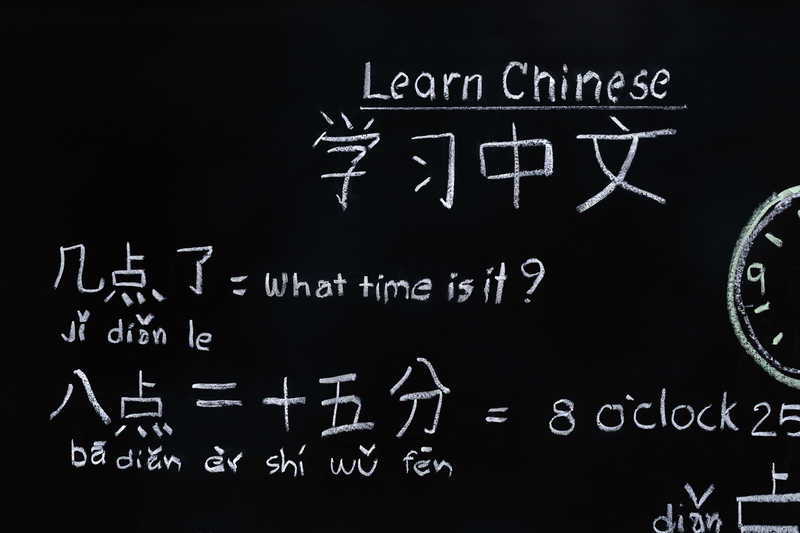
The grammar and vocabulary of Han and Chinese have certain differences
The relationship between Chinese and Han
After analysing the aspects, we can clearly see the “part – whole” relationship between Chinese and Han.
Chinese characters in Chinese
Chinese characters are the foundation of Chinese. Every official Chinese text is written in Chinese characters (mainly simplified in mainland China). The Pinyin system is only a pronunciation-support tool, not a replacement for Chinese characters. Learning Chinese means having to learn:
-
- Chinese characters (shape, strokes, composition)
- Pinyin (standard reading)
- Tones (4 tones + light tone)
- Grammar and vocabulary
Dialects and Mandarin
Chinese (Mandarin) is the standard dialect, taught in schools, used in media and official documents. However, in many regions of China, people still use the local dialect in daily communication.
For example:
- In Shanghai: People speak Wu (Shanghainese) at home, speak Chinese at school/work
- In Guangzhou: Use Cantonese in life, Chinese in the official environment
- In Taiwan: Mandarin (國語 – Guóyǔ) coexists with Min Nan.

Dialects and Mandarin have certain special features
Applications of Han and Chinese
Han and Chinese are not only communication languages but also play an important role in many fields such as education, business, tourism and cultural research. Understanding and using these two language systems helps expand opportunities to study and work as well as connect with one of the oldest and most influential cultures in the world.
- Learning Chinese: When you register for a “Chinese” course, you will learn Mandarin – the most widely used standard language. This is the most suitable choice for:
- Business communication with mainland Chinese partners
- Studying abroad at Chinese universities
- Working at Chinese companies
- Taking the HSK certificate exam (Hanyu Shuiping Kaoshi)
- Travelling in mainland China
- Cultural and historical research: To research deeply about ancient Chinese culture and history, you need to understand:
- Traditional Chinese characters (because ancient books are written in traditional characters)
- Classical Chinese (文言文) is different from modern Chinese
- The various dialects and their influence in literature and poetry
- Communication and business: In the era of globalisation, Chinese is becoming the second most important language after English in international business. According to a report by the British Council – the UK’s international organisation for education and cultural relations – Chinese is among the top 5 most important languages for the future global economy due to China’s strong economic development today.
Knowing Chinese opens up opportunities to:
- Work at Chinese corporations (Huawei, Alibaba, Tencent, BYD…)
- Interpret and translate for enterprises
- Be a tour guide serving Chinese tourists
- Teach Chinese or Vietnamese to Chinese people

Han and Chinese are increasingly widely applied around the world
>>>> SAVE NOW:Should you study Chinese or Korean? [Handbook 2026]
HUFLIT – Where the journey to conquer in-depth Chinese begins
HUFLIT applies an integrated teaching method, combining language learning, culture and practical skills. The programme is designed according to the international HSK (Hanyu Shuiping) standard, helping students have a clear roadmap from basic to advanced. Students practise all 4 skills of listening – speaking – reading – writing regularly, with special emphasis on real-world communication skills.
The lecturers at HUFLIT have Master’s and PhD qualifications specialising in the Chinese Language, many graduated from prestigious universities such as Peking University, Fudan University and Beijing Normal University. They are not only good at expertise but also have a lively, easy-to-understand teaching method and enthusiastically support students.

HUFLIT brings an in-depth Chinese-learning strategy to students
Frequently asked questions about whether Han and Chinese are the same
Many people, when starting to find out, often wonder whether Han and Chinese are the same, and in what respect these two concepts differ. In reality, they have a close relationship but are not completely identical in understanding and usage.
Does learning Chinese require learning Chinese characters?
Yes, it is compulsory to learn them. Chinese characters are the official writing system of Chinese. To read and write proficiently, learners must firmly grasp Chinese characters alongside listening and speaking skills. Although Pinyin helps you pronounce correctly, it cannot replace Chinese characters because:
- Chinese has many homophones (same pronunciation but different meaning) – only distinguishable through Chinese characters
- All official documents, newspapers and books are written in Chinese characters
- Not knowing Chinese characters = being illiterate in China
Do simplified and traditional Chinese have anything to do with Han?
Both are forms of Chinese characters. Simplified and traditional characters only differ in writing form, while in essence they are still Chinese characters – the writing system of Han.
- Simplified (简体): Reformed by mainland China from 1956, simplifying the strokes to be easier to learn
- Traditional (繁體): Keeping the traditional form, used in Taiwan, Hong Kong, Macau
The spoken language (Chinese/Mandarin) is almost unchanged. Simplified and traditional users still speak the same language, only differing in writing. For example: “study” is written as 学 (simplified) or 學 (traditional), but both are read as “xué”.
Is Chinese harder than English?
The level of difficulty will depend on each person’s foundation. Chinese is hard in its Chinese-character system, tones and many homophones, but has fairly simple grammar because it does not conjugate verbs or make complex plural changes. For Vietnamese people, being familiar with tones and having a rich Sino-Vietnamese vocabulary is a big advantage, making the Chinese-learning process more approachable than in many other countries.
Are Chinese and Han the same? In reality, these two concepts are closely related but not completely identical, in which Chinese is the standard form most commonly used today. Clearly understanding the difference will help you orient your studies correctly and more effectively. If you are interested in the Chinese Language field at HUFLIT, find out and register for consultation to start the journey to conquer this language.
>>>> REFER TO RELATED ARTICLES:
Should you study Chinese or Japanese? An A-Z analysis
Is learning Chinese easy? The secret to learning quickly and effectively
CONTACT INFO
Apply for admission at
tuyensinh.huflit.edu.vn
Find out information
huflit.edu.vn
Advising education enrollment