


-
Proud to be HUFLITers #07 | M.A. Tran My Uyen – A lectern where a teacher wishes only to “watch her children grow up”At the HUFLIT Faculty of Foreign Languages, M.A. Tran My Uyen (Vice Dean) goes by many names. Some call her “Ms My”; her students call her “mother”. Colleagues often compare her to Mother Au Co with a hundred children. Yet to become the “mother” of the lecture hall she is today, she went through a profound shift in thinking that completely changed a teaching philosophy built over more than 30 years.
-
New Cybersecurity Regulations: Opportunities for the Cybersecurity Field in the Digital EraThe new cybersecurity regulations taking effect on 1 July 2026 not only help complete the legal framework but also drive demand for talent in cybersecurity. This is also the moment when the discipline becomes a promising choice for young people who love technology and information security.
-
“GenZ Major Insights 2026” – Episode 9: Boundless Journeys with HUFLIT’s Tourism and Hospitality ProgramsMany students choose the Tourism and Hospitality field simply because they love to travel. But passion alone is not enough to pursue this field in the long run. What matters more is understanding the nature of the discipline, its professional requirements, and the qualities needed to grow in a professional service environment.
Where to Start Learning AI So as Not to Lose Direction? A Detailed Exploration
NGÀY: 01/04/2026
Chia Sẻ Qua
Why should you study artificial intelligence AI?
Before finding out where to start learning AI, you need to clearly understand why artificial intelligence has become an important skill in the digital era. AI is being applied strongly in most fields such as business, marketing, finance, healthcare, education and manufacturing. This technology helps automate processes, analyse data in depth and optimise work performance at a level that humans can hardly do manually.
Besides, AI opens up wide-open career opportunities with attractive income and long-term development potential. Not only technology people, but even those working in other fields can also take advantage of AI to enhance work efficiency and create a competitive advantage. Therefore, determining to study methodically will help you build a solid foundation and optimise time and effort on the journey to conquer this potential-rich field.

Artificial intelligence AI plays an extremely important role in life today
Where to start learning AI: The knowledge you must equip
After clearly understanding the importance of artificial intelligence, the next question will certainly be where to start learning AI so as not to be overwhelmed by the vast volume of knowledge in this field. Below are the important foundations that help you build a methodical and effective study roadmap.
Mathematics – The pillar of AI
If you don’t understand the foundation, you will only stop at the level of “using tools” instead of truly mastering the algorithms. The three important areas of mathematics you need to focus on include:
- Linear algebra: This is the foundation of most machine-learning algorithms. Concepts such as vectors, matrices, feature spaces or linear transformations appear throughout the process of data processing and model building.
- Calculus: This foundation helps you understand how a model optimises through derivatives, gradients and methods such as gradient descent – the core technique to “train” an AI model.
- Probability – Statistics: The foundation that supports evaluating data, understanding probability distributions and making statistical inferences, thereby helping the model predict more accurately.

Mathematics is one of the solid pillars of the AI field
>>>> EXPLORE NOW: Will AI replace humans? 5 skills to make you “unbeatable”
Programming ability – Mandatory
AI is not just theory or ready-made tools; you need to know how to write code to process data, build models and deploy algorithms into practice. Programming is the bridge between mathematical knowledge and AI application in life.
The most popular language today in the AI field is Python thanks to its simple, easy-to-learn syntax and a powerful library ecosystem such as TensorFlow, PyTorch or Scikit-learn. Besides, you also need to understand foundational knowledge such as data structures, algorithms, file processing, working with APIs and managing libraries.
Grasp basic knowledge about data and programming
Besides basic programming skills, you should clearly grasp concepts such as data types, data structures (list, dictionary, array) and how to manipulate tabular data,…. In the Python ecosystem, libraries such as Pandas and NumPy strongly support data processing and analysis. When you clearly understand how data operates and know how to manipulate it with code, you will have a solid foundation to approach machine-learning models and go further in the AI field.
A detailed step-by-step basic AI learning roadmap
After understanding where to start learning AI and grasping the important foundations, the next step you need is a clear, step-by-step roadmap. Therefore, below is a basic AI learning roadmap arranged by each stage, helping you go from the foundation to real-world application logically and effectively.
Step 1: Get familiar with data processing and programming
First of all, start with Python – the most popular language in AI thanks to its simple syntax and rich library ecosystem. You should learn basic knowledge such as variables, conditions, loops and functions, then continue with how to use libraries such as Pandas and NumPy to read, process and transform data.
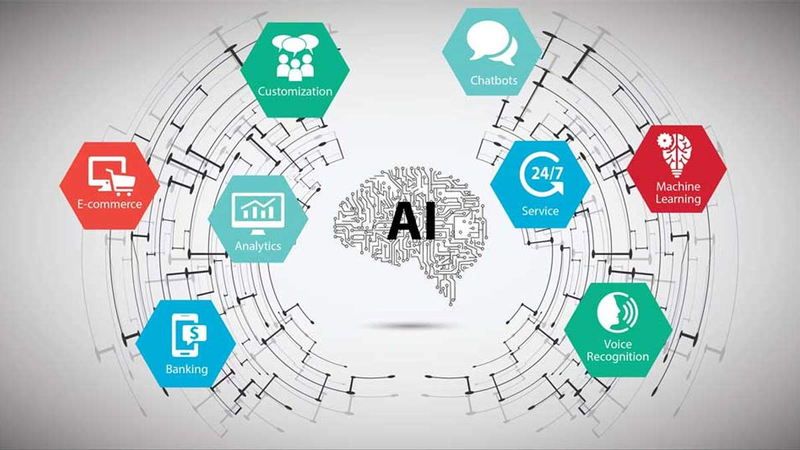
The first step in the basic AI learning roadmap is getting familiar with data processing
Step 2: Learn the foundational learning algorithms
After having a foundation in programming and data processing, the next step is to approach basic machine-learning (Machine Learning) algorithms. Some algorithms you should learn include linear regression, logistic regression, decision trees, Random Forest, SVM or k-Nearest Neighbors (KNN).
Step 3: Deep learning and language processing
When you have grasped foundational Machine Learning, you will continue with architectures such as CNN networks (usually used for images) and RNN/Transformer (usually used for data sequences and text. In particular, natural language processing (NLP) is an important branch that helps machines understand and generate text.
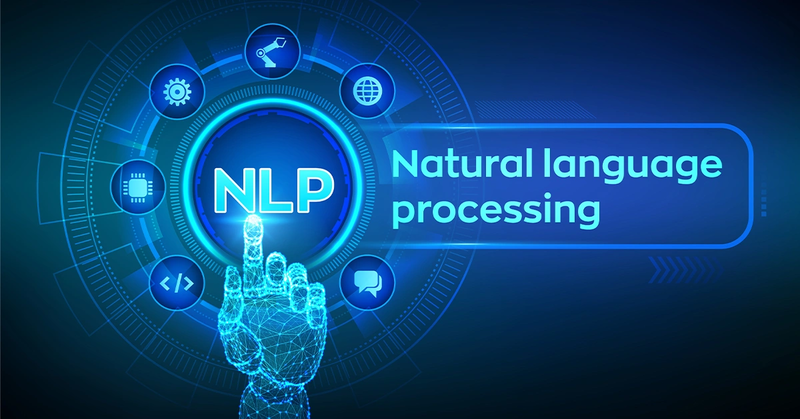
Deep learning and language processing is an extremely important step in the AI learning roadmap
Step 4: Do personal projects
Choose real data from platforms such as Kaggle or open data sources to practise problems such as spam classification, price prediction, image recognition, language-processing chatbots or product-recommendation systems. Doing projects not only reinforces knowledge but also helps you present results, make reports and introduce your own AI product.
>>>> READ NOW:Will auditing be replaced by AI, and the skills to survive
Career opportunities and attractive salaries in the artificial intelligence field
The artificial intelligence field today is not only a technology trend but also opens up many diverse job positions globally and in Vietnam, from AI engineer, machine-learning engineer, to data analyst and natural-language-processing specialist. These jobs are widely applied in fintech, healthcare, e-commerce, manufacturing automation and large technology enterprises.
Not only that, the income in the AI field is also very attractive compared to many other professions. According to job-market statistics, AI experts in the international market usually have very high salaries. For example, an AI engineer or AI researcher abroad can receive an average of more than 140,000 USD/year (3,678,850,000 VND) and up to over 200,000 USD (5,255,500,000 VND) with in-depth experience and skills.
In the Vietnamese market, AI-related positions are also becoming attractive with an average salary ranging from about 1,500 – 3,000 USD/month (39,416,250 – 78,832,500 VND) for newcomers to the profession and can increase much more with experience and skills.

The artificial intelligence field has been and is an extremely hot field today
A supportive community and real-world experience so you don’t get discouraged
On the journey of where to start learning AI, companionship from the community and real-world experience is also the “booster” that helps you maintain motivation and make steady progress. Learning AI alone easily makes you feel lost, confused before the huge amount of knowledge and sometimes discouraged when encountering difficulties.
AI communities on platforms such as Facebook Group, Discord or Zalo are where you can ask questions, share exercises and receive quick feedback. This is also where you update the latest trends, useful learning resources and opportunities to practise on real-world problems instead of just reading theory.
Is it worth studying the artificial intelligence AI field at HUFLIT?
Choosing to study the artificial intelligence AI field at HUFLIT is an important decision if you are wondering where to start learning AI along the methodical university path. The University is currently one of the pioneering units in Vietnam providing in-depth training on AI – a core field of the 4.0 technology revolution.
A streamlined study programme with a clear learning roadmap is one of HUFLIT’s strengths. The artificial intelligence training programme is designed logically from the foundational maths – programming subjects to advanced course units such as machine learning, deep learning,… Students follow a clear learning roadmap, helping you absorb knowledge step by step instead of being overloaded from the start.
In addition, HUFLIT regularly updates the curriculum closely following the development speed of the field. The course units are integrated with new technology and real-world project practice. From there, the University helps students not only learn theory but also become familiar with modern AI tools and trends.

Choosing to study the Artificial Intelligence AI field at HUFLIT brings you many practical experiences
>>>> READ NOW:AI in the legal field: Trends and applications 2026
Frequently asked questions about the artificial intelligence learning roadmap
How long does it take to learn artificial intelligence proficiently?
The time to learn artificial intelligence proficiently depends on your foundation and level of investment. If you already have basic knowledge of maths and programming, you may take about 6 – 12 months to master AI at the application level. However, if you study more in depth, you may need more time to practise and experience in reality. The most important thing is to study regularly and do projects continuously to enhance your skills.
What do you need to prepare before starting to learn artificial intelligence?
Before entering the journey of where to start learning AI, you should equip foundational knowledge of mathematics and programming skills, especially Python – the standard language in AI. Besides, understanding how to process and analyse data will help you approach algorithms more effectively.
Can you learn artificial intelligence without knowing how to code?
The answer is yes, but having programming will help you progress faster and deeper in where to start learning AI. Currently there are many tools and platforms that support building AI applications with available source code, helping newcomers who don’t need complex programming still be able to practise and understand the basics of how AI works.
The journey to conquer artificial intelligence will become clearer and more feasible when you correctly determine where to start learning AI and build a methodical study roadmap right from the start. As long as you persevere, study strategically and practise unceasingly, you can completely master AI and open up many career-development opportunities in the future. HUFLIT hopes that through this article, you will clearly grasp the information and soon become an expert in this field.
>>>> SEE MORE RELATED ARTICLES:
The jobs that could be replaced by AI and how not to be eliminated
CONTACT INFO
Apply for admission at
tuyensinh.huflit.edu.vn
Find out information
huflit.edu.vn
Advising education enrollment