



-
Proud to be HUFLITers #07 | M.A. Tran My Uyen – A lectern where a teacher wishes only to “watch her children grow up”At the HUFLIT Faculty of Foreign Languages, M.A. Tran My Uyen (Vice Dean) goes by many names. Some call her “Ms My”; her students call her “mother”. Colleagues often compare her to Mother Au Co with a hundred children. Yet to become the “mother” of the lecture hall she is today, she went through a profound shift in thinking that completely changed a teaching philosophy built over more than 30 years.
-
New Cybersecurity Regulations: Opportunities for the Cybersecurity Field in the Digital EraThe new cybersecurity regulations taking effect on 1 July 2026 not only help complete the legal framework but also drive demand for talent in cybersecurity. This is also the moment when the discipline becomes a promising choice for young people who love technology and information security.
-
“GenZ Major Insights 2026” – Episode 9: Boundless Journeys with HUFLIT’s Tourism and Hospitality ProgramsMany students choose the Tourism and Hospitality field simply because they love to travel. But passion alone is not enough to pursue this field in the long run. What matters more is understanding the nature of the discipline, its professional requirements, and the qualities needed to grow in a professional service environment.
11+ Effective Ways of Studying at University That Students Need to Know
NGÀY: 16/03/2026
Chia Sẻ Qua
Why do you need to build an effective way of studying at university
Building an effective way of studying at university helps students adapt well to the large amount of knowledge and the high requirement of self-study in the university environment. When you have a scientific study method, you will optimise time, improve memory ability and be more proactive in absorbing, thereby achieving good study results and developing skills long-term.
- Reducing study pressure: According to a survey by the Student Support Centre – Vietnam National University Hanoi in 2024, 68% of students feel stressed because of study pressure, especially during exam season. When you have the right study method, you will study more effectively in a shorter time, thereby reducing worry and stress. Instead of cramming at the last minute, you can allocate time reasonably and be more confident when entering the exam.
- Learning how to balance life: University does not only have study but also extracurricular activities, internships, part-time work and social relationships. An effective study method helps you complete study tasks well while still having time for other activities.
- Firmly grasping the lesson: Effective studying is not just learning by heart for the exam but truly understanding the essence of the problem, with the ability to apply knowledge to reality. According to Dr. Nguyễn Văn Minh – a cognitive psychology expert at the Vietnam Institute of Educational Sciences, in the article “From rote learning to learning by understanding” in the Journal of Psychology issue 285/2024: “Students who study by a proactive, systematic method will remember knowledge 3-5 times longer than passive learning.”

Applying an effective way of studying at university helps reduce study pressure, understand lessons more deeply and balance well between study and other activities
>>>> SEE NOW HERE: The necessary soft skills for HUFLIT students
10 effective ways of studying at university students need to know
Below are 11 study methods proven effective by many excellent students. Each method has its own advantages and disadvantages; choose the ways most suitable to yourself.
Ask a question for each lecture
Instead of passively absorbing, students should proactively ask questions during study to understand the essence of the problem. This helps the brain work more actively, connect new knowledge with old knowledge and remember more deeply. You can prepare questions by reading materials before the lesson, noting the unclear points and discussing directly with the lecturer or friends after class.
Study daily
Studying daily helps knowledge be continuously consolidated and easily stored in long-term memory, much more effective than cramming before the exam. Just divide the study time for each subject and maintain regularity, and you will reduce pressure, limit stress and improve study effectiveness sustainably.

Studying regularly every day helps remember long, reduce pressure and avoid ineffective cramming
Study by time period (45 minutes)
Dividing study time into 45-minute sessions helps students maintain concentration and limit fatigue. This is the period when the brain absorbs most effectively before starting to reduce attention. After every 45 minutes of study, you should rest 10–15 minutes to relax, exercise lightly or drink water. Studying at a regular rhythm helps improve performance and avoid studying long but not taking it in.
Write more, not only including class assignments
Rewriting knowledge in your own understanding is a proactive study method that helps check the level of grasp and remember longer. When writing, you are forced to arrange and systematise information logically. You can write lecture summaries, personal notes, do additional self-practice exercises or write a study blog. Handwriting usually helps memory better, but you can flexibly combine with typing.

Rewriting knowledge in your own understanding helps check the level of grasp and remember sustainably
>>>> YOU SHOULD NOT MISS: The common difficulties that first-year students face
Don’t care too much about other students’ scores
Comparing scores with others easily creates pressure and reduces study motivation. Each student has a different starting point and rate of progress, so what is important is your own progress. Set goals suitable to your personal capacity and focus on understanding lessons, developing skills. When the knowledge foundation is solid, scores will improve naturally.
Attend class diligently
Fully attending classes helps you grasp knowledge right in class, reducing the self-study burden later. Lecturers usually explain difficult parts deeply and share practical experience that materials don’t have. Attending regularly also demonstrates a serious attitude, helping you easily receive support from lecturers. Missing many classes will make self-making-up knowledge difficult and ineffective.

Fully attending classes helps understand lessons right in class and reduce the self-study burden
Find a suitable study space
The study space directly affects memory ability and maintaining concentration. A tidy environment with enough light and little noise will help you study more effectively, reducing the feeling of fatigue when sitting for a long time. Therefore, you should proactively choose places that create study inspiration such as the library, self-study room or a private study corner in your room. Building a habit of studying in a fixed space also helps the brain form a better concentration reflex over time.
Choose the right study group to improve effectiveness
Group study is only really effective when the members have a common goal and a serious attitude. If the study session is frequently interrupted by personal matters, you will find it hard to absorb knowledge and easily feel tired after each study session. In that case, you should proactively adjust or find a more suitable study form to avoid wasting time.
Conversely, studying with like-minded people helps you understand lessons more deeply through discussion, asking questions and explaining to each other. The ideal study group should include 3 – 5 people, with prior preparation and clear conventions to keep focus. However, you still need to combine with personal self-study time to achieve optimal effectiveness.

Group study is only effective when the members are serious and have a common study goal
Study an additional specialisation or another minor
Equipping additional knowledge outside your specialisation helps students increase competitive advantage and be more flexible upon graduation. Multi-field skills are increasingly valued by employers. Register for elective subjects outside your specialisation, participate in online courses (Coursera, edX, Udemy), attend workshops and seminars of other disciplines.
At HUFLIT, students are encouraged to learn additional international informatics certificates, specialised foreign languages and participate in the Google Digital Talent Scholarship in coordination with NIC, helping access 18 digital-skill courses along with international professional certificates, improving comprehensive capacity and career advantage. The highlight of the scholarship is free study, unlimited courses and a certificate from Google.

Studying an additional minor helps students develop multi-field skills, increasing competitive advantage but needs to be selective to avoid overload
Learn how to listen
Active listening helps you grasp the main ideas faster instead of mechanically taking notes. Paying attention to the lecturer’s tone and emphasis helps deeply understand the lecture content. Take notes selectively, ask questions when unclear and summarise the lesson yourself after class. Good listening skills will help you study more effectively right in class.
>>>> READ MORE HERE: 9+ benefits of studying university in English you can’t miss
The skills university students need to hone further
Besides the study method, university students need to proactively hone additional necessary skills to study well and develop comprehensively. Below are 5 core skills that help you quickly adapt to the university environment and prepare well for the future.
- Note-taking skills: Scientific note-taking helps you revise effectively. Use the Cornell Notes method (dividing the page into 3 parts: notes, keywords, summary), Mind Map or Outline. Note the main ideas instead of copying verbatim, use symbols and abbreviations to be faster.
- Material-reading skills: University requires reading many specialised, English materials. Use the skimming technique to grasp the main ideas, scanning to find specific information. Highlight, underline the important parts. After reading, summarise in your own words to check comprehension.
- Communication skills: Know how to present opinions clearly, listen and respond. Participate in class presentations, Q&A with lecturers, join clubs and extracurricular activities to train. Good communication helps you study in groups effectively, build relationships and be more confident when applying for jobs.
- Time-management skills: Use a study schedule, to-do list, work-management apps (Notion, Trello, Google Calendar) to track deadlines, allocate time reasonably between study, extracurricular activities and entertainment. Prioritise work by the Eisenhower matrix (urgent-important).
- Teamwork skills: Know how to assign tasks, listen to opinions, resolve conflicts and contribute effectively. Participate in class group projects and volunteer activities to train.
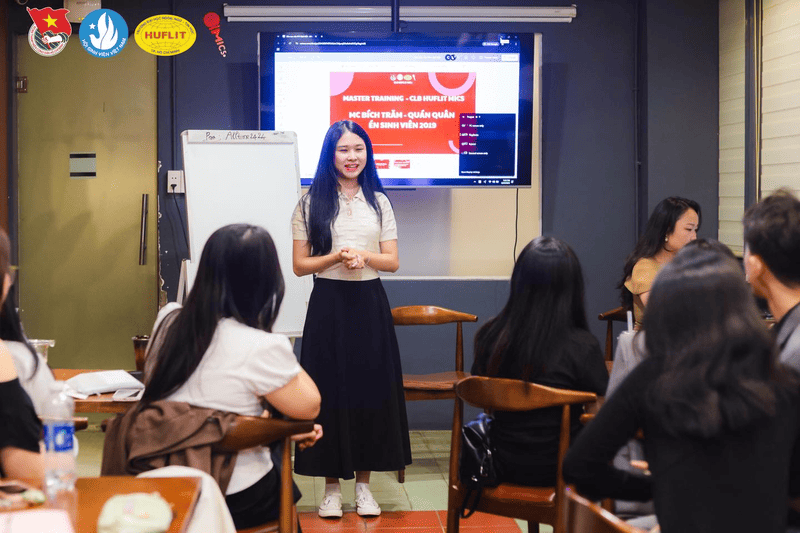
Fully equipping study skills and soft skills helps students quickly adapt to the university environment
FAQ about effective ways of studying at university
How to practise studying effectively from the first year?
Create a fixed study schedule right from the first weeks. Instead of cramming before the exam, prioritise studying regularly every day, 1-2 hours each day. Building a regular study habit will help you not be overloaded later. Participate in study-orientation sessions organised by the school, meet senior students to learn experience.
How to allocate study and rest time reasonably?
You should divide study time into short frames (45-50 minutes), interspersed with 10-15 minutes of rest so the brain is not overloaded. Sleep 7-8 hours each night for the brain to consolidate knowledge. Avoid staying up late to study because the effectiveness is very low and affects health. Spend time on sports and entertainment to balance life.
How should students take lecture notes to be scientific?
Note the main ideas instead of copying verbatim; diagramming the content helps easy remembering and convenient revision later. Use methods such as Cornell Notes, Mind Mapping or Outlining. Handwriting is better than typing because it helps memory better. After class, spend 10-15 minutes editing and supplementing notes to perfect them.
The article above has compiled the methods and skills that help build an effective way of studying at university, based on the combination of scientific thinking, discipline and perseverance. Hopefully this sharing will help you find a suitable study direction and be more proactive during your study process at university. At HUFLIT, students are always supported in building an effective way of studying right from the first year in a modern and professional study environment.
>>>> REFER TO THE RELATED ARTICLES:
CONTACT INFO
Apply for admission at
tuyensinh.huflit.edu.vn
Find out information
huflit.edu.vn
Advising education enrollment