


-
Proud to be HUFLITers #07 | M.A. Tran My Uyen – A lectern where a teacher wishes only to “watch her children grow up”At the HUFLIT Faculty of Foreign Languages, M.A. Tran My Uyen (Vice Dean) goes by many names. Some call her “Ms My”; her students call her “mother”. Colleagues often compare her to Mother Au Co with a hundred children. Yet to become the “mother” of the lecture hall she is today, she went through a profound shift in thinking that completely changed a teaching philosophy built over more than 30 years.
-
New Cybersecurity Regulations: Opportunities for the Cybersecurity Field in the Digital EraThe new cybersecurity regulations taking effect on 1 July 2026 not only help complete the legal framework but also drive demand for talent in cybersecurity. This is also the moment when the discipline becomes a promising choice for young people who love technology and information security.
-
“GenZ Major Insights 2026” – Episode 9: Boundless Journeys with HUFLIT’s Tourism and Hospitality ProgramsMany students choose the Tourism and Hospitality field simply because they love to travel. But passion alone is not enough to pursue this field in the long run. What matters more is understanding the nature of the discipline, its professional requirements, and the qualities needed to grow in a professional service environment.
VCL 2025 Scientific Conference – “Let AI Elevate Humanity”
NGÀY: 05/12/2025
Chia Sẻ Qua
“We must shape AI so that it reflects the finest values of our civilization—fairness, transparency, and respect for cultural diversity. Let AI elevate humanity, not replace us,” shared Dr. Nguyễn Anh Tuấn, President of HUFLIT, at the VCL 2025 Conference.
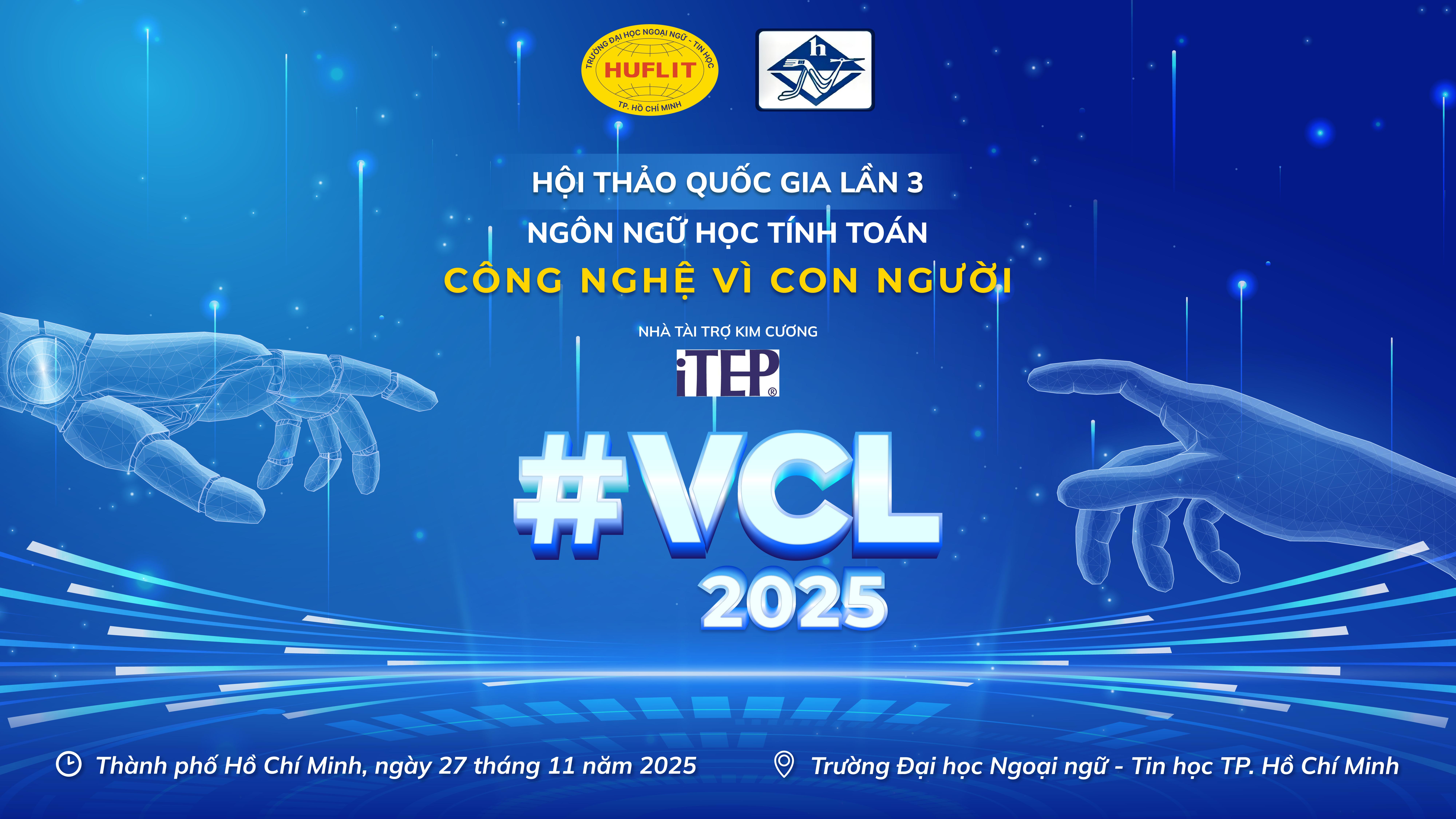
Recently, HUFLIT, in collaboration with the Linguistic Society of Vietnam (VUSTA), organized the 3rd National Conference on Computational Linguistics (VCL 2025).
The VCL 2025 Conference provided an academic forum for discussing advancements in Natural Language Processing (NLP) and the role of Artificial Intelligence (AI) in language preservation, educational development, and community service.
Under the theme “Technology for Humanity,” VCL 2025 received nearly 100 submissions from experts and researchers across Vietnam and abroad.
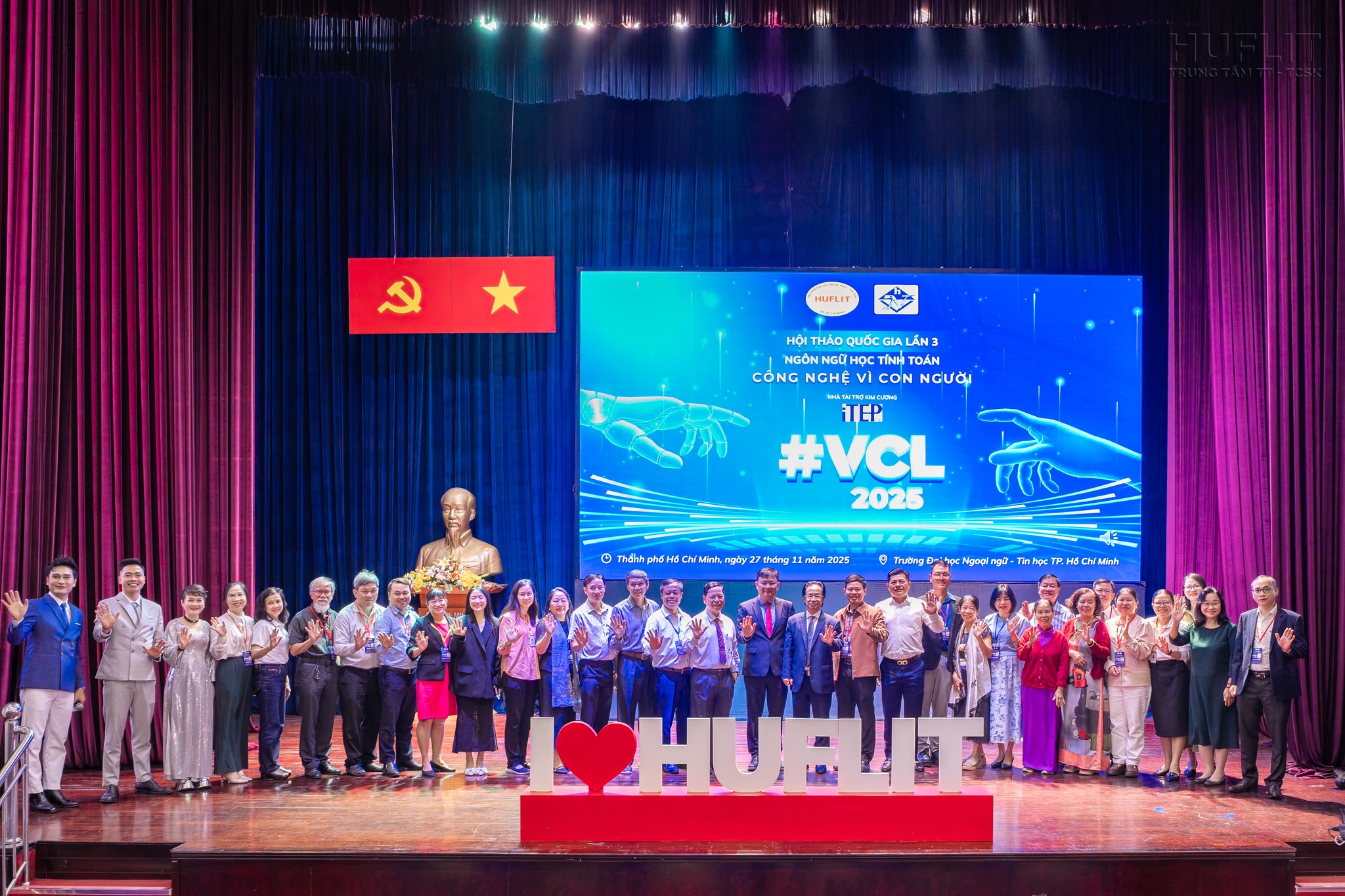
The VCL 2025 Conference gathered nearly 200 experts and researchers from universities and research institutes in Vietnam and abroad, featuring 48 selected scientific presentations from 96 submissions.
Technology for Humanity
At the conference, Dr. Nguyễn Anh Tuấn, President of HUFLIT, shared: “We must shape AI so that it reflects the finest values of our civilization—fairness, transparency, and respect for cultural diversity. Let AI elevate humanity, not replace us.”
According to Dr. Nguyễn Anh Tuấn, AI today has become a powerful assistant that inspires us and expands the limits of human potential. Yet, amid the whirlwind of technological advancement, we must never forget the core element: the human factor and our fundamental values. AI is a tool—an extension of human intelligence—but it can never replace empathy, creativity, and ethics, which belong to humans alone.
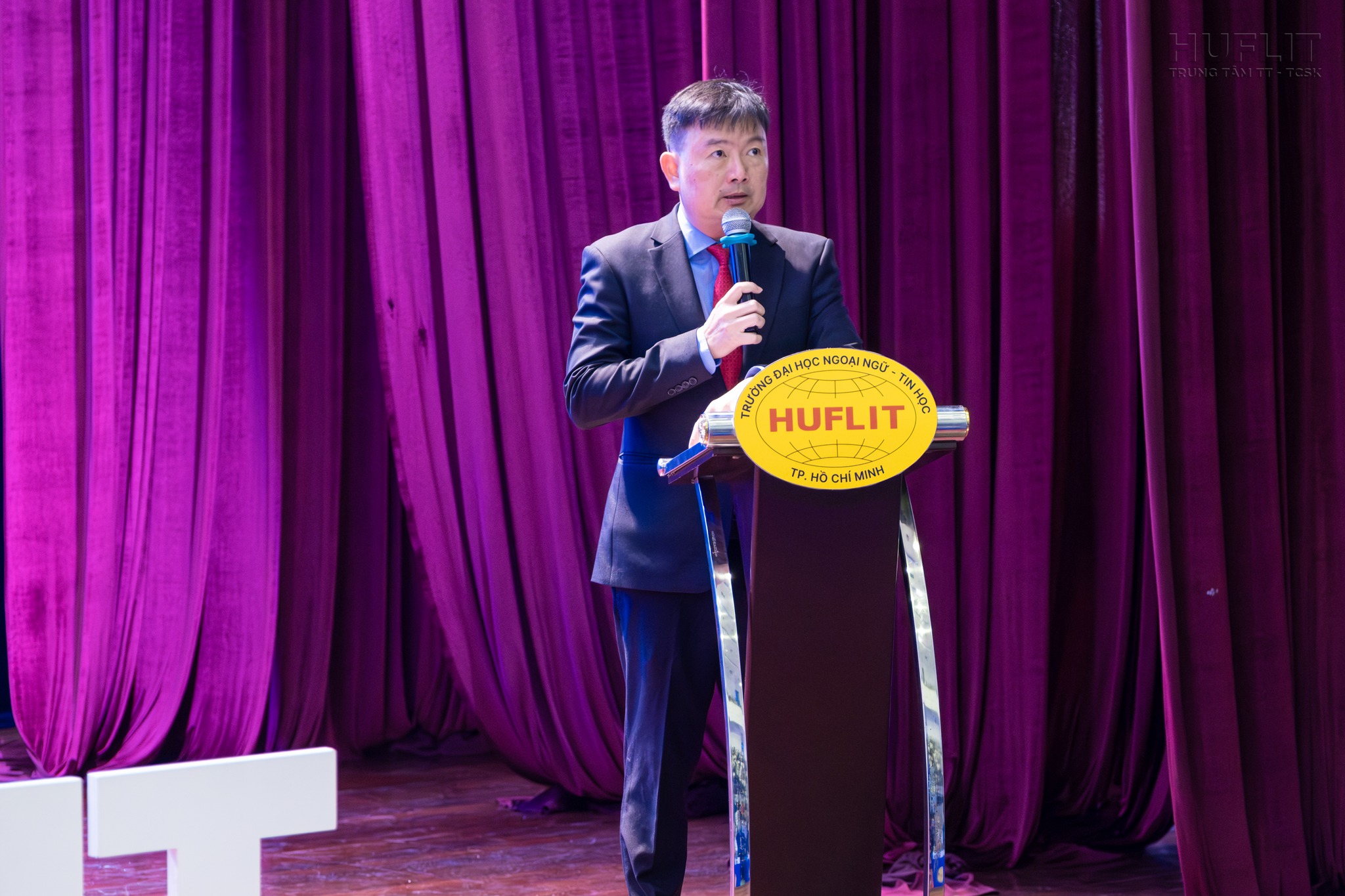
Dr. Nguyễn Anh Tuấn, President of HUFLIT, speaking at the 3rd National Conference on Computational Linguistics (VCL 2025)
“The mission of computational linguists must be to ensure that every AI system we build serves the best interests of humanity,” he emphasized.
This year, the conference received more submissions than in previous years, ranging from foundational academic studies to practical applications. Beyond purely technological topics, many papers expanded into socially meaningful and human-centered areas.
Some notable topics included: the preservation of ethnic minority languages, the use of AI to address issues of fairness in education and training, and the application of technology in supporting and treating language-related disorders in preschool and primary school children.
Interdisciplinary Collaboration: Linguistics and Computer Science
The VCL 2025 Conference created a platform that fosters interdisciplinary research, highlighting the strong intersection between fields and the wide-ranging applications of AI technology in real-life contexts.
The two fields that benefited most directly and evidently from the conference’s presentations were Linguistics and Computer Science. The program served as a bridge, strengthening scientific exchange between these two areas of knowledge.
“From this connection, many valuable ideas and applications have emerged. We are witnessing linguistics students not only study language but also have opportunities to develop technological expertise—using AI as a powerful tool for linguistic research. Conversely, information technology students are gaining a better understanding of the specific nature of linguistics,” shared Assoc. Prof. Dr. Nguyễn Ngọc Vũ, Vice President of HUFLIT and Deputy Head of the VCL 2025 Organizing Committee.
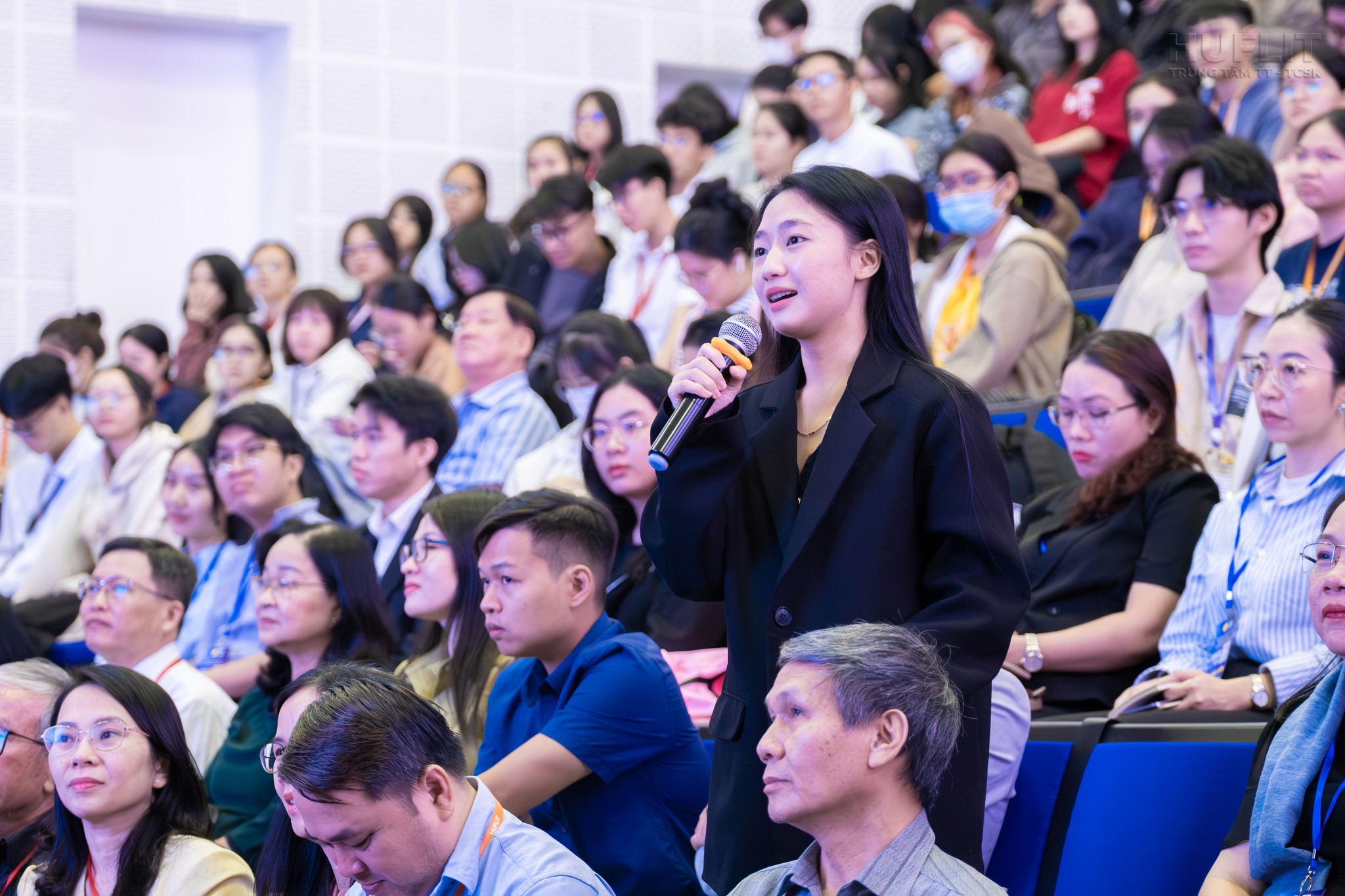
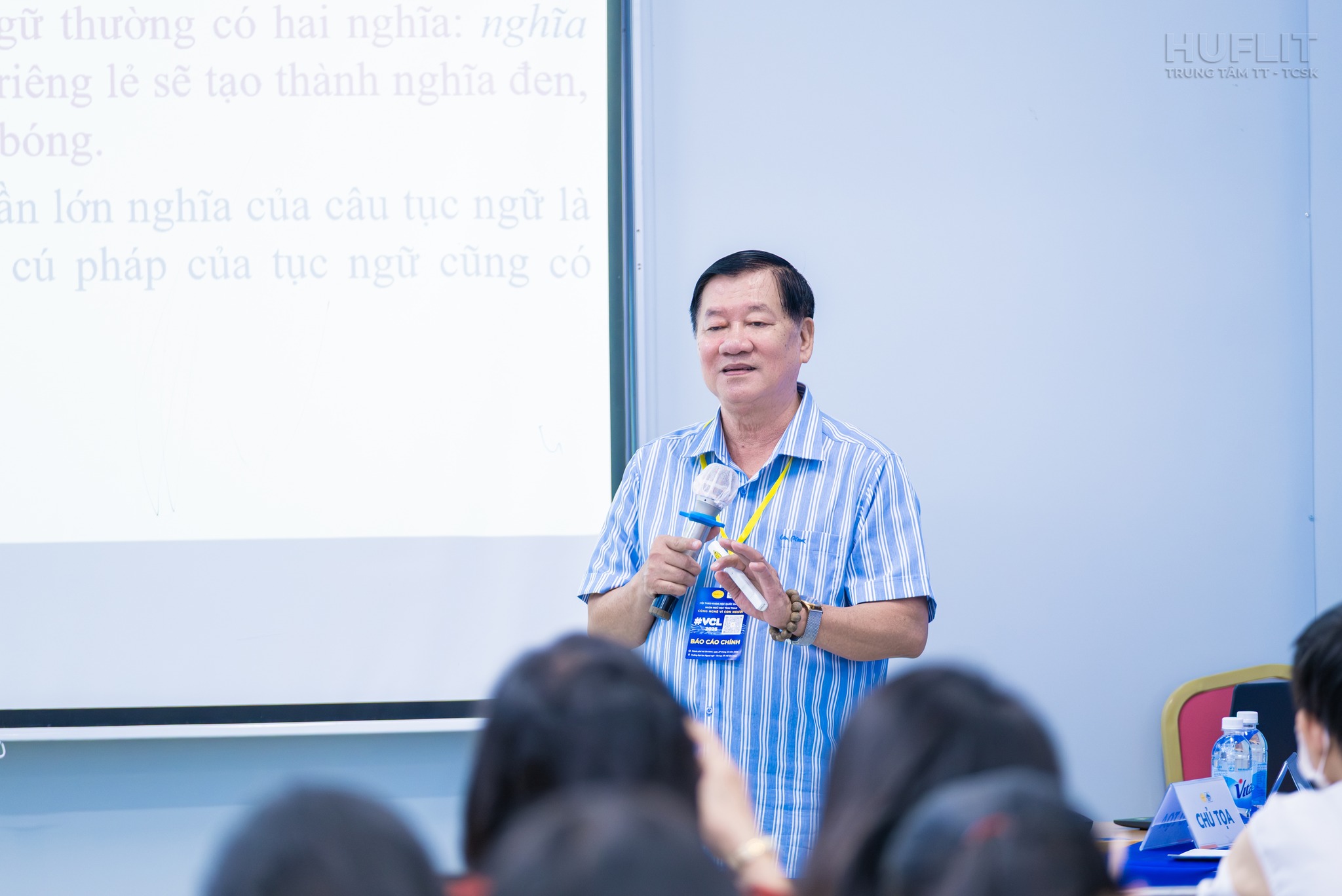
The VCL 2025 Conference received significant attention from the linguistics and computer science research communities in Vietnam
The VCL 2025 Conference was not only a platform for experts, researchers, lecturers, and students to meet and exchange academic ideas, but also a strong affirmation of HUFLIT’s role in connecting and promoting interdisciplinary research. Through this event, the university contributed practical value to the scientific research community as well as to its own training activities.
It was also a rare opportunity for students to access modern technological trends, experience an advanced academic environment, and broaden their career orientation in emerging fields such as machine translation, speech technology, digital language analysis, and AI in education.
Through the VCL 2025 Conference, HUFLIT continues to promote an academic culture, foster a spirit of research, and enhance training quality toward a practical, modern, and socially responsive approach.
CONTACT INFO
Apply for admission at
tuyensinh.huflit.edu.vn
Find out information
huflit.edu.vn
Advising education enrollment